
 11

ANALYSIS
By Andrew Mendy
While voters successfully removed Jammeh’s long-standing autocratic regime through democratic means, the political elites who oversaw the democratic transition from 2017 to 2026 have, to some extent, failed to build and consolidate these gains. Barrow’s post-2017 promises to usher in much-needed democratic reforms have been reneged on, leaving no meaningful difference between what existed under the Jammeh era autocratic regime and what we have now. The regime has successfully transformed itself into what political scientists such as Levitsky and Way call ‘anocracy’ or “hybrid regimes,” where democracy is supplemented with autocratic practices.
From becoming the coalition flagbearer in 2016 to establishing the National People’s Party (NPP) and contesting the 2021 presidential elections, a lack of political will and pervasive partisan politics in the legislature have hindered necessary reforms. Specifically, the failure to reform the colonial and Jammeh-era Public Order Act and the 1997 Constitution points to a growing political ambition to consolidate power and prioritize electoral victories over fundamental democratic reforms. Democratic consolidation cannot thrive without legal frameworks that properly govern these interactions, especially while operating under the Jammeh “-induced” modified 1997 Constitution. To substantiate this, Kotz (2010) once argued that for liberal democratic consolidation to exist and be successful, the remnants of the old authoritarian regime must be destroyed. Its institutions, processes, values, and political routines need to be dismantled to make space for the new liberal democratic institutions, processes, values, and routines. Therefore, states will engage in an exercise of massive political, social, and economic reforms, which can only occur via the democratization process.
While there is strong citizen support for democracy and a new constitution (Afrobarometer’s 2024 Round 10 survey), the Barrow regime has consistently failed to address this democratic lacuna. Now, a decade into his regime, it is critical to reopen the conversation around these issues. As the December 2026 presidential elections are just around the corner, we must reflect deeply on these questions: “What do Post-December 2026 Presidential Elections Hold for the Democratic Future of The Gambia? What can and must be done to strengthen our democracy and minimize the danger of an aspiring autocrat dressed in democratic costume? Do we want continuity or meaningful democratic change?
Regardless of the election outcomes and whoever ultimately prevails, the voters’ choices must remain focused on these broad contextual issues to achieve robust democratic reform.
A Viable Agenda for Democratic Reform
Legal Reform: To meet the growing demands and aspirations of citizens in line with modern democratic norms, the new administration must prioritize reforming key legal frameworks, particularly the Public Order Act and the Constitution.Security Sector Reform: Under the Jammeh era, security institutions merely existed to protect the regime for regime survival and were used against the citizens. This is not only peculiar to the Gambian context but has been the norm in most post-independence African societies. The regime must not weaponize these state institutions against the citizens for regime survival. Thus, the next administration must focus on the current SSR to ensure the Jammeh-authoritarian legacies do not persist in the future.Transitional Justice & Reparations: While the TJ process has registered some successes, much work still needs to be completed in terms of bringing justice and accountability to the perpetrators and reparations to victims of human rights abuses under Jammeh. It is therefore imperative that the next administration ensures that this is achieved.Youth and Women Development: Women and young people remain among the most underrepresented groups in our society while bearing the brunt of unemployment, often forcing them to take significant risks in search of better opportunities.The next administration must prioritize developing the skills and capacities of these groups to ensure they can actively contribute to and benefit from the economy.
Strengthen Independent Institutions: Former US President Barack Obama once said, “Africa does not need strong men. It needs strong institutions”. No meaningful democratic change can occur without robust institutions. Therefore, the next administration must prioritize the effective operationalization of institutions such as the NHRC, the Access to Information Commission, the Reparations Commission, the Independent Electoral Commission etc.Civil Society & Media: Scholars have often regarded civil society and media as the purveyors of democratic norms, and their role is critical to democratic accountability and consolidation. While the space has become more open and freer, it is imperative that the next administration reinforces this for these institutions to thrive in their role.Andrew Mendy
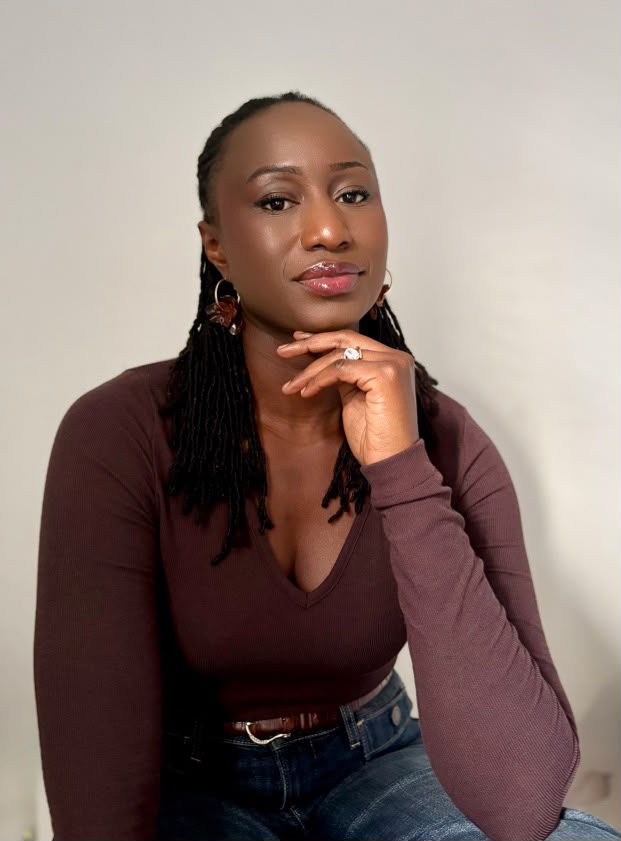
Researcher & Political Science Ph.D. Student at The University of Mississippi