
 11
11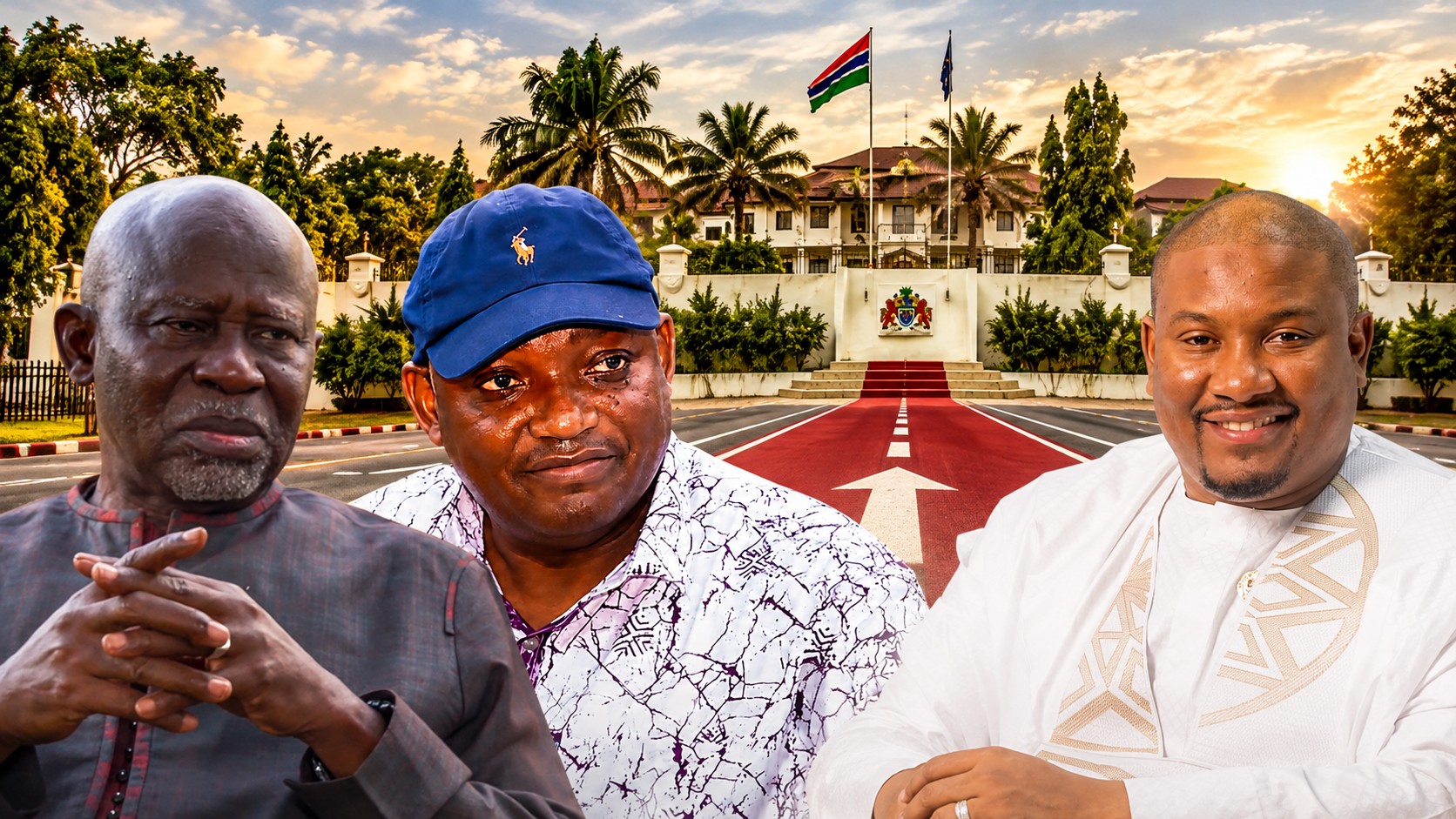
Written by: Seringe S.T. Touray
With barely two months to The Gambia’s December 5th presidential election, the country’s rapidly changing alliance politics is producing an intriguing paradox: political camps are gaining new allies while losing some of their own people.
Coalition 2026, led into the election by Talib Ahmed Bensouda, is dealing with the withdrawal of Professor Sidat Yaffa’s Gambia Movement for Progress (GMP), one of eight parties and movements that came together under the coalition’s formal political alliance in August.
Yaffa’s departure carries additional significance because he was himself involved in the Coalition 2026 flagbearer process before Bensouda emerged as its candidate. He is now reportedly moving towards President Adama Barrow’s NPP-led alliance.
The National Reform Congress (NRC), another Coalition 2026 partner, confirmed GMP’s departure in a statement sent to The Fatu Network, but made clear it was staying.
“While we respect GMP’s right to make its own political determination, the NRC remains fully committed to the objectives for which Coalition 2026 was formed,” it said.
Perhaps more tellingly, the NRC appealed directly to the other coalition partners to remain together: “We also call on all remaining partners within Coalition 2026 to stay the course.”
But political defections are not flowing in only one direction.
Even as Barrow’s alliance absorbs prominent opposition figures, including Essa Mbye Faal, whose alliance with the NPP was formally sealed at State House on Sunday, the governing party is facing departures of its own.
The Standard reported on September 29th that 20 NPP grassroots officials have resigned to join the newly registered National Democratic Party (NDP) led by Kebba Madi Bojang, himself a former NPP Youth President. The group reportedly includes constituency coordinators, women and youth officials, executive members and grassroots organisers.
Their resignation letters are dated August 22nd, according to the report, meaning the departures predate their emergence in the news this week. The defectors reportedly said they had remained in the NPP because of Bojang and decided to follow him after he established his own party.
The NDP itself is remarkably new. The Independent Electoral Commission formally registered it only on September 17th, naming Bojang as its leader.
Taken together, the two developments illustrate the fluidity of Gambian politics as December approaches. Coalition announcements and high-profile defections may dominate headlines, but underneath them is a more complicated contest over political structures, grassroots organisers and whether supporters will necessarily follow leaders when those leaders change camps.
GMP has walked away from Bensouda’s coalition while the NRC is calling on those remaining to hold together. Barrow, meanwhile, is welcoming prominent opposition figures into his alliance while some officials from his own party are heading elsewhere.
In this election season, political traffic is moving in both directions.