
 11
11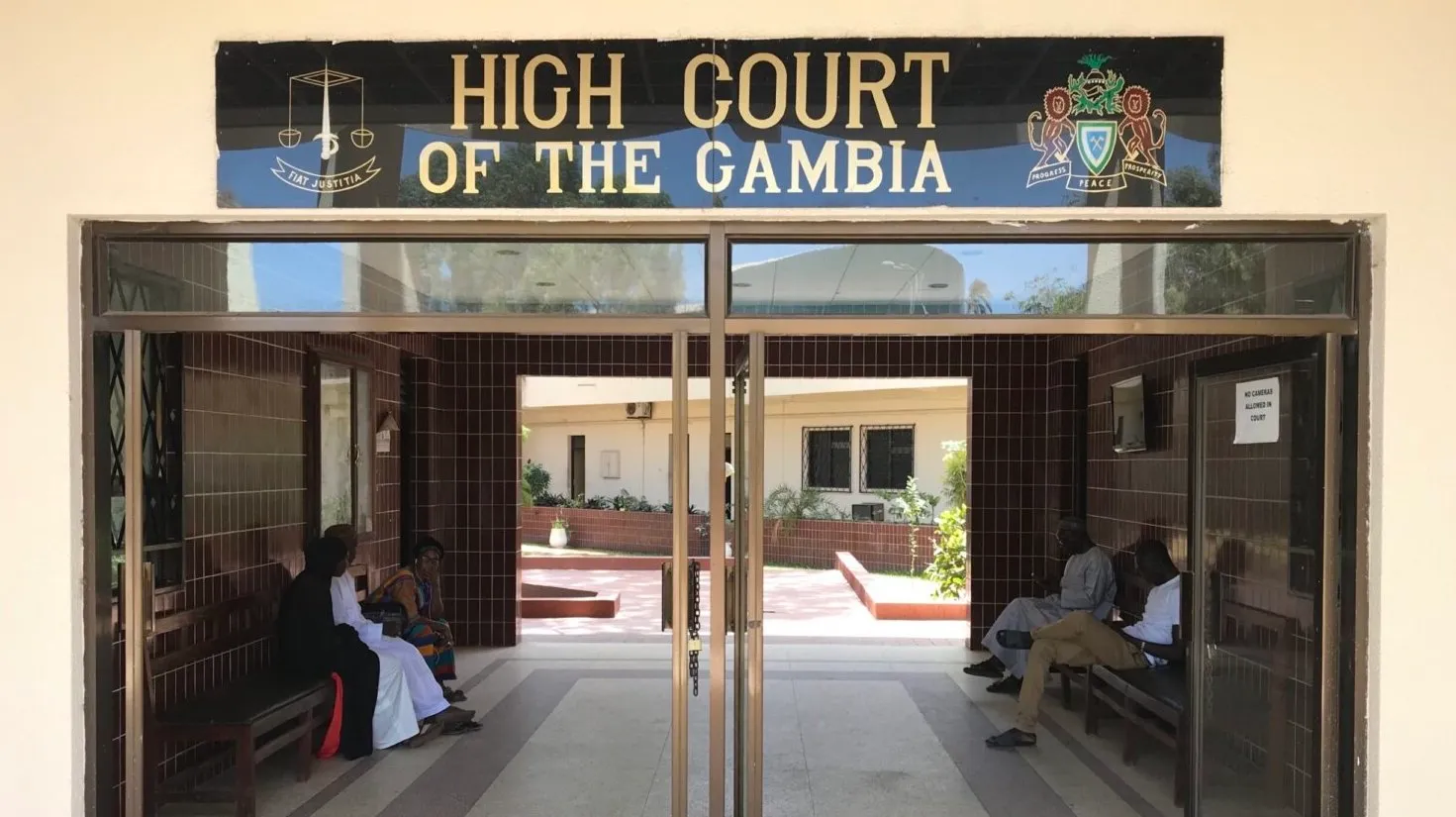
Written by: Mama A. Touray
The High Court of The Gambia has acquitted Ousainou Bojang of murder in connection with the fatal shooting of two Police Intervention Unit officers at the Sukuta–Jabang traffic lights on September 12th, 2023, ruling that the State failed to prove its case beyond reasonable doubt.
Delivering judgment, Justice Ebrima Jaiteh said the court was not satisfied that the accused caused the deaths of Police Constables Sang J. Gomez and Pateh J. Jallow, pointing to significant inconsistencies and evidential gaps in the prosecution’s case.
The judge explained that for a murder conviction, the State must establish several essential elements. He said the first element, proving that the victims are deceased, was sufficiently established through death certificates and postmortem reports presented before the court.
However, he ruled that the second and most critical element, proving that Ousainou Bojang was the person responsible for the killings, was not established.
Justice Jaiteh highlighted contradictions in the testimonies of key prosecution witnesses, particularly among officers who claimed to have witnessed the shooting. He noted inconsistencies in their identification of the accused, as well as discrepancies in their accounts of the number of shots fired.
The court also examined the testimony of a witness, Ancy Jawo, which the judge said undermined the prosecution’s case, noting that her identification of the accused was based on viewing his photograph on social media rather than at the scene.
Further concerns arose over the alleged confession said to have been recorded by prosecution witness Mama Jabbie. Justice Jaiteh stated that the failure to properly preserve the audio recording raised serious doubts about its credibility and reliability.
On the issue of identification, the judge concluded that the descriptions provided by witnesses were inconsistent, stating: “This court is not satisfied that the accused caused the death of the police officers.”
The court also found the testimony of Ousainou Bojang to be detailed, coherent, and consistent. According to the judgment, the accused not only denied being at the scene but presented evidence indicating that he was in Brufut at the time of the incident.
Justice Jaiteh further criticised the conduct of investigators, stating that they failed to carry out a proper and thorough investigation and instead resorted to intimidation, which he described as “fatal to the prosecution’s case.”
The court also addressed physical evidence presented by the State, including shoes said to match those worn by the attacker. The judge noted that the shoes did not fit the accused but instead matched the size of his brother, weakening the prosecution’s attempt to link him to the crime.
Additionally, the court observed that when the accused was arrested and taken to the Sukuta Police Station, officers who were said to have been at the scene did not identify him as the assailant.
Justice Jaiteh also highlighted the absence of any forensic or scientific evidence establishing a nexus between the accused and the crime.
In conclusion, the court held that the prosecution failed to establish the identity of Ousainou Bojang as the perpetrator and failed to prove its case beyond reasonable doubt. He was accordingly acquitted and discharged.
His sister, Amie Bojang, who was charged as an accessory after the fact to murder, was also acquitted. The court held that such a charge cannot stand where the principal accused has been cleared, stating: “There cannot be an accessory after the fact to murder where the principal offender is acquitted and discharged.”