
 11
11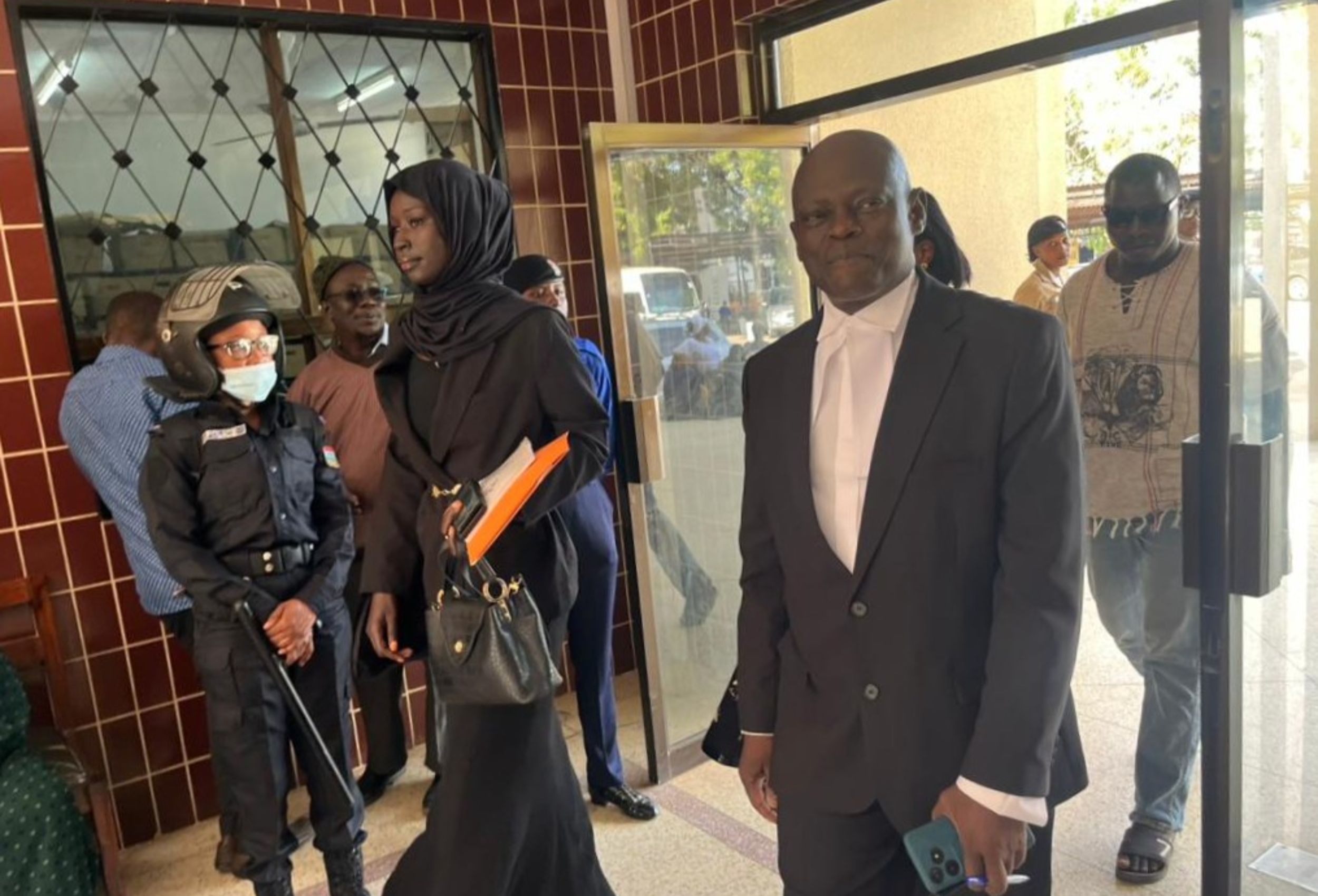
Written by: Alieu Jallow
After more than two years of intense legal proceedings, the High Court of The Gambia in Banjul has acquitted and discharged Ousainou Bojang and his sister, Amie Bojang, on all charges, bringing to a close one of the country’s most closely followed criminal trials.
Ousainou Bojang had faced multiple serious charges, including two counts of murder, attempted murder, causing grievous bodily harm, and an alleged act of terrorism. The case, which drew national attention, centred on the fatal shooting of Police Constables Sang J. Gomez and Pateh J. Jallow at the Sukuta–Jabang traffic lights on September 12th, 2023, an incident that shocked the nation and raised serious concerns about accountability and justice.
Speaking shortly after the judgment, defence counsel Dr. Lamin J. Darboe described the outcome as a hard-fought victory while using the moment to raise broader concerns about the country’s justice system, particularly the structure and independence of the Directorate of Public Prosecutions (DPP).
“It is now about time that we give constitutional guarantees to a DPP, and it is about time that we now have a Gambian as DPP. We should stop this nonsense of appointing foreigners as directors for public prosecution in the Gambia. We are very qualified young people who are able, far, far more able than any foreigner you can find, to act as DPP, to serve in the role, in the position of a DPP in this country,” he states.
Dr. Darboe further argued that the current institutional arrangement undermines the independence of the DPP, stressing that the office should operate separately from the Ministry of Justice and the Attorney General’s Chambers. According to him, this overlap creates the potential for executive influence, particularly in politically sensitive cases.
“The Attorney General and Minister of Justice are executive appointees, and more than likely, they would want to do what the government wants, especially in politically significant cases like this. We don’t want that. If people commit crime, then obviously, we are not opposed to those people being tried and punished, but you cannot politicise this.”
He also made a striking claim regarding the direction of the evidence presented during the trial, suggesting that individuals initially treated as eyewitnesses may themselves be implicated in the crime.
“We follow that and eventually they will be dragged to court, maybe not today, maybe not tomorrow. But we know very well that at some point, at some point, they will be placed before the court, they will have that day in court, and they can tell us who engaged them. They can tell us who hired them to do what they did. There is no question about this, the evidence has clearly, clearly, proven the killers in this case,” he states.
Despite the acquittal, the case leaves behind unresolved grief and lingering questions. While the ruling marks a moment of relief and vindication for Ousainou Bojang, Amie Bojang, their family, and the defence team, the families of the slain officers continue to mourn.
More than two years on, a central question remains unanswered: who killed the police officers?
As the dust settles on the courtroom victory, the search for truth and accountability continues.