
 11
11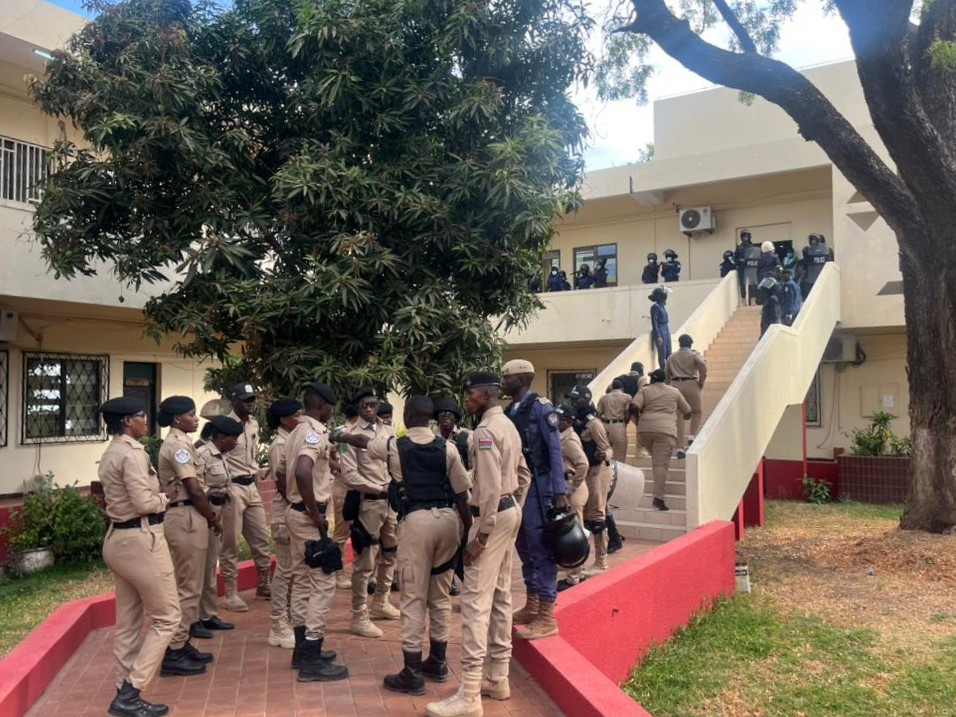
Written by: Alieu Jallow
A tense silence has gripped the High Court of The Gambia as a judge begins delivering what is expected to be a lengthy and decisive judgment in the Sukuta–Jabang police shooting case of September 12th, 2023.
The case relates to the fatal shooting of two Police Intervention Unit officers and the wounding of another at the Sukuta–Jabang traffic lights, an incident that sent shockwaves across the country and triggered a high-profile criminal investigation.
After a trial spanning 2 years, 6 months, and 19 days, the packed courtroom has become the focus of national attention. Lawyers, family members, and observers sit shoulder to shoulder, awaiting a verdict that could bring either relief or heartbreak.
At the centre of the moment is a lingering question: will it be tears of joy or tears of sorrow for Ousainou Bojang, accused of carrying out the attack, and his sister, Amie Bojang, who is charged with aiding his escape?
The presiding judge is currently reading detailed summaries of testimony from prosecution and defence witnesses, along with the final legal arguments submitted by both sides. This stage of the process is expected to take several hours before the court reaches its final determination.
The State has maintained throughout the trial that its case is “overwhelming and unshaken.” Prosecutors rely on eyewitness testimony, medical reports, and what they describe as confessional evidence. They point in particular to accounts from members of the Gambia Armed Forces, who testified that they identified the suspected shooter and linked his description to Ousainou Bojang. Medical evidence presented in court confirmed that the officers died from gunshot wounds.
However, the defence has strongly challenged the prosecution’s case.
Counsel Lamin J. Darboe, representing Ousainou Bojang, argued that there is no conclusive evidence placing his client at the scene. He disputed the admissibility of the alleged confession, saying it was not obtained in accordance with the law, and highlighted the absence of forensic evidence such as DNA, fingerprints, or a confirmed ballistic link between the accused and the weapon used.
The defence also questioned the reliability of eyewitness identification and criticised what it described as shortcomings in the identification process, arguing that the case against the accused is largely circumstantial.
For Amie Bojang, her counsel A. Sillah similarly rejected the State’s case, arguing that investigators failed to establish a clear and direct link between her and the alleged crime. The defence pointed to gaps in the investigation, the absence of direct evidence connecting her to the weapon or the scene, and procedural concerns that, in their view, undermine the credibility of the prosecution’s case.
As the judgment continues to be read, the courtroom remains silent, with emotions running high among families and observers who have followed the case from the beginning.
The proceedings are expected to last several hours before the final verdict is delivered, a decision that will determine whether the Bojang siblings are acquitted or convicted.
For now, all eyes remain fixed on the bench.