
 111
111 2
2 3
3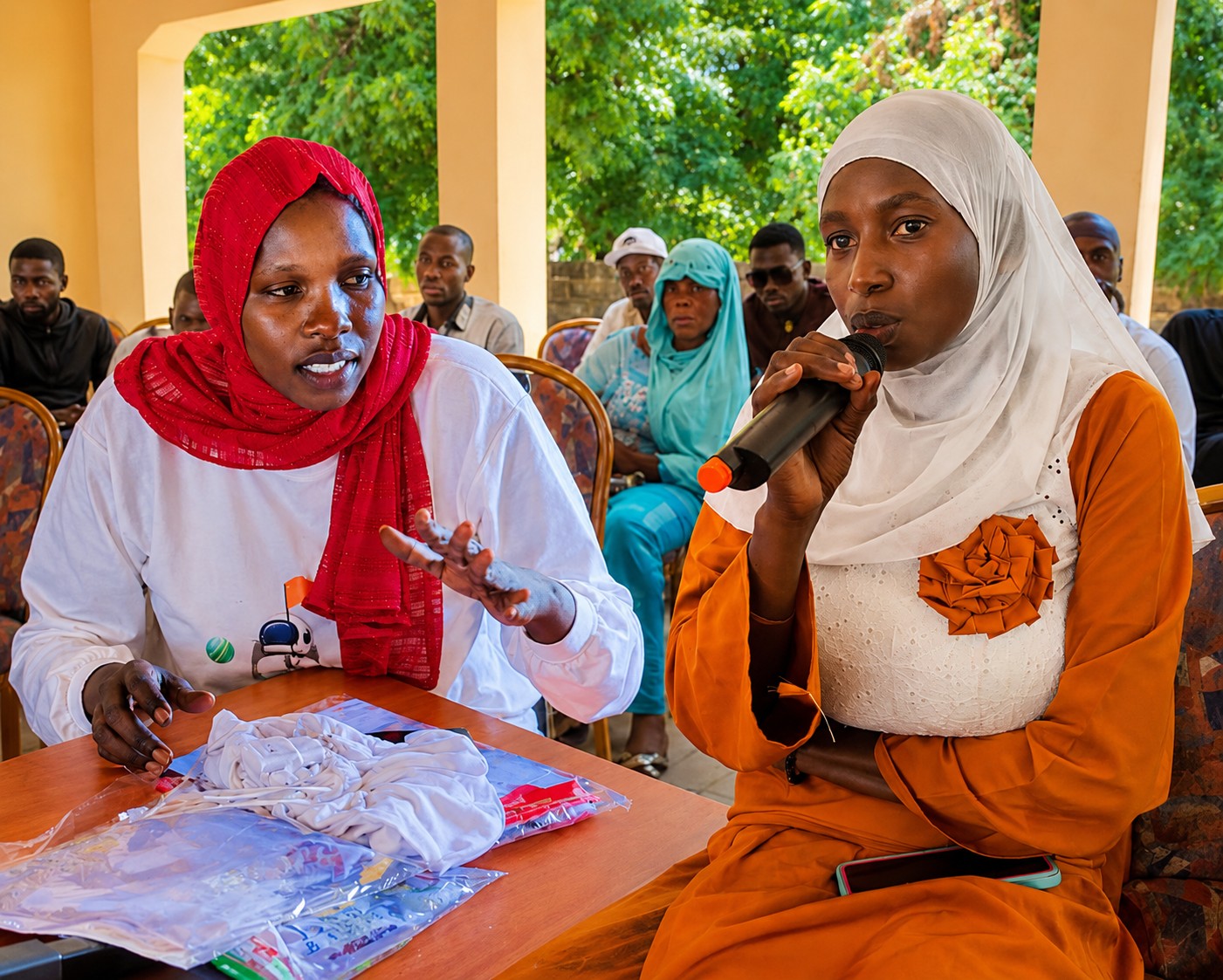
Written by: Alieu Jallow
Right holders across The Gambia’s North Bank Region have praised the revived Technical Advisory Committee (TAC), describing it as a transformative platform that has strengthened collaboration between communities and government institutions while improving service delivery and accountability.
Revived with financial support from ActionAid International The Gambia, the Technical Advisory Committee brings together government institutions, local authorities, civil society organisations and community representatives. A key feature of the platform is its interface sessions, where right holders engage directly with duty bearers to raise community concerns and seek practical solutions. Participants say the initiative has significantly improved communication, institutional responsiveness and coordinated service delivery across the region.
Speaking on behalf of the youth and women of Lower Badibou District, Jaila B. Gaye said the TAC has delivered tangible benefits for communities.
She highlighted the Kerewan Area Council’s decision to allocate five per cent of its revenue to youth activities, as well as its pledge of D1 million to support the upcoming National Youth Conference and Festival (NAYCONF).
“Recently, because of this TAC meeting, the Kerewan Area Council dedicated a percentage of its revenue to youth and women. During the last meeting, they announced that five percent of their money will be ploughed back into youth activities. Secondly, with NAYCONF around the corner, the council promised to provide one million dalasis to support the young people in making the event successful. They are equally supporting women in their various districts. So, a lot of changes have happened,” she said.
Gaye added that the TAC has also strengthened cooperation with government institutions, making it easier for youth groups to organise activities and access support.
“Sometimes we had challenges getting teachers to attend our activities, but because of this TAC meeting, we have built a good rapport with the Regional Education Directorate. Now it is simply a matter of writing a letter requesting permission, and it is granted. During a recent community-based programme, we were provided with a vehicle, and one of the TAC members volunteered as a resource person at no cost because he understood it was part of his responsibility,” she explained.
Fatoumatta Jammeh, Chairperson of Upper Badibou District, echoed those sentiments, saying the TAC has fostered stronger collaboration between communities and public institutions.
She pointed to a recent district dialogue where stakeholders engaged directly with young people on issues affecting their lives, describing it as a clear example of the platform’s role in promoting meaningful participation and inclusive decision-making.
Jammeh also cited the Agriculture Department’s intervention in her home village of Illiasa, where flood barriers were constructed to protect farmland from seasonal flooding.
“In my village, last year floodwaters coming from the highlands caused serious damage to our community and farmlands. The Agriculture Department constructed barriers and actively involved our young people and women throughout the process,” she said.
Yaya Ndour of Upper Nuimi, representing the Albreda Eco Zone, said the TAC has also transformed collaboration with the Department of Forestry.
He explained that community forest conservation efforts were previously hampered because local environmental groups had to pay for tree seedlings. Since the TAC was revived, he said, the department has become far more supportive.
“In my area, before the start of the TAC, we faced many challenges in our forest conservation work. Whenever we requested seedlings from the Forestry Department, we had to pay for them. Now they provide us with free seedlings together with technical guidance whenever we need them,” Ndour said.
The testimonies from the three community representatives highlight the growing impact of the revived Technical Advisory Committee across the North Bank Region. From increased investment in youth and women to stronger collaboration with public institutions and improved agricultural and environmental support, participants say the platform is helping bridge the gap between right holders and duty bearers while ensuring community concerns lead to concrete action.
For many residents, the TAC has evolved from a discussion forum into an effective mechanism for accountability, partnership and more responsive local governance.


