
 111
111 2
2 3
3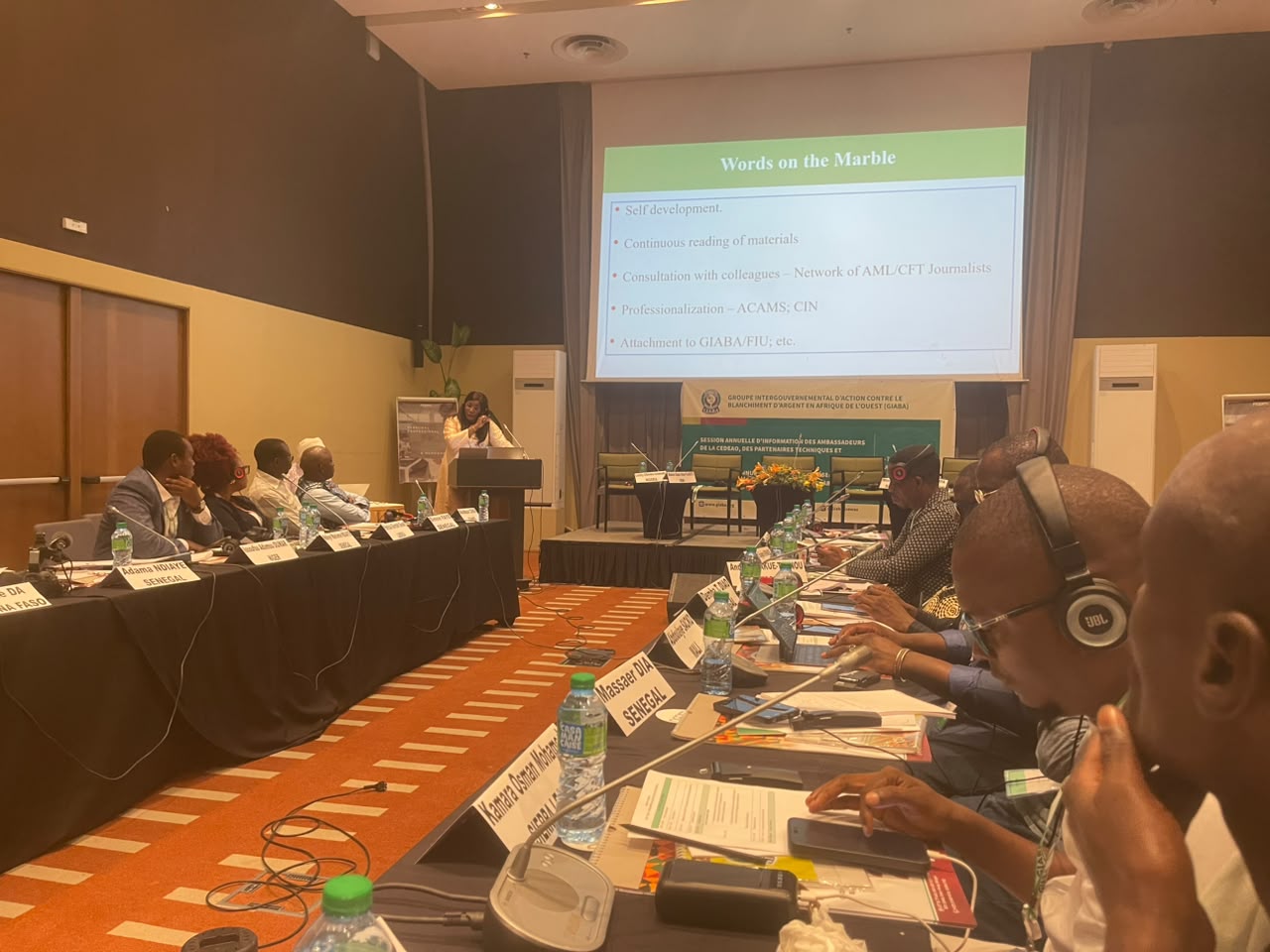
By: Dawda Baldeh
The Inter-Governmental Action Group against Money Laundering in West Africa (GIABA) has reaffirmed its leading role in safeguarding Africa’s financial systems, highlighting major achievements in combating money laundering, terrorist financing and the financing of the proliferation of weapons of mass destruction while calling on all African nations to strengthen collaboration against transnational financial crimes.
The call was made during GIABA’s 2025 Annual Briefing Session for Ambassadors, Technical and Development Partners held in Dakar, Senegal, where diplomats, ECOWAS officials, financial intelligence experts and development partners gathered to review the institution’s achievements and priorities.
Speaking at the opening ceremony, GIABA’s Director of Administration and Finance, Mantia N’Diaye, representing the Director General, said the institution continued to deliver critical support to ECOWAS Member States through capacity building, technical assistance and intelligence-driven initiatives.
“Throughout 2025, GIABA demonstrated its commitment to delivering quality services to Member States through awareness campaigns, technical assistance, training workshops, seminars and conferences aimed at strengthening the fight against money laundering, terrorist financing and proliferation financing,” he said.
He noted that GIABA had significantly enhanced the region’s understanding of financial crime risks by producing typology reports and research studies that help governments identify emerging threats.
“These studies have deepened knowledge across the region and strengthened Member States’ capacity to combat money laundering and terrorist financing,” he added.
The annual briefing, he explained, also serves as an accountability platform where GIABA presents its annual report, achievements and challenges to ambassadors and development partners while seeking stronger collaboration in implementing international anti-money laundering standards.
Representing Senegal’s Financial Intelligence Unit (CENTIF), Babacar Amadou Diagne described the fight against financial crimes as essential to Africa’s economic stability and national security.
“The fight against money laundering, terrorist financing and the proliferation of weapons of mass destruction remains more than ever a major challenge for the stability of our economies and the security of our populations,” Diagne said.
He revealed that Senegal is currently undergoing the third round of GIABA’s Mutual Evaluation Process, which assesses countries’ compliance with international anti-money laundering and counter-terrorist financing standards.
“Senegal remains fully committed to this fight in close collaboration with GIABA and all national, regional and international institutions,” he stated.
Diagne stressed that the presentation of GIABA’s 2025 Annual Report offers Member States an opportunity to assess progress made, identify remaining gaps and strengthen regional cooperation.
“We must collectively evaluate our achievements, recognise the persistent challenges and work together to deepen cooperation for the integrity of our financial systems,” he said.
He also commended development partners for their continued support in strengthening the region’s anti-money laundering framework.
The briefing also highlighted the growing role of women in promoting financial integrity across West Africa.
Representing the ECOWAS Centre for Gender Development (EGDC), Salimata Cham said the Centre has partnered with GIABA over the years to ensure that women become active participants in preventing financial and economic crimes.
“Every year, we work with GIABA to fight against money laundering and explore how women can contribute meaningfully to this important agenda,” Cham said.
She explained that the Centre’s work goes beyond gender equality by empowering women economically, improving access to financial information and promoting inclusive governance, all of which reduce vulnerabilities that criminal networks often exploit.
Cham disclosed that the Centre has established a digital ecosystem that collects gender-related data across ECOWAS Member States and publishes an annual regional report measuring countries’ progress in promoting gender equality.
She also highlighted initiatives supporting women entrepreneurs, girls’ education, reproductive health, cross-border traders and climate resilience.
“Today, our regional digital platform serves more than one million women users, providing access to financial and non-financial information while creating opportunities for economic empowerment,” she revealed.
The ECOWAS Gender Development Centre representative emphasised that empowering women economically strengthens financial transparency and contributes significantly to preventing illicit financial activities.
Throughout the briefing, speakers agreed that financial crimes continue to evolve rapidly across Africa, making regional cooperation more critical than ever.
They stressed that no country can effectively combat money laundering and terrorist financing in isolation, urging governments to strengthen Financial Intelligence Units, improve cross-border information sharing, implement GIABA recommendations and invest in stronger legal and institutional frameworks.


