

 11
By Dawda Baldeh
Young children enrolled in local Quranic memorisation centres are being forced onto the streets of The Gambia to meet strict daily financial targets or face violent beatings from their teachers.
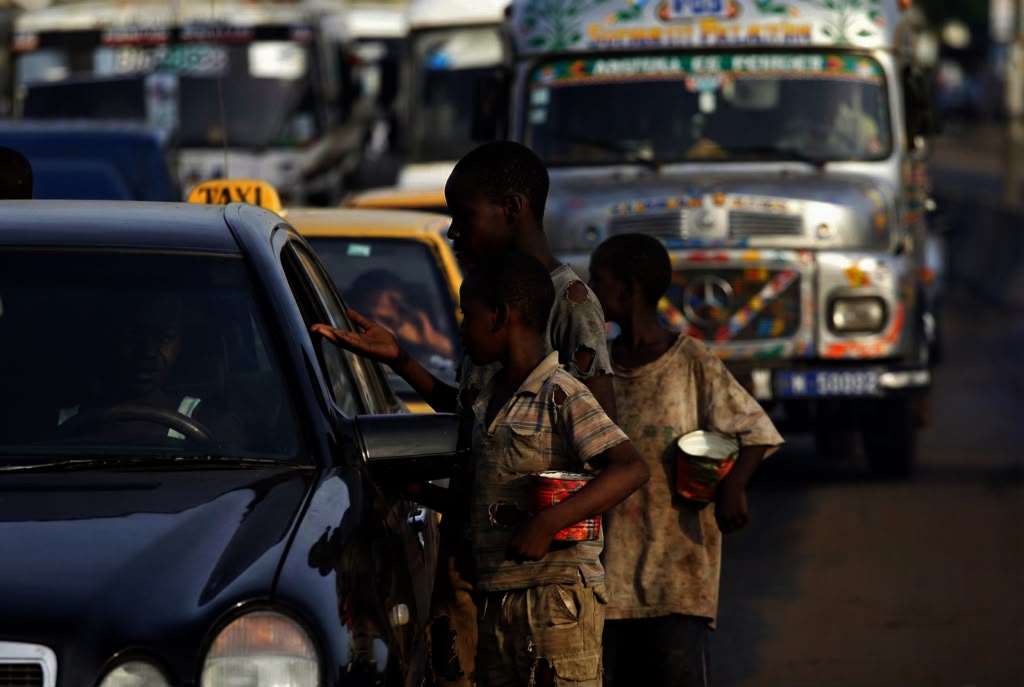
At the bustling Jarra Soma bus garage along the Trans-Gambia corridor, barefoot, exhausted children as young as 11 spend up to 12 hours a day begging passengers for money before returning to their dormitories for evening religious lessons.
According to several boys interviewed at the transport hub by The Fatu Network, their teachers and guardians tell them to return each evening with at least D100 (£1.01; $1.36) to pay for food and board.
“If you don’t have the D100 when you get home you will face beating,” one 11-year-old boy told TFN, his eyes widening with fear. Having collected just D11 after hours on the street, he added: “If I go home, my teacher will beat me.”
The boy explained that he began his Quranic studies in Futa, Senegal, where his parents still live, before being brought across the border to The Gambia. His daily schedule leaves no time for recreation or formal schooling.
“From 6 a.m. to 6 p.m. we are allowed to beg. We return home by 7 p.m. and start learning,” he said, noting that Quranic lessons run every night until 9 p.m.
Another 13-year-old boy detailed a near-identical ordeal, explaining that he hands his daily collections directly to his guardian. Having gathered only D65 on the day he was interviewed, he admitted: “I can’t go home now if I don’t have D100.”
Despite spending four years memorising the Quran, the teenager revealed he had completed only 14 of its 114 surahs because the majority of his daytime hours are spent begging.
The sight of young children weaving dangerously through heavy traffic has drawn sharp criticism from passengers and child rights advocates, who warn of severe exposure to exploitation, abuse, and physical injury.
Lamin Sarr, a passenger who witnessed the children begging at the garage, expressed deep concern over their living conditions and physical appearance.
“This is not safe at all. These kids need to be protected. Tasking them to bring a certain amount of money every day will expose them to abuse,” Sarr said.
Having handed the children D400 to help them meet their targets, Sarr added: “I feel sorry for these children. Their parents shouldn’t have allowed this. These children barely learn the Quran and they look unhealthy.”
He urged Gambian authorities to intervene directly by supporting Quranic institutions while strictly enforcing bans on child street begging: “The government needs to support these centres as well. Seeing these vulnerable children on the streets is heartbreaking.”
Although The Gambia’s Ministry of Gender, Children and Social Welfare has previously pledged measures to stamp out child exploitation and street begging, the practice remains widespread at major transit hubs across the country.
Attempts by TFN to contact the children’s guardians for comment were unsuccessful.