
 11
11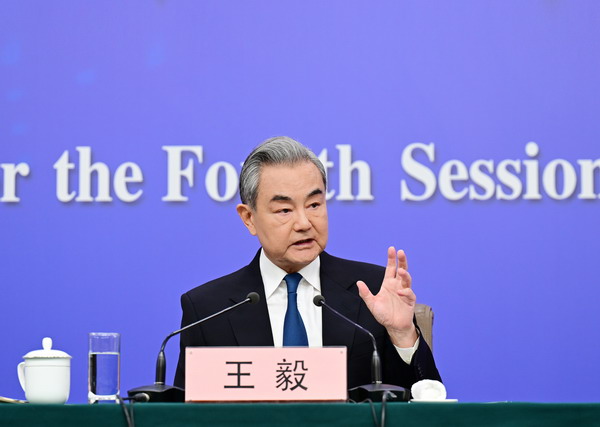
By: Seringe S.T. Touray
China’s foreign minister has called for an immediate end to the escalating conflict involving the United States, Israel and Iran, warning that the war risks pushing the Middle East deeper into instability at a time when global tensions are already rising. The remarks came on March 8th during a press conference held in Beijing on the margins of the Fourth Session of the 14th National People’s Congress, where Foreign Minister Wang Yi answered questions from Chinese and international media on China’s foreign policy and global affairs.
Addressing the ongoing hostilities involving Iran, the United States and Israel, Wang described the conflict as a dangerous escalation that threatens to spread across the region. “This is a war that should not have happened. It is a war that does no one any good,” he said, adding that continued military operations risk driving the situation toward wider confrontation. According to Wang, history has repeatedly shown that military force cannot solve the region’s problems and instead creates deeper grievances and new crises.
China’s position, he said, rests on several principles. Sovereignty must be respected and the territorial integrity of countries in the Gulf region, including Iran, must not be violated. The abuse of military force must be rejected because the “law of the jungle must not rule the world.” Wang also criticised attempts to interfere in the internal affairs of Middle Eastern countries or pursue regime change, arguing that the future of the region must be decided by the people who live there. In China’s view, a return to dialogue and negotiations remains the only sustainable path toward common security.
The crisis in Gaza also featured prominently in Wang’s remarks. He described the ongoing war as a test of international justice and warned that the Palestinian issue must not be pushed aside once again by global politics. While he welcomed international efforts that produced a fragile ceasefire, he said the deeper question of Palestinian statehood still requires resolution. According to China, the only fair and widely recognised solution remains the creation of two states, allowing Palestinians and Israelis to live side by side in peace and security.
Wang framed these conflicts within what he described as a broader moment of transformation in international relations. He said the world is experiencing “changes unseen in a century,” as geopolitical competition intensifies and conflicts emerge in multiple regions. In this environment, China says major powers should contribute to stability rather than deepen confrontation. Beijing presents itself as a country that supports dialogue, multilateral cooperation and international law as the foundation for resolving disputes.
One of the central ideas discussed during the press conference was China’s vision of a multipolar world. According to Wang, global affairs should not be dominated by a single power or a small group of countries. Instead, every nation, regardless of size or strength, should have an equal voice in shaping international rules. China, he said, will not pursue hegemony as it grows stronger but instead seeks a system where countries cooperate and resolve disputes through international law and diplomacy.
Relations between China and the United States were also discussed during the briefing. Wang acknowledged that ties between the two countries carry global significance and warned that confrontation between the world’s two largest economies would have serious consequences. “Turning our backs on each other would only lead to mutual misperception and miscalculation,” he said, adding that conflict between the two powers would bring disaster not only to them but to the wider world. China’s position, he said, is that the two countries should manage differences while expanding areas of cooperation based on mutual respect and peaceful coexistence.
China also reaffirmed its strategic partnership with Russia, describing the relationship as one built on equality, mutual respect and coordination on major international issues. Wang said the partnership has remained stable despite global turbulence because neither side seeks to impose its will on the other. Both countries, he added, support a more balanced international order and oppose unilateral actions or pressure from other powers.
A major theme throughout the press conference was the growing influence of developing nations, often described as the Global South. Wang noted that these countries now account for more than 40 percent of the global economy, compared with just 24 percent four decades ago. In China’s view, the rise of the Global South represents one of the most important changes shaping international politics today. Developing nations, he said, should strengthen coordination and defend their legitimate rights and interests in the global system.
Africa featured prominently in the briefing as China outlined its partnership with the continent. Wang noted that 2026 marks the seventieth anniversary of diplomatic relations between China and African countries and said Beijing intends to deepen cooperation across multiple areas. One major step announced during the briefing was the full implementation of zero tariff treatment for imports from African countries beginning May 1st, a move China says will help African producers gain greater access to the Chinese market. In addition, nearly six hundred cultural and people to people exchange activities will take place during the China Africa Year of People to People Exchanges.
Economic tensions were also addressed during the press conference, particularly the backlash against globalization and the rise of protectionist trade policies. China criticised efforts to build tariff barriers or break global supply chains, arguing that such moves ultimately harm the global economy. Wang said isolating economies behind protectionist walls may appear protective in the short term but will eventually limit growth and opportunity. China, he said, intends to continue expanding economic openness while supporting a more inclusive and balanced form of globalization.
Beyond the Middle East, Wang also spoke about tensions in Asia, including disputes in the South China Sea and the issue of Taiwan. China maintains that peace and cooperation should remain the guiding principle in the South China Sea and said negotiations toward a regional code of conduct are entering a critical stage. On Taiwan, Wang reiterated that the island is part of China and described the issue as a core national interest that cannot be separated from China.
Throughout the eighty minute press conference, Wang repeatedly returned to the idea that the world is entering a period of profound transformation marked by war, geopolitical competition and economic uncertainty. China’s response, he said, is to promote dialogue, multilateral cooperation and a more inclusive international system that reflects the growing influence of developing nations.
“The future of humanity will be forged through the collective efforts of all nations,” Wang said, arguing that cooperation rather than confrontation offers the only realistic path toward global stability and development.
Addressing the ongoing hostilities involving Iran, the United States and Israel, Wang described the conflict as a dangerous escalation that threatens to spread across the region. “This is a war that should not have happened. It is a war that does no one any good,” he said, urging all sides to halt military operations and prevent further deterioration of the situation. According to Wang, history has repeatedly shown that military force cannot solve the region’s problems and instead creates deeper grievances and new crises.
China’s position, he said, is based on several principles. Sovereignty must be respected and the territorial integrity of countries in the Gulf region, including Iran, must not be violated. The abuse of military force must be rejected because the “law of the jungle must not rule the world.” Wang also criticised attempts to interfere in the internal affairs of Middle Eastern countries or pursue regime change, arguing that the future of the region must be decided by the people who live there. In China’s view, the only sustainable path forward is a return to dialogue and negotiations aimed at achieving common security.
The crisis in Gaza also featured prominently in Wang’s remarks. He described the ongoing war as a test of international justice and warned that the Palestinian issue must not be pushed aside once again by global politics. While he welcomed international efforts that produced a fragile ceasefire, he stressed that the deeper question of Palestinian statehood must still be addressed. According to China, the only fair and widely recognised solution remains the creation of two states, allowing Palestinians and Israelis to live side by side in peace and security.
Wang framed these conflicts within what he described as a broader moment of transformation in international relations. He said the world is experiencing “changes unseen in a century,” as geopolitical competition intensifies and conflicts emerge in multiple regions. In this environment, China believes major powers should act responsibly and contribute to peace rather than deepen confrontation. Beijing presents itself as a country that supports dialogue, multilateral cooperation and international law.
One of the central ideas highlighted during the press conference was China’s vision of a multipolar world. According to Wang, global affairs should not be dominated by a single power or a small group of countries. Instead, every nation, regardless of size or strength, should have an equal voice in shaping international rules. China, he said, will not pursue hegemony as it grows stronger but instead seeks a system where countries cooperate and resolve disputes through international law and diplomacy.
Relations between China and the United States were also discussed during the briefing. Wang acknowledged that ties between the two countries carry global significance and warned that confrontation between the world’s two largest economies would have serious consequences. “Turning our backs on each other would only lead to mutual misperception and miscalculation,” he said, adding that conflict between the two powers would bring disaster not only to them but to the wider world. China’s position, he said, is that the two countries should manage differences while expanding areas of cooperation based on mutual respect and peaceful coexistence.
China also reaffirmed its strategic partnership with Russia, describing the relationship as one built on equality, mutual respect and coordination on major international issues. Wang said the partnership has remained stable despite global turbulence because neither side seeks to impose its will on the other. Both countries, he added, support a more balanced international order and oppose unilateral actions or pressure from other powers.
A major theme throughout the press conference was the growing influence of developing nations, often described as the Global South. Wang noted that these countries now account for more than 40 percent of the global economy, compared with just 24 percent four decades ago. In China’s view, the rise of the Global South represents one of the most important changes shaping international politics today. Developing nations, he said, should strengthen coordination and defend their legitimate rights and interests in the global system.
Africa was highlighted as a key partner in that vision. Wang noted that 2026 marks the seventieth anniversary of diplomatic relations between China and African countries and said Beijing intends to deepen cooperation across multiple areas. One major step announced during the briefing was the full implementation of zero tariff treatment for imports from African countries beginning May 1st, a move China says will help African producers gain greater access to the Chinese market. In addition, nearly six hundred cultural and people to people exchange activities will be held during the China Africa Year of People to People Exchanges.
Economic issues also featured in Wang’s remarks, particularly the backlash against globalization and the rise of protectionist trade policies. China criticised efforts to build tariff barriers or break global supply chains, arguing that such moves ultimately harm the global economy. Wang warned that isolating economies behind protectionist walls may appear protective in the short term but will eventually limit growth and opportunity. China, he said, intends to continue expanding its economic openness while supporting a more inclusive and balanced form of globalization.
Throughout the eighty minute press conference, Wang repeatedly returned to the idea that the world is entering a period of profound transformation marked by war, geopolitical competition and economic uncertainty. China’s response, he said, is to promote dialogue, multilateral cooperation and a more inclusive international system that reflects the growing influence of developing nations.
“The future of humanity will be forged through the collective efforts of all nations,” Wang said, arguing that cooperation rather than confrontation offers the only realistic path toward global stability and development.