
 111
111 2
2 3
3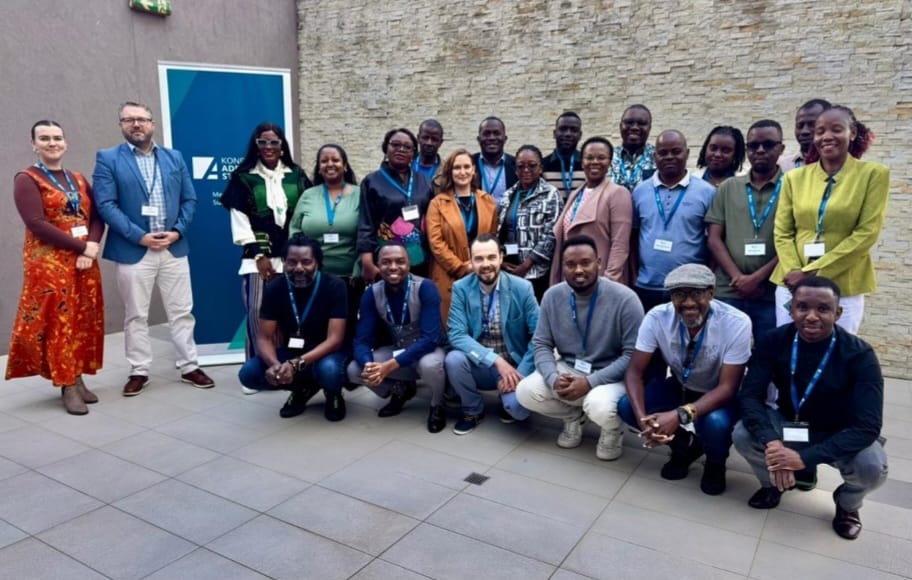
By Mustapha Ceesay
Sixteen (16) African journalists and media practitioners have concluded a four-day workshop on exploring resilience and countermeasures to cyber threats and implications for the media.
The workshop in Gaborone, Botswana, titled “Cyber Threats and Cyber Resilience for Media, Journalists and Newsrooms” gathered journalists and media practitioners from across the continent, including The Gambia.
The participants explored several modules on understanding the cyber threat landscape, resilience, and countermeasures for the media, journalists, and newsrooms in preparation to manage the cyber threat landscape and its implications.
The event held in the capital of the southern African nation, from 5 – 7 May, was organised by the Konrad Adenauer Stiftung’s Regional Media Programme for Sub-Saharan Africa (KAS Media Africa) 2026.
“From targeted cyberattacks and surveillance to disinformation campaigns and AI-driven manipulation, the risks to journalists and newsrooms are evolving rapidly and require new forms of awareness, skills, and resilience,” stated KAS Media Africa in a statement ahead of the training.
Through a combination of expert inputs, practical exercises, and peer exchange, the programme strengthened participants’ digital security practices, understanding disinformation and information manipulation, and strategies to enhance cyber resilience within newsroom environments.
The training came as the media sector increasingly operates in digital environments, professionals face a growing range of cyber threats that impact not only their work, but also their safety, credibility, and the integrity of information.
Participants, Kananelo Boloetse, news editor for Newsday newspaper and head of news at Sky Alpha HD in Lesotho, and Kofi Adu Domfeh, news editor for Multimedia Group in Ghana, shared how the training would impact their work as they navigate a digital environment that exposes them to numerous cyber threats.
“The workshop has strengthened my understanding of digital security, OSINT (Open-Source Intelligence), (Artificial Intelligence), AI-related threats, and newsroom resilience. I believe the knowledge gained will help me improve the protection of sources, strengthen verification processes, and promote safer newsroom practices,” Boloetse said.
“The training comes at a great time of heightened cyber threats and attacks. The knowledge and skills will greatly afford my team the opportunity to build resilience in the face of cyber-attacks on our productions. We also have the tools to fact-check issues and support in fighting disinformation and misinformation. At the personal level, I’ve appreciated the need to be cautious in the digital space,” Domfeh shared.
Comments are closed.


ohij41