
 111
111 2
2 3
3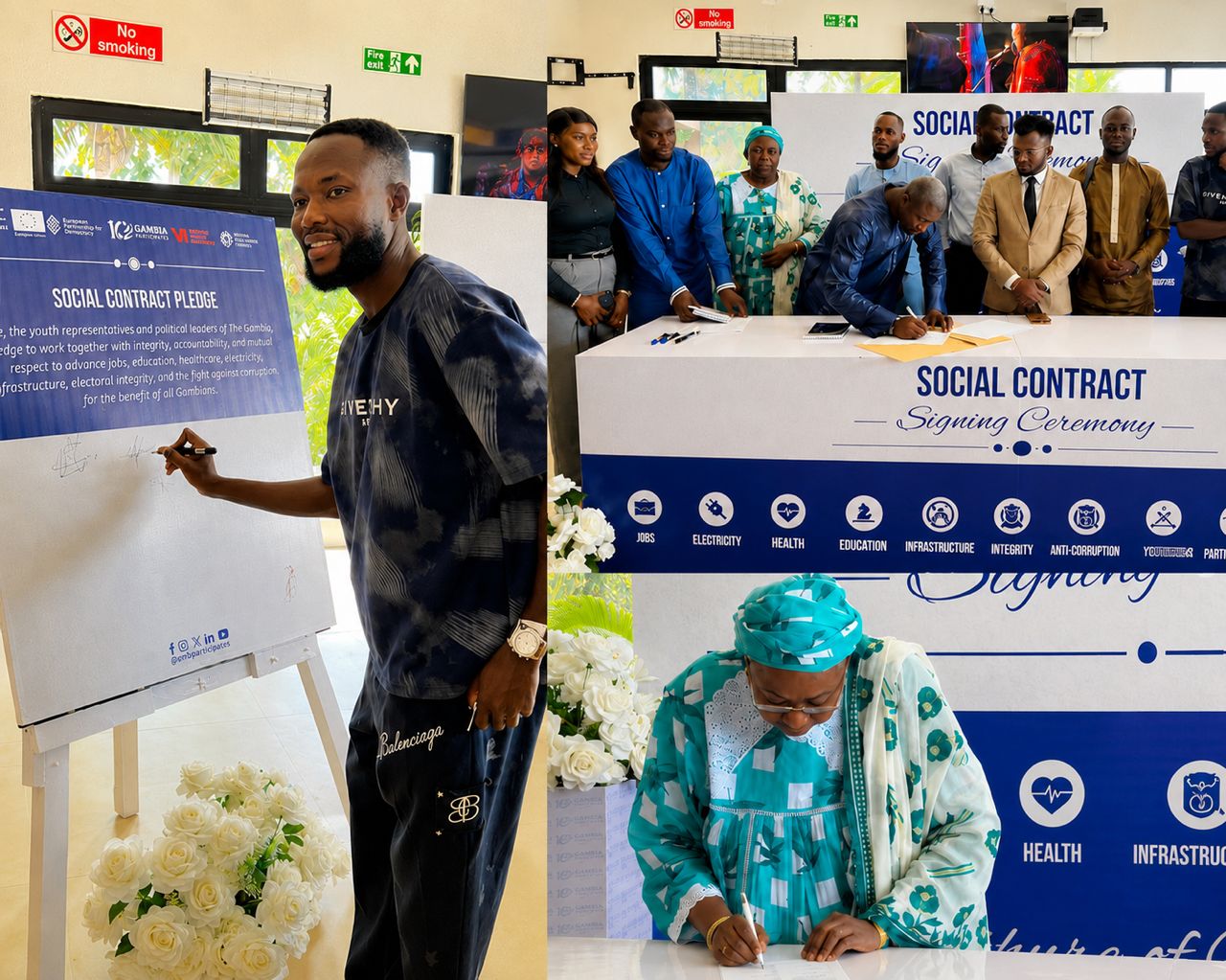
By Alieu Jallow
Lawmakers, political hopefuls, and civil society figures have signed a Youth–Politician Social Contract aimed at holding leaders to measurable commitments on issues affecting young people and communities across The Gambia, organisers said.
The initiative, facilitated by Gambia Participates, creates a public accountability framework designed to secure transparent, citizen‑centred pledges from elected officials and aspiring candidates and to establish mechanisms for monitoring implementation. The contract seeks to move political promises beyond election day by setting measurable commitments and a platform for continuous dialogue between youth and leaders.
Speaking at the signing ceremony, Ansumana Ceesay, Program Officer at Gambia Participates, said democracy must extend beyond voting. “We believe that democracy should not begin and end on election day. Democracy is strongest when citizens are continuously given the opportunity to engage with their leaders, influence public decisions, and hold duty bearers accountable for commitments made in their name,” he said.
Ceesay described the social contract as a practical tool for accountability that allows young people to articulate priorities and political leaders to publicly commit to addressing them.
“This instrument is designed to serve as a practical tool for accountability. It provides a platform through which young people can clearly articulate their priorities, and through which political leaders can publicly commit themselves to addressing these priorities. Most importantly, this instrument creates a framework for continuous dialogue and monitoring. It moves us beyond promises towards measurable commitments and shared responsibility,” he added.
The signing was followed by an interactive panel that brought together National Assembly members, media practitioners, youth leaders, civil society actors and governance activists to discuss implementation strategies, challenges and the contract’s long‑term viability. Panelists stressed that the success of the initiative will depend on sustained citizen engagement and regular monitoring of commitments.
Gambia Participates said the contract is intended to strengthen youth participation in governance and public policy while encouraging political leaders to remain responsive to constituents’ needs. Ceesay framed the ceremony as more than symbolic: “Today’s signing ceremony represents more than a symbolic gesture. It is a public pledge by political leaders to place the interests of citizens above partisan interests and commit themselves to addressing issues that directly affect the lives of young people and communities,” he said.
The initiative arrives amid growing calls for greater political accountability and meaningful youth inclusion in The Gambia. Organisers hope the social contract will help ensure that elected officials and candidates are held to clear, monitorable promises and that citizens have the tools to track progress.


