
 111
111 2
2 3
3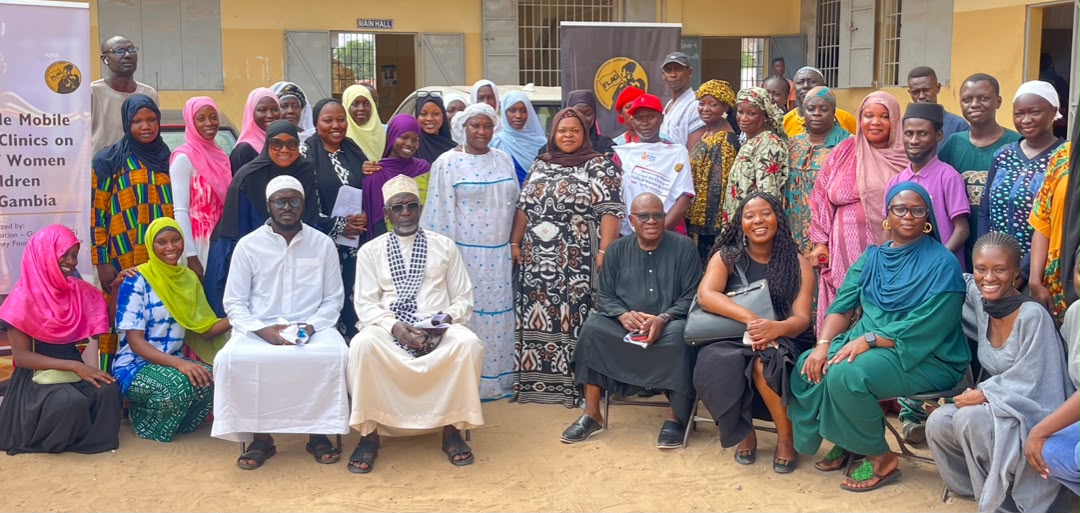
By Alieu Jallow
A Gambian woman has refused to leave her matrimonial home after her husband pronounced a divorce, telling a legal outreach she had “nowhere to go back to with my children” and underscoring the wider problem of unpaid child maintenance following marital breakdowns.
The testimony was given at a Mobile Legal Clinic on the rights of women and children organised by the Female Lawyers Association of The Gambia (FLAG) with the Clooney Foundation for Justice in Lamin. The outreach brought together legal practitioners, Islamic scholars, medical personnel and community members to discuss access to justice for vulnerable groups.
Ndey Banora, who said she had been married for more than 16 years, described how her husband told her he had divorced her and swore the divorce in Allah’s name.
“My husband woke up one day and told me that he had divorced me. I asked him to swear three times in Allah’s name that he had indeed divorced me, and he did. In response, I swore three times in Allah’s name that I would not leave this house. I then drew a part of the house to indicate that it would be my grave if necessary. We agreed to divide the house in two, allowing me to live here with our kids, but I have no intention of leaving,” he said.
Banora said she refused to leave because she believed staying was in her children’s best interests and that the divorce had been driven by anger. “I refused to leave because we have children and divorce was not in my best interest, and I want my children to feel both parents’ love. Maybe I realised that my husband was angry; that is why he asked for a divorce, so I’ll advise young ladies to stay in their marriage and respect their vows and take care of their husbands,” she added.
FLAG vice‑president Yassin Senghore told The Fatu Network that child maintenance is one of the association’s most common cases, saying many fathers stop supporting children after divorce and then claim they cannot afford court‑ordered payments.
“Most people, unfortunately, in the Gambia, when they divorce the wife, they divorce the children. So they leave the women with these children; they provide absolutely no support for them. They don’t pay school fees. And even when the matter goes to the court and, of course, makes orders for that, there’s always the report enforcing those orders because they profess that they did not have money to be able to pay maintenance for their children. So the women are left with the burden of taking care of these children themselves with very little or no assistance from the men. Not to say that all men do this, but in many, a lot of cases that we deal with is the situation,” he said.
Senghore also urged an end to the stigma that deters women from reporting domestic violence or seeking enforcement of maintenance orders.
“In the society we live in, when women take their husbands or ex-husbands to the police to report domestic violence, or when they take them to the courts to seek maintenance, there’s always this tug-of-war against this woman to say, you will never find another husband or no other man will marry you because you would like to take the people to the law.
“And I think we need to break that stigma and to encourage women to actually take steps to protect themselves, because I think it is only when they do that that they can get some assistance with raising their children, because you decide that you’re not going to do anything. And in the meantime, you’re suffering. Your children are not getting the education that they need. They’re not being fed the way that they should. They don’t have accommodation to live in. How is that a better option than actually taking steps to make sure that the person who is responsible is made to take care of the children that he has with you?”
FLAG said the mobile clinic is part of a nationwide campaign to raise awareness of women’s and children’s legal rights and to encourage survivors to seek legal protection. The association continues to receive cases involving sexual and gender‑based violence, child maintenance disputes, female genital mutilation, physical abuse and other rights violations.


