
 11
11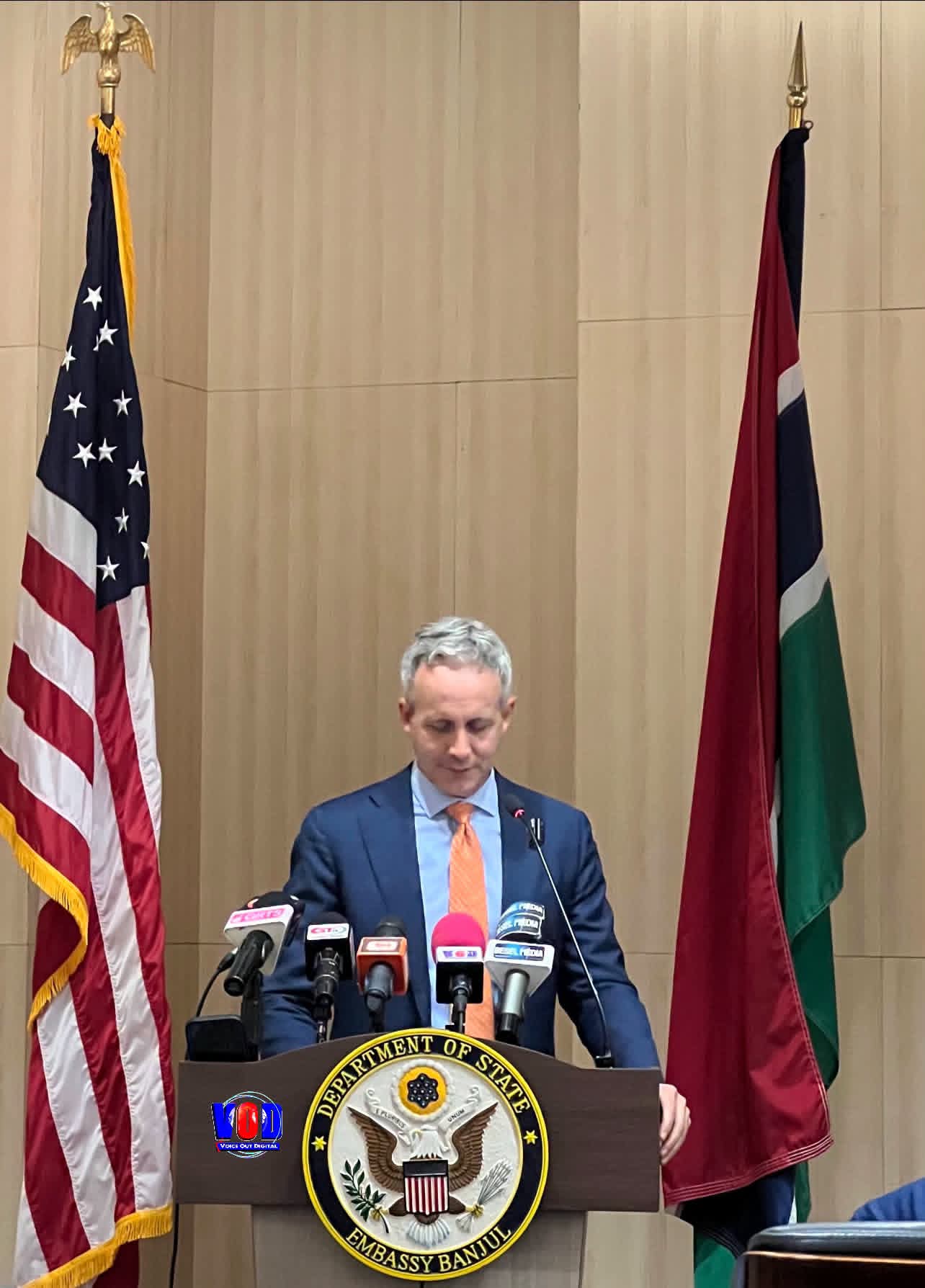
By Hadram Hydara
The United States Embassy in Banjul hosted a media engagement forum on Monday, August 3, to highlight the role of international exchange programmes in strengthening journalism and deepening bilateral ties between the United States and The Gambia.
Held at the Sir Dawda Kairaba Jawara International Conference Center, the forum—titled “American Excellence in Journalism: Washington Foreign Press Center Reporting Tours Empowering Gambian Journalists”—focused on the experiences of returning exchange participants and the role of international reporting tours in strengthening local media capacity.
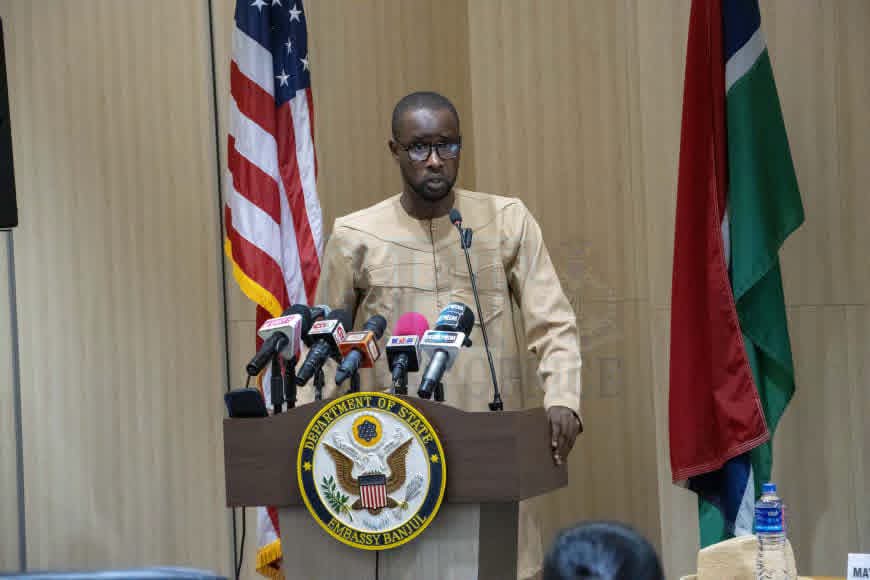
Opening the forum, US Charge d’Affaires Robert Anderson framed the event within the broader context of America’s 250th anniversary of independence and more than 60 years of diplomatic relations with The Gambia.
“All across America and around the world, we are commemorating 250 years of our Declaration of Independence,” Anderson said. “It’s built on that same belief that free peoples, informed by a free press, are the foundation of a just, democratic, and prosperous society.”
Anderson highlighted the impact of the Foreign Press Center (FPC) reporting tours, which allow international journalists to travel to the US, cover specific global and local issues firsthand, and file stories directly from the ground. “You have the power of the pen… You inform your citizenry, and I think sometimes we don’t understand the power that journalists and media have,” he added.
Joining virtually from Washington, Jeff Weinshenker, Director of the US Department of State Foreign Press Centers, emphasized the long-standing mission of the FPC. “Programs like this matter, and they matter now more than ever,” Weinshenker said. “Authentic, fact-based, on-the-ground reporting remains critical to cutting through all the noise and keeping our citizens informed.”
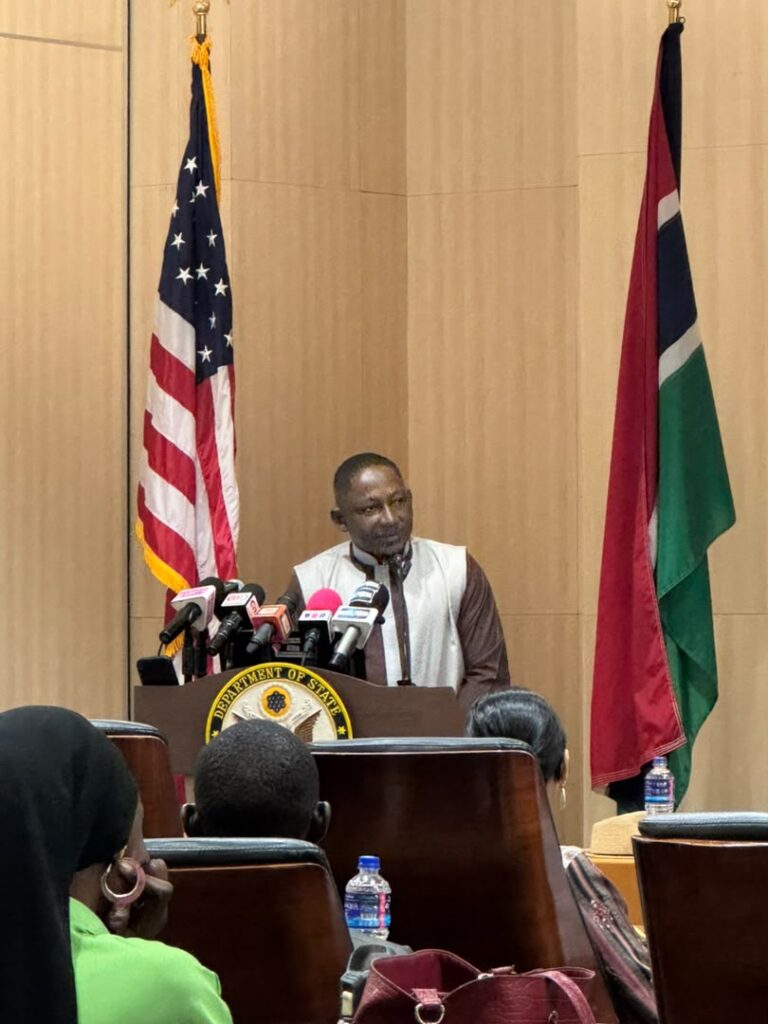
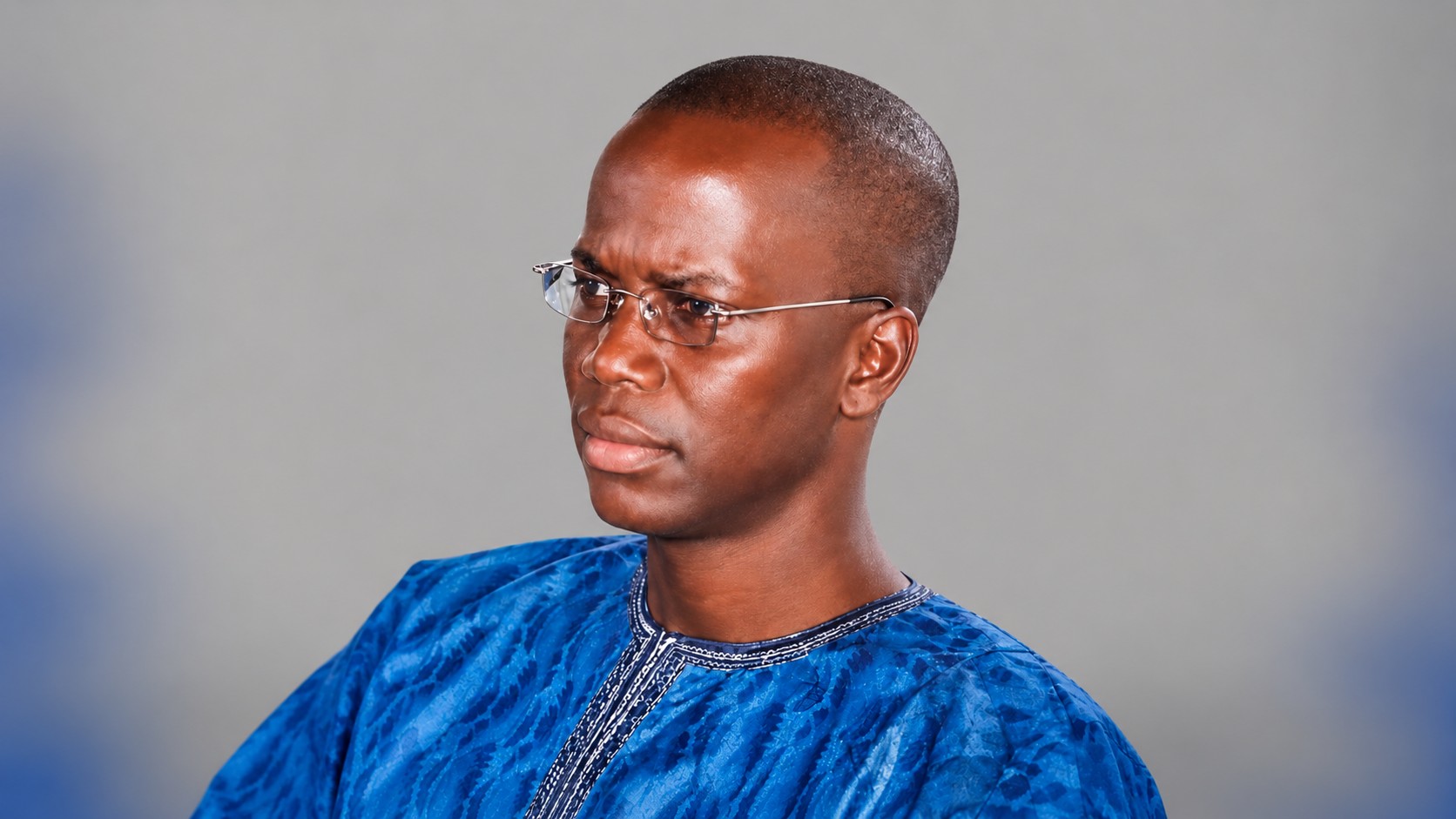
Addressing the audience, The Gambia’s Minister of Information, Dr. Ismaila Ceesay, underscored the transformative power of media exchanges and reflected on the dramatic shift in the nation’s press freedom landscape over the past two decades.
“Today’s event is much more than a gathering of media professionals; it is a celebration of ideas, it is a knowledge exchange, it is about professional growth, but most importantly, it is about our shared belief that a free, independent, and responsible press is essential to every thriving democracy,” Dr. Ceesay stated.
Highlighting the modern challenges facing the media, Dr. Ceesay noted that technological evolution requires stronger analytical and ethical skills. “Social media has democratised access to information while simultaneously creating fertile ground for misinformation, disinformation, and hate speech,” he said.
“These realities demand journalists who are not only skilled writers and storytellers but also critical thinkers, ethical professionals, fact-checkers, and defenders of truth.”
Drawing a stark contrast with the country’s past political era, Dr. Ceesay highlighted the government’s current stance on media freedom: “You would agree with me that journalists were an endangered species 15, 20 years ago because they were targeted, they were seen as a threat to autocratic rule. Today, I can boldly say that no single journalist is in prison serving time for doing his or her job… today no journalist is arbitrarily arrested in this country for doing his or her job, but also no journalist has been forcefully disappeared.”
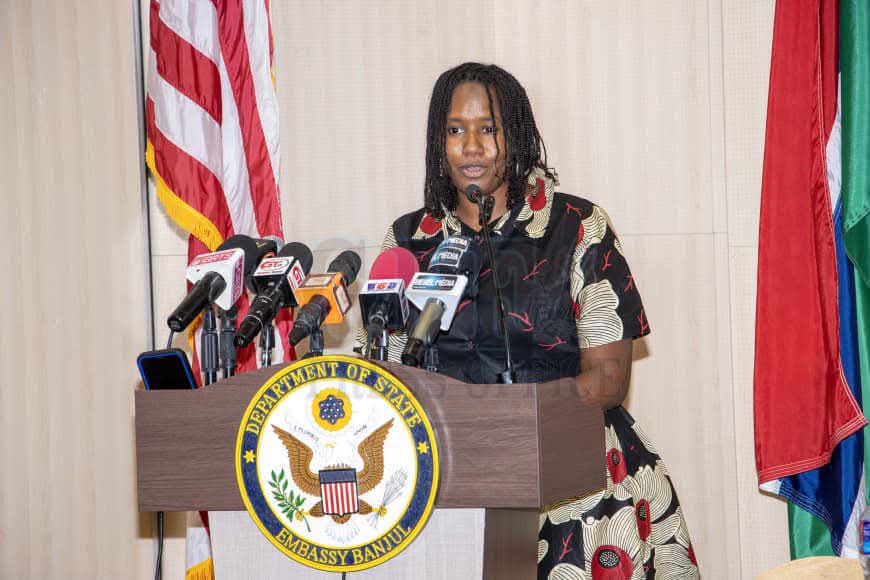
Delivering remarks on behalf of Gambia Press Union (GPU) President Isatou Keita, GPU Program Officer Juldeh Njie expressed gratitude for the continued support of Gambian media professionals while reinforcing the GPU’s commitment to an independent press.
“In an era marked by rapid technological change, information disorder, and growing public demand for accountability, the role of journalists has never been more important,” Njie stated. “Strong democracies rely on informed citizens, and informed citizens rely on a media sector that is professional, ethical, independent, and committed to the truth.”
Njie noted that global exchanges directly enhance the quality of domestic journalism. “Exposure to global best practices enrich reporting skills, strengthen ethical standards, and broaden perspectives on issues that are increasingly global in nature, from migration, elections, to governance, climate change issues, and youth engagement,” she highlighted.
The forum also provided a platform for recent FPC alumni to share their experiences covering key issues in the US. Also present at the event were representatives from the National Human Rights Commission, The Gambia Police Force, and various media outlets from across the country.
The Foreign Press Center reporting tours form a key component of the U.S. Department of State’s Bureau of Global Public Affairs, which operates primary facilities in Washington, D.C., and New York City. First established in 1946 to support foreign correspondents covering the early United Nations, the program aims to deepen international understanding of American democratic institutions, policy, and society by providing foreign reporters with direct access to authoritative sources. Through fully funded thematic tours, international journalists travel throughout the United States to examine critical issues ranging from civic governance and trade to security and environmental policy, operating under complete editorial independence to bring factual, high-standard reporting back to their home newsrooms.