
 11
11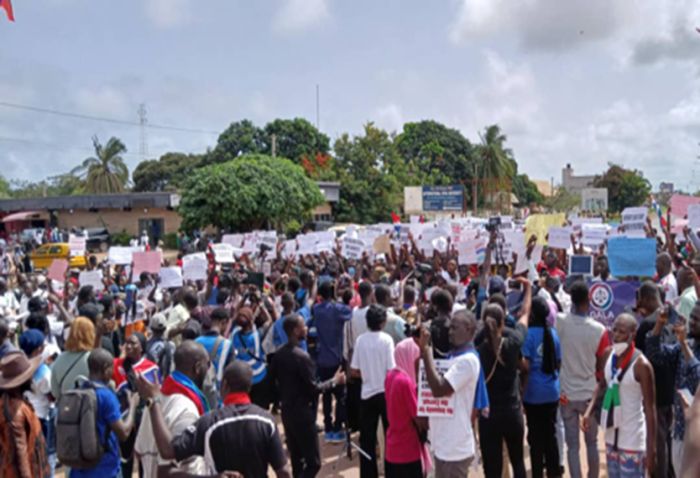
By Alieu Jallow
A new survey by research group CepRass has revealed sharp contrasts in The Gambia’s civic space, showing that while freedoms of association and protest enjoy overwhelming public support, young people are widely seen as lacking influence in national affairs.
Only 39% of respondents believe youth have meaningful opportunities to express their views, compared to 56% who say those opportunities are restricted or absent. Regional differences are notable, with Mansakonko, Basse and Kuntaur showing more confidence in youth participation, while Kerewan, Brikama and Banjul reflect deep scepticism.
By contrast, 92% of Gambians say citizens are free to join political parties or organisations, making freedom of association one of the strongest indicators of civic openness. Protests also enjoy legitimacy, with 71% of respondents viewing recent youth-led demonstrations as justified.
However, government and police responses to protests drew heavy criticism. Just 13% said authorities handled demonstrations well, while 71% rated their response badly. The police fared worse, with 75% saying they handled protests poorly.
On media freedom, 74% believe journalists are free to cover political issues, but only 32% trust state-owned media to report fairly, with nearly half describing it as biased.
The survey paints a picture of civic space marked by contrasts: freedoms are broadly recognised, but youth voices remain constrained and trust in institutions is low. Analysts say strengthening youth participation, improving protest management, and rebuilding confidence in media and policing will be key to making civic space genuinely inclusive.