
 11
Written by: Seringe S.T. Touray
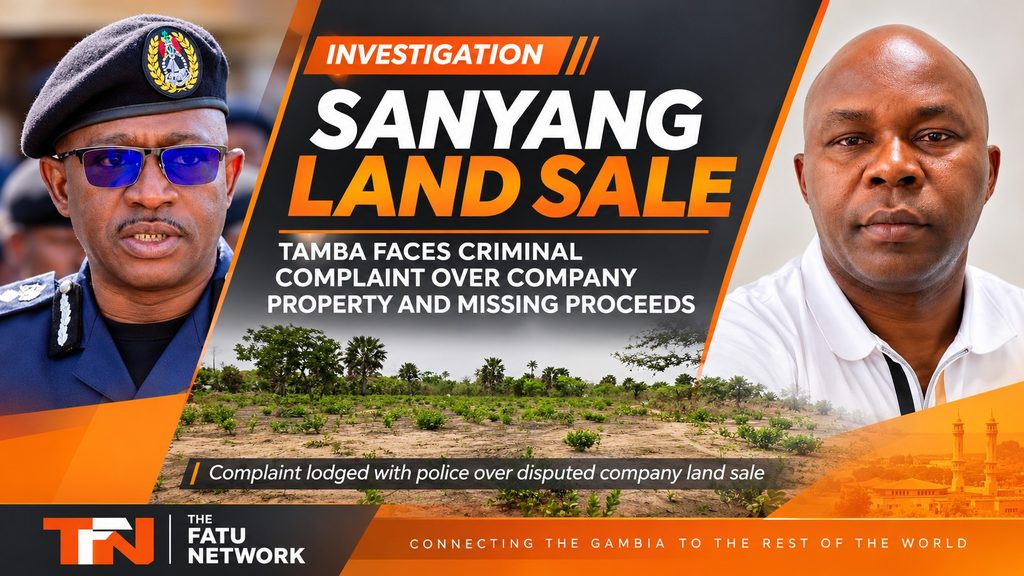
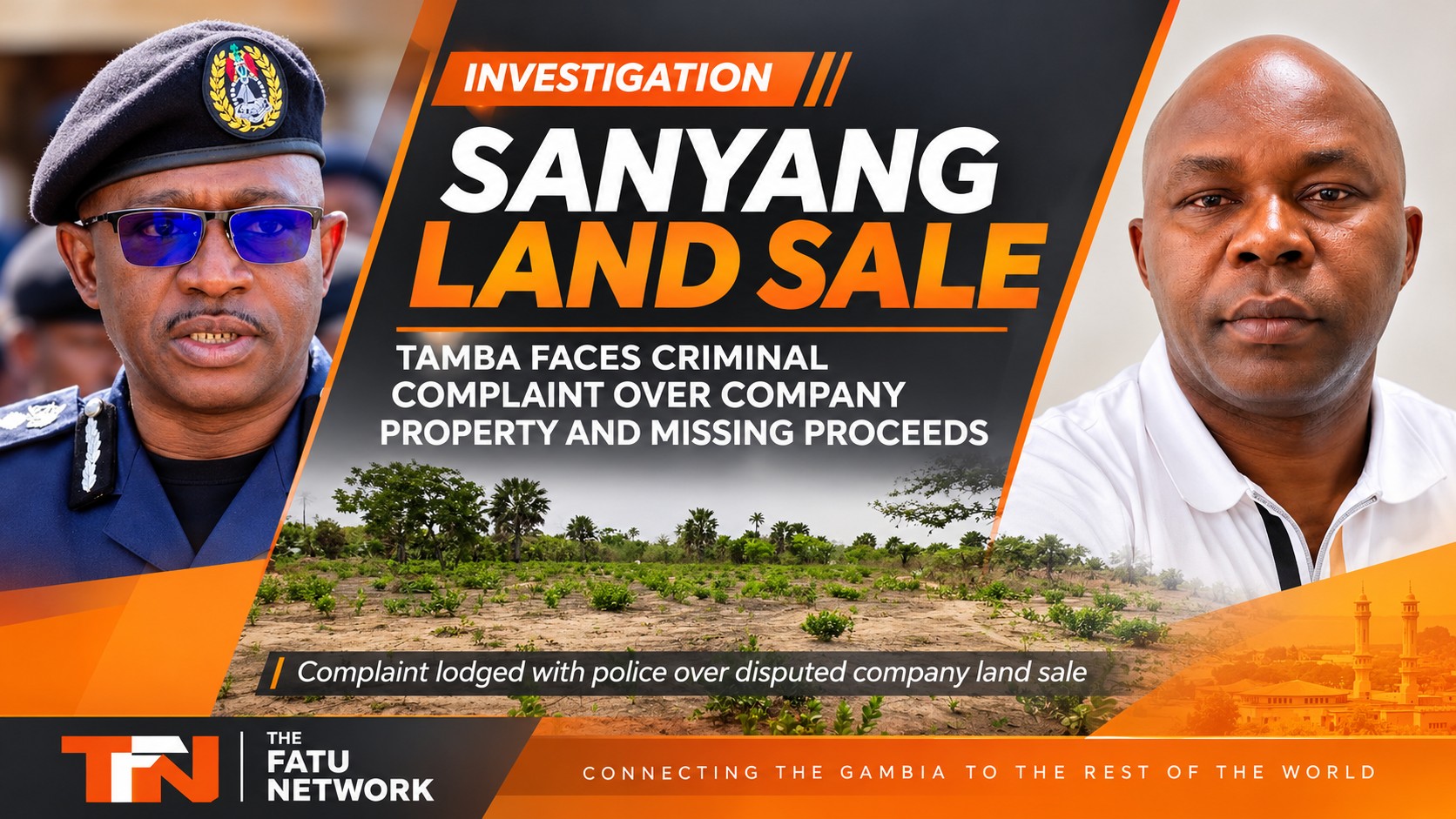
Gambian businessman Ebrima Solomon Tamba is facing another criminal complaint from his former Austrian business partner, Manuel Stofleth-Mitterer, this time over the sale of land in Sanyang and what happened to the money from the transaction.
The complaint concerns MASThave Real Estate Company Limited, a company established in August 2022 and owned equally by Manuel and Tamba, with each holding 50 per cent. Manuel alleges that land belonging to the jointly owned company was sold by Tamba without his knowledge or approval, while the proceeds cannot be identified in the company’s available financial records.
The matter forms part of the wider dispute involving Manuel and his wife, Angelika Stofleth-Mitterer, Tamba and Dutch investor Marcel van Andel. The same former business partners are also involved in the dispute over The Edge Apartments and the unfinished Bitcoin Tower development in Bijilo.
At the centre of the latest complaint is a Sanyang land sale completed in October 2024.
In written correspondence seen by The Fatu Network, the buyer, Amadou C., confirmed that he purchased the land from Tamba. The documents presented by Manuel identify the property as belonging to MASThave Real Estate Company Limited.
The events leading to the transaction are central to Manuel’s complaint.
During 2024, Tamba told Manuel that he needed money and wanted to sell a plot of land in Sanyang. Tamba also owned private property in the area, so Manuel understood that he intended to sell one of his personal plots.
Manuel then introduced Tamba to Amadou C., an electrician who had previously worked for him.
After the introduction, Tamba and Amadou dealt directly with each other. Manuel told The Fatu Network he was not involved in the final negotiations, did not agree on the purchase price, did not sign a sale agreement and did not authorise the sale of company property.
The transaction was completed in October 2024.
On October 22nd, Amadou transferred D200,000 to Manuel. Manuel describes the payment as a voluntary thank-you for introducing him to Tamba, rather than part of the purchase price for the land.
According to the information available to Manuel at the time, the remaining purchase price was paid in cash to Tamba.
Manuel later obtained information indicating that the sale agreement may have been prepared in the name of MASThave Real Estate Company Limited and signed by Tamba alone. The complete executed agreement has not been provided to him.
For Manuel, the issue is straightforward: he says he introduced a buyer believing Tamba was selling his own land, only to later discover that the transaction concerned property belonging to their jointly owned company.
He maintains that, as the other 50 per cent shareholder, a director and company secretary, he neither approved nor signed the sale.
WHO RECEIVED THE MONEY FROM THE SANYANG SALE?
The financial records add another serious issue.
MASThave’s audited financial statements for the year ending December 2025 contain no identifiable entry for the Sanyang sale or the proceeds from it.
The available company accounts likewise do not show identifiable income from the transaction.
Despite written requests for the relevant records, Manuel says he has not received the complete sale agreement, transfer documents or a full accounting of the purchase price.
On October 1st, 2026, Manuel wrote to the buyer, Amadou C., requesting the signed sale agreement, purchase price, payment records, details of who received the money, government tax receipts and other documents connected to the transaction.
Five days later, a lawyer acting for MASThave also formally requested documents relating to the sale.
The full purchase price and the final destination of all the money have still not been established from the records available to Manuel.
The transaction also connects to a separate financial dispute between Manuel and Tamba.
Tamba previously received a personal loan of €165,000 from Manuel under a signed promissory note. Manuel later declared him in default after the agreed repayment deadlines passed and is now seeking to enforce the debt through the courts.
Tamba has publicly confirmed receiving the €165,000 loan.
Manuel says no repayment was made from the money Tamba received from the Sanyang land sale. The land transaction and the €165,000 debt are separate matters, but Manuel points to the sale because Tamba had told him he needed money before disposing of the property.
A D15,000 TAX PAYMENT IN THE COMPANY’S NAME
The complaint also focuses on a D15,000 cash payment made to the Gambia Revenue Authority on July 14th, 2025.
The payment was recorded as capital gains tax in the name of MASThave Real Estate Company Limited.
The GRA receipt contains the company’s name and tax identification number, but it does not identify the person who made or authorised the payment. It also does not state which property the tax related to.
The complaint therefore asks police to obtain the underlying tax declaration and establish whether the D15,000 payment was connected to the Sanyang sale, who arranged it and on whose authority.
The timing is also significant.
Five days earlier, on July 9th, 2025, the High Court had issued an interim injunction against Tamba in separate proceedings involving the company’s business operations. The order remained in force when the capital gains tax payment was made.
Whether the tax payment was connected to the Sanyang transaction, who arranged it and whether any action breached the court order are matters Manuel wants investigators to establish.
FROM ACCUSATIONS AGAINST THE AUSTRIANS TO COMPLAINTS AGAINST TAMBA
Manuel and Angelika are Austrian investors who spent years developing businesses in The Gambia, including The Edge Apartments and the 18-storey Bitcoin Tower in Bijilo, alongside other ventures.
Their business relationship with Tamba and Marcel van Andel later broke down over company shares, money and control of their joint projects.
Tamba subsequently made serious allegations against Manuel and Angelika, including claims involving company funds, apartment sales and financial records.
The Austrian couple denied the accusations.
Police investigations followed, along with arrests, the seizure of their passports and electronic devices, travel restrictions and months of criminal proceedings.
In June 2026, Principal Magistrate Muhammed Krubally acquitted Manuel and Angelika of the charge of disobeying a lawful order after finding that the prosecution had not presented enough evidence to even require them to defend themselves. The court also ordered the return of their passports and other seized property.
Police later appealed aspects of that ruling.
Manuel and Angelika have since filed complaints of their own and submitted contracts, payment records, audited financial statements, court documents and written correspondence in support of their allegations.
The Sanyang land transaction is now one of the matters they want the authorities to investigate.
WILL THE SAME STANDARDS APPLY TO EVERYONE?
In the latest complaint, Manuel is asking the Inspector General of Police to investigate the Sanyang sale and establish who legally owned the property, whether Tamba had authority to sell it, what agreement was signed, who received the purchase price and why the proceeds do not appear in the available company records.
He also wants investigators to establish whether the D15,000 capital gains tax payment was connected to the transaction and who authorised it.
The complaint identifies possible criminal offences for investigation, including the suspected unauthorised disposal of company property, possible misappropriation of sale proceeds, false representations and the possible concealment of corporate records.
These are allegations requiring investigation and are not findings of guilt.
For Manuel and Angelika, the issue is whether the complaints and documents they have now submitted will receive the same level of police scrutiny previously applied to allegations made against them.
The Sanyang case presents specific records that investigators can examine: the land documents, sale agreement, purchase price, payment records, company accounts, tax documents and correspondence with the buyer.
Those records should establish what was sold, who had authority to sell it, who received the money and how the transaction was accounted for.