
 11
11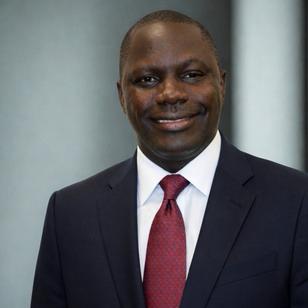
OPINION
By Alagie Sanyang
MSc, Columbia University, New York
as4112@columbia.edu
It is understandable that any major presidential appointment made during an election year will generate debate. Every public official, including the Chief Justice, must be open to legitimate public scrutiny. What is unacceptable, however, is for that scrutiny to be based on speculation, personal attacks, misleading claims or allegations presented without credible evidence.
To My Brother Nanama Keita
My brother Nanama, I read your commentary with serious disappointment. To portray Mr. Edi Faal as a financial opportunist returning to The Gambia merely to retire at the expense of struggling Gambian taxpayers is deeply unfair and unsupported by the facts and law.
As a member of the United States Armed Forces, you represent sacrifice and service to a nation. You accepted the responsibility of putting your life at risk in the service of your country not simply for financial gain. You also know that your skills, discipline and experience could potentially earn you considerably more in the private sector. Public service, therefore, cannot always be reduced to money or stage in life.
It is particularly ironic to criticize Mr. Faal for spending his productive years abroad when you, too, are dedicating your youth, energy and service to a country other than The Gambia. Gambians in the diaspora should not be condemned for returning home to serve simply because they built successful careers overseas.
If your principal objection to Mr. Faal’s appointment concerns his possible retirement benefits, then the discussion must begin with the law and the applicable pension regulations—not assumptions, speculation or exaggerated figures.
Mr. Faal will be 72 years old by the end of this year. He does not qualify for the pension package being publicly attributed to him, and he does not need it. It is unreasonable to demand that he publicly renounce benefits to which he is not entitled in the first place. https://nawatch.org/wp-content/uploads/2024/06/Final-Judicial-Officers-Bill-2023.pdf
You also described him as an unknown lawyer without a website, email address or visible online presence. A lawyer’s professional standing is not determined by the quality of his website, the size of his social media following or how easily his name appears in an internet search.
I refer you to the 1993 Los Angeles Times article titled “Faal Emerging From Denny Case as Rising Legal Star.” The article provides a glimpse of what Mr. Faal had already accomplished as a 39 year old lawyer. It also records the recognition he received from Johnnie Cochran, one of the most prominent criminal defence attorneys of his generation. Faal Emerging From Denny Case as Rising Legal Star – Los Angeles Times
Before dismissing Mr. Faal as an unknown lawyer, his critics should examine his actual legal record, courtroom experience and professional reputation.
It has also been stated publicly by presidential aspirant Jaiteh, who previously worked with Mr. Faal, when Mr. Faal provided pro bono legal assistance to The Gambia’s mission at the United Nations. Mr. Jaiteh further stated that Mr. Faal’s professional billing rate was approximately US$800 per hour—
At that rate, only a few hours of private legal work could exceed the monthly income attached to The Chief Justice positions in The Gambia.
Against that background, the suggestion that a successful lawyer with substantial professional experience and property interests across several continents would abandon his established life merely to pursue a salary of less than US$5,000 per month and a pension for which he does not qualify is absurd.
My brother Nanama, please continue to serve and allow others the opportunity to serve as well. Question public appointments. Examine qualifications. Demand accountability. Challenge the law where necessary. That is your right as a citizen.
However, criticism should not descend into character assassination.
For the record, Mr. Faal’s connection to public service in The Gambia did not begin with this appointment. Before developing his legal career abroad, he previously worked with the Department of Social Welfare and the Attorney General’s Chambers.
To the Gambia Bar Association
The Gambia Bar Association also has serious questions to answer.
When the Association submitted its concerns to the Judicial Service Commission, it publicly informed its membership and the wider Gambian public. Why, then, was the Judicial Service Commission’s response not given the same level of publicity?
If the Association is genuinely committed to transparency, its members and the public should be allowed to examine both the original objection and the Commission’s response.
It must be remembered that the Judicial Service Commission is the constitutionally established body responsible for advising the President on judicial appointments, including the appointment of the Chief Justice.
The Commission was headed by former Chief Justice Hassan B. Jallow, one of the country’s most senior and respected legal figures and a longstanding member of the Gambian Bar. The Commission reportedly voted unanimously in favour of Mr. Faal’s appointment.
That fact cannot simply be ignored because it does not support the position of a small but vocal group.
The Bar Association must also avoid allowing the views of a minority to be presented as the unanimous position of the entire Gambian legal profession. If a formal vote of the Association’s full membership was conducted, the results should be published. If no such vote was held, that should also be disclosed.
To the Gambia Bar Association—or should I say the vocal five per cent—when you wrote to the Judicial Service Commission, you immediately informed your members and the public. Why did you not similarly circulate the Commission’s response?
Transparency cannot be selective. You cannot publicize the accusation and conceal the answer.
I have also received reports that certain journalists and social media commentators were approached and encouraged to publish hostile material against Mr. Faal. Most reportedly refused because they did not wish to participate in what they believed was a coordinated campaign of character assassination.
Those involved should understand that the reputation of an individual should not be destroyed simply because a legal or political disagreement exists.
The Gambia Bar Association should focus on its legal challenge, present its constitutional arguments before the appropriate institutions, disclose the Judicial Service Commission’s response and allow the courts and the Gambian public to consider the facts.
It should stop the personal attacks and character assassination.
No individual is above scrutiny—not the President, not the Chief Justice and not the Gambia Bar Association. But scrutiny must be honest, evidence based and respectful of the reputation and dignity of everyone involved.
Public accountability is essential. Character assassination is not.
The views expressed in this article are the author’s own and do not necessarily reflect The Fatu Network’s editorial stance.