
 11
11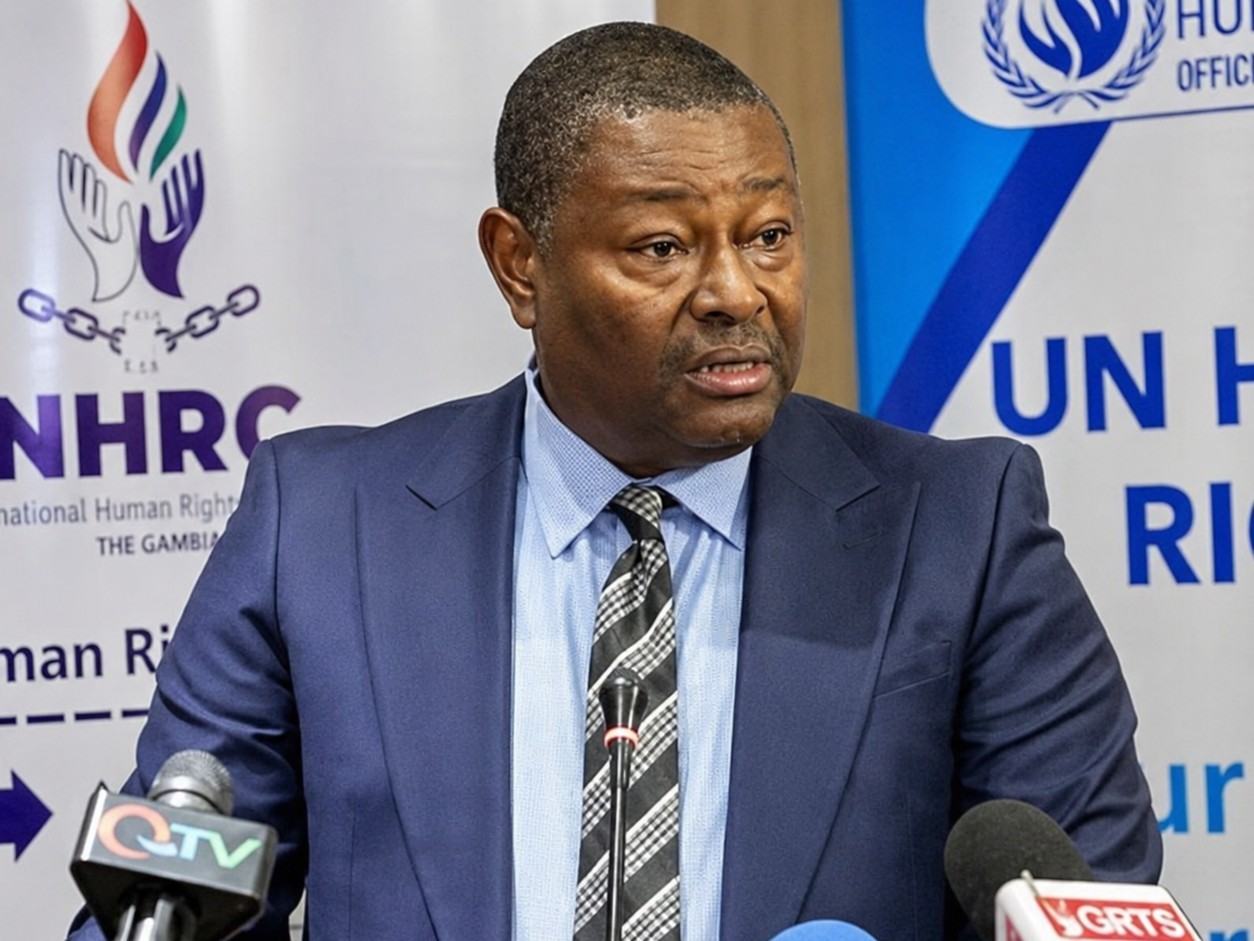
Written by: Alieu Jallow
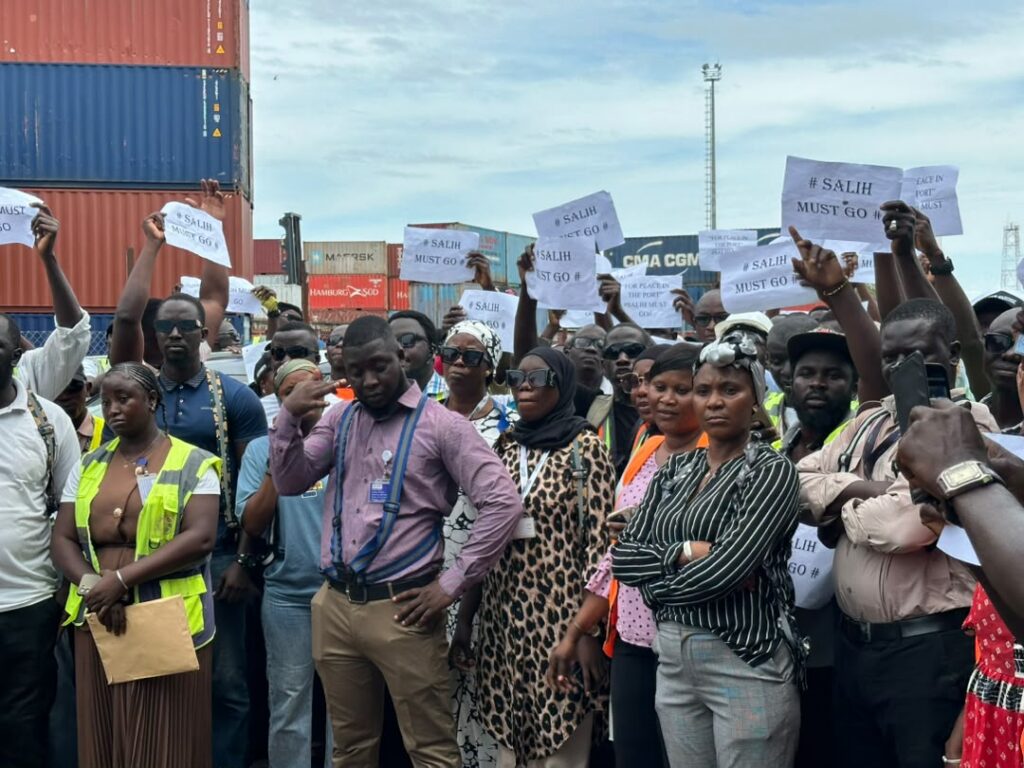
As debate intensifies over the arrest of protesters in recent demonstrations, the National Human Rights Commission (NHRC) has renewed its call for the Government to replace the current permit requirement for public assemblies with a notification system, arguing that the reform is necessary to better protect the constitutional right to peaceful assembly.
In its 2025 Annual State of Human Rights Report, the Commission urged the Ministries of Interior and Justice to amend Section 5 of the Public Order Act, describing the recommendation as part of its longstanding position that The Gambia’s legal framework should be aligned with national, regional and international human rights standards.
Under the current law, organisers of public assemblies are required to obtain a police permit. The NHRC argues that replacing this with a notification system would allow authorities to prepare for demonstrations without making police approval a precondition for exercising the right to peaceful assembly.
According to the report, The Gambia experienced several public protests during the period under review, organised mainly by civil society organisations and youth groups. The demonstrations centred on governance, accountability, corruption, economic regulation and constitutional reform.
“The NHRC observed that State authorities adopted both facilitative and restrictive approaches to public assemblies, with implications for the exercise of the right to freedom of peaceful assembly as guaranteed under Section 25(1)(d) of the 1997 Constitution and relevant regional and international human rights instruments ratified by the State,” the Commission stated.
While acknowledging an increase in the number of protest permits granted during the reporting period, the Commission stressed that recognising the right to peaceful assembly places a corresponding obligation on the State to respect and guarantee that right without discrimination.
“The Gambia should consider amending Section 5 of the Public Order Act to replace the permit requirement with a notification requirement,” the report recommends.
The Commission also urged the Gambia Police Force to ensure that any use of force during public assemblies, as well as restrictions imposed on demonstrations, complies with the principles of legality, necessity and proportionality, in line with the African Commission’s Guidelines on Freedom of Association and Assembly. Those guidelines state that legal frameworks governing public assemblies should primarily facilitate, rather than restrict, the exercise of these rights.
The NHRC cited several demonstrations held in 2025 to illustrate differing police responses to public assemblies.
Among them was the protest organised by Gambians Against Looted Assets (GALA), whose permit application was rejected by the Inspector General of Police on 7 May 2025. Despite the refusal, protesters proceeded with the demonstration on 8 May, demanding greater transparency and accountability in the management of former President Yahya Jammeh’s assets. Police dispersed the protest, arrested at least 12 people, including journalists, and charged them with offences relating to unlawful assembly.
The report also referenced the 22 August 2025 protest outside the Public Utilities Regulatory Authority (PURA), where youth activists and civil society organisations demonstrated against the introduction of a mandatory internet data price floor. Police dispersed the protesters and arrested 23 people, who were subsequently charged with unlawful assembly. The matter remains before the Kanifing Magistrates’ Court, while civil society groups questioned the necessity and proportionality of the police response.
In contrast, the Commission noted that an unauthorised protest organised by members of the United Democratic Party (UDP) on 23 August 2025 outside the Independent Electoral Commission and along the Bertil Harding Highway proceeded without interruption. Although no permit had been granted, police maintained order and facilitated the demonstration.
The NHRC further cited the events of 15 September 2025, when members of GALA held an impromptu press briefing outside the National Audit Office following the removal of Auditor General Modou Ceesay after President Adama Barrow appointed a new Auditor General. Police dispersed the gathering and arrested about four youths, who are currently facing charges of unlawful assembly.
According to the Commission, the incident reflected concerns previously documented in its 2024 State of Human Rights Report regarding the denial of permits and the forceful dispersal of assemblies under the Public Order Act, raising questions about fairness, equality and non-discrimination in the law’s application.
The report also highlighted examples where assemblies were peacefully facilitated by law enforcement. On 23 July 2025, a protest in Westfield received police approval and concluded without arrests. Similarly, in November 2025, the Coalition of Progressive Gambians (CoPG) obtained a permit to demonstrate in Banjul in support of reinstating the 2020 Draft Constitution, with the protest taking place peacefully under police supervision.
Overall, the NHRC observed that public demonstrations in 2025 reflected increasing civic engagement, particularly among young people. While some protests were facilitated, others resulted in restrictions, arrests and detentions.
The Commission concluded by reiterating that any use of force during public assemblies, and any limitations placed on the right to peaceful assembly, must strictly comply with the principles of legality, necessity and proportionality under national law and international human rights standards.