
 111
111 2
2 3
3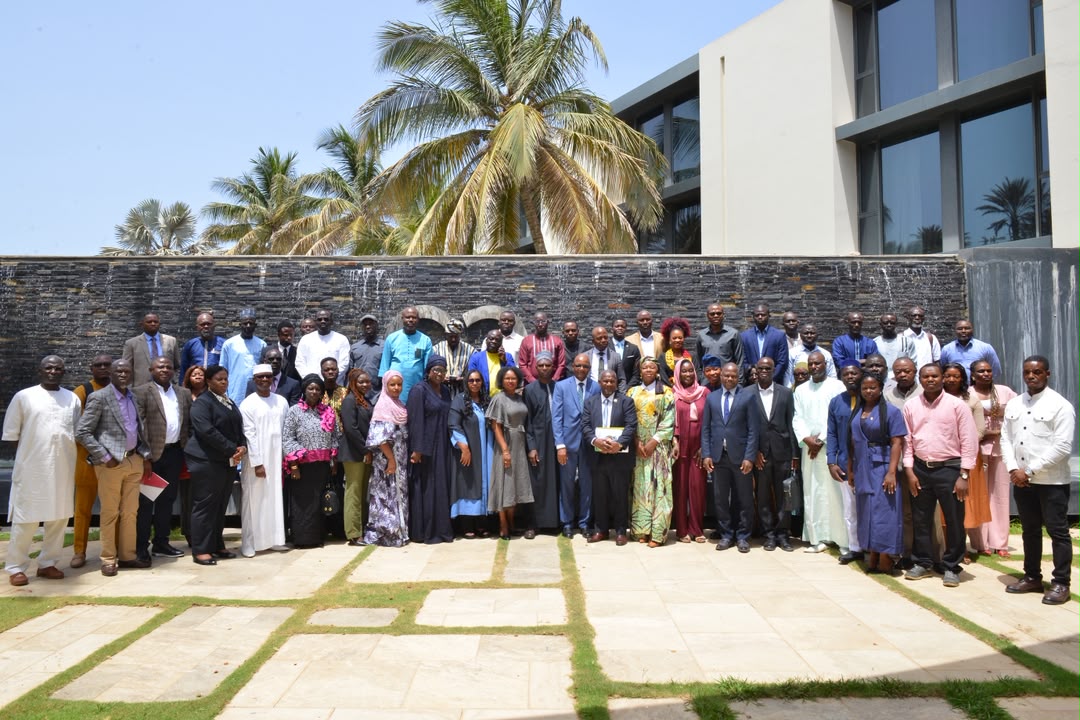
By: Dawda Baldeh
West Africa’s fight against money laundering, terrorist financing and the proliferation of weapons of mass destruction remains one of the region’s most urgent security and economic challenges, speakers warned at the Inter-Governmental Action Group against Money Laundering in West Africa (GIABA Annual Briefing for Ambassadors, ECOWAS officials and development partners in Dakar.
The high-level meeting, which featured the public presentation of GIABA’s 2025 Annual Report, highlighted the institution’s achievements while acknowledging that significant gaps remain as ECOWAS member states prepare for a new cycle of mutual evaluations.
Opening the session, organisers described the annual briefing as an important platform for transparency and accountability.
“This session is extremely important for the organisation to brief Your Excellencies on our activities, progress and challenges,” the master of ceremonies said while welcoming diplomats, technical experts and development partners.
Delivering the keynote welcome on behalf of Senegal’s Financial Intelligence Unit, Babacar Amadou Diagne warned that illicit financial flows continue to undermine regional stability and security.
“The fight against money laundering, terrorist financing and the proliferation of weapons of mass destruction remains more than ever a major issue for the stability of our economies and the security of our populations,” Diagne said.
He reaffirmed Senegal’s commitment to combating financial crime through closer collaboration with GIABA and international partners.
“Senegal… remains fully engaged in this fight in close collaboration with GIABA and all the national, regional and international institutions concerned.”
Diagne also stressed that while progress has been made, the region cannot afford complacency.
“The presentation of the GIABA Annual Report 2025 offers the opportunity to draw up an objective assessment of the achievements we have made, but also to identify the persistent challenges and the efforts that remain for us to accomplish collectively.”
A major concern raised during the briefing was the commencement of the third cycle of mutual evaluations, regarded as a defining moment for ECOWAS member states.
Diagne revealed that Senegal has already entered the assessment process.
“Senegal has been involved since December in the third evaluation, and exchanges have already started with GIABA.”
The evaluations are expected to measure countries’ compliance with international standards on anti-money laundering and counter-terrorism financing, with implications for investment, banking relationships and regional credibility.
Officials said the 2025 Annual Report demonstrates GIABA’s continued efforts to strengthen anti-money laundering systems across West Africa.
According to the organisers, the institution expanded awareness campaigns, technical assistance, specialised training, risk assessment and research throughout the region.
“GIABA has demonstrated our commitment to delivering quality services to Member States,” organisers said.
The organisation noted that its work included building countries’ understanding of financial crime risks, producing typology reports and strengthening national capacities to detect and prevent illicit financial activities.
The ECOWAS Centre for Gender Development used the platform to underscore the importance of women’s empowerment in strengthening governance and reducing financial crime.
Representing the Centre, Salimata Cham explained that gender equality is increasingly recognised as part of broader efforts to promote transparent and resilient institutions.
“Our mission is to transform West Africa into a just and safe community in which women and men can participate, decide, control and benefit from all development initiatives.”
Cham outlined several flagship programmes, including initiatives supporting girls’ education, women’s reproductive health, economic empowerment and peacebuilding.
She also announced that the Centre is developing a regional action plan to combat gender-based violence while expanding digital systems to monitor gender indicators across ECOWAS member states.
“With GIABA, we have an annual activity that we carry out every year to fight against money laundering and see how women can contribute to this agenda,” she said.
Cham also highlighted a continental digital platform supporting more than one million women entrepreneurs by providing access to financial information, business opportunities and employment resources.
Throughout the meeting, speakers repeatedly acknowledged that no single country can effectively tackle financial crime alone.
Participants emphasised the importance of sustained cooperation among governments, financial intelligence units, development partners and regional institutions as organised crime networks become increasingly sophisticated.
As West Africa confronts evolving security threats and illicit financial flows, the message from Dakar was clear: regional cooperation, stronger institutions and continued investment in prevention remain essential to safeguarding the region’s economies and citizens.


