
 11
11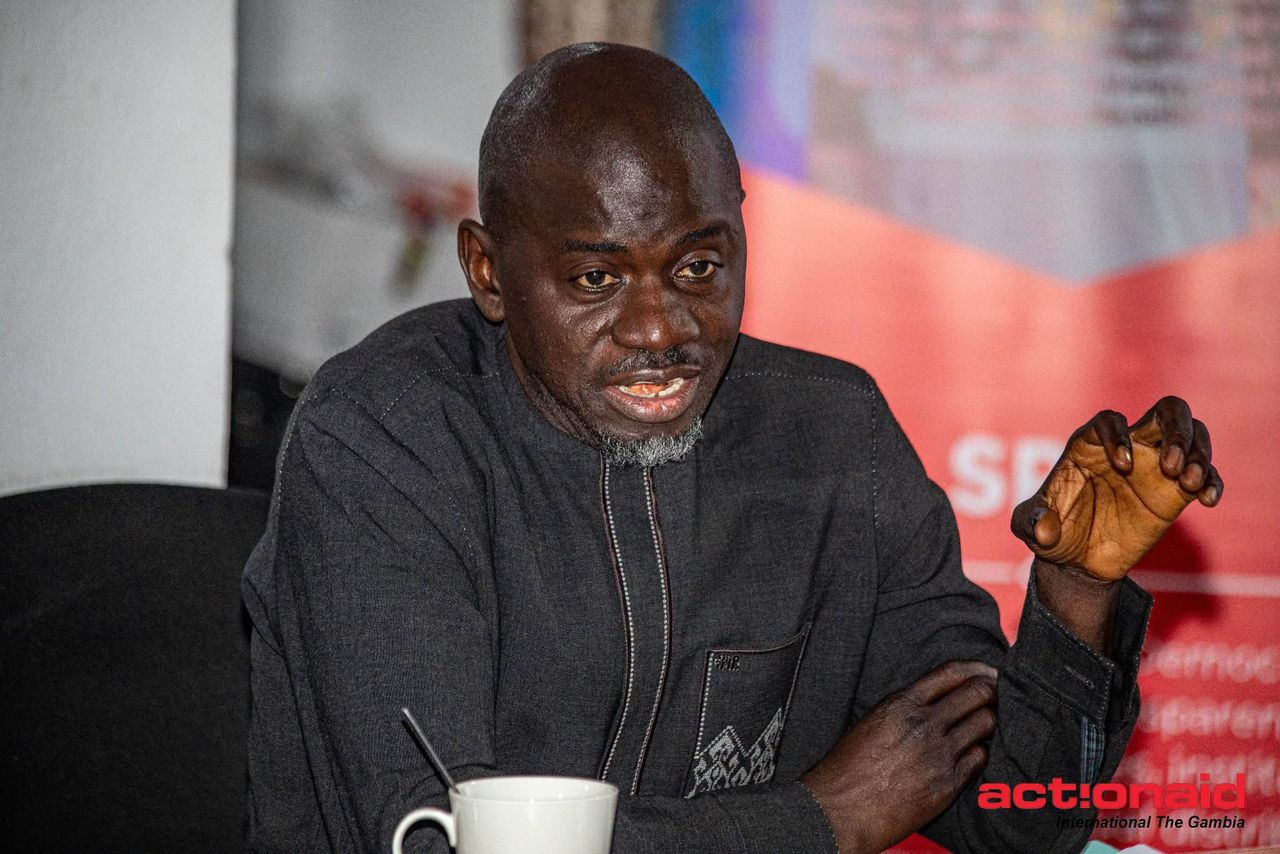
Written by: Alieu Jallow
The outgoing Board Chairperson of ActionAid International The Gambia (AAITG), Ousman Badjie, has called for urgent and innovative resource mobilisation efforts as declining child sponsorship funding and increasing competition for donor support continue to threaten development programmes.
Speaking to journalists on the sidelines of ActionAid The Gambia’s 2025 Annual General Meeting (AGM), Mr. Badjie acknowledged the organisation’s achievements over the past year but warned that securing sustainable funding remains one of the most significant challenges facing the development sector.
His remarks come as humanitarian and development organisations worldwide grapple with shrinking donor contributions, shifting funding priorities, and rising humanitarian needs driven by conflict, climate change, and economic uncertainty.
“While we celebrate these achievements, we also recognise the challenges that persist, particularly in resource mobilisation. The continued decline in Child Sponsorship funding, coupled with increasing competition for donor resources, remains a concern for the Board,” Mr. Badjie said.
“We therefore encourage management to intensify efforts to secure sustainable funding and strengthen partnerships to support the successful implementation of CSP VI,” he added.
Mr. Badjie described 2025 as a year shaped by overlapping humanitarian, economic, and climate-related crises that continue to place vulnerable communities under increasing pressure.
According to him, conflicts in Gaza, Sudan, and Ukraine have had severe humanitarian consequences while diverting international attention and resources away from long-term development priorities.
“At the same time, climate-related disasters intensified across many parts of the world, particularly in Africa, leaving millions of people in need of urgent support. These challenges have continued to undermine efforts aimed at empowering people living in poverty and exclusion,” he said.
Despite the challenging funding environment, ActionAid International The Gambia says it has continued to advance human rights, social inclusion, and community development across the country.
The organisation’s Executive Director, Ndella Faye Colley, said ActionAid remains committed to promoting the rights and welfare of vulnerable groups, including women, children, persons with disabilities, and marginalised communities.
“As a human rights organisation, our policy goals are aligned with national development priorities aimed at improving the lives and livelihoods of citizens. The year 2025 presented valuable opportunities for us to reach many communities and target groups in line with our strategic priorities,” she said.
Madam Faye Colley noted that ActionAid’s work extends beyond advocacy to practical interventions that promote inclusion and participation at the community level.
“We are a human rights organisation. We preach rights, but we must also demonstrate them. We have numerous interventions that promote inclusion and participation, targeting women, children, persons with disabilities and marginalised groups, while also supporting access to education and other basic needs,” she explained.
She revealed that the organisation directly reached more than 60,000 people during the reporting period, while its programmes indirectly impacted over 700,000 people nationwide.
Beyond service delivery, Madam Faye Colley said ActionAid continues to challenge social norms and systemic barriers that hinder equality and development.
“At the community level, we are challenging systems and cultures that negatively affect people’s lives. Social and cultural change takes time because people do not easily adapt. There are interventions whose full benefits may not be immediately visible, but we believe this is the right path,” she said.
She added: “Culture has existed for generations and changing mindsets takes time. What is important is that we continue raising awareness and influencing attitudes so that people can better serve one another and uphold the rights and dignity of all.”
With development organisations across Africa facing mounting financial pressures, AAITG’s leadership says sustainable funding and stronger partnerships will be critical to preserving development gains and maintaining support for vulnerable communities.