
 11
11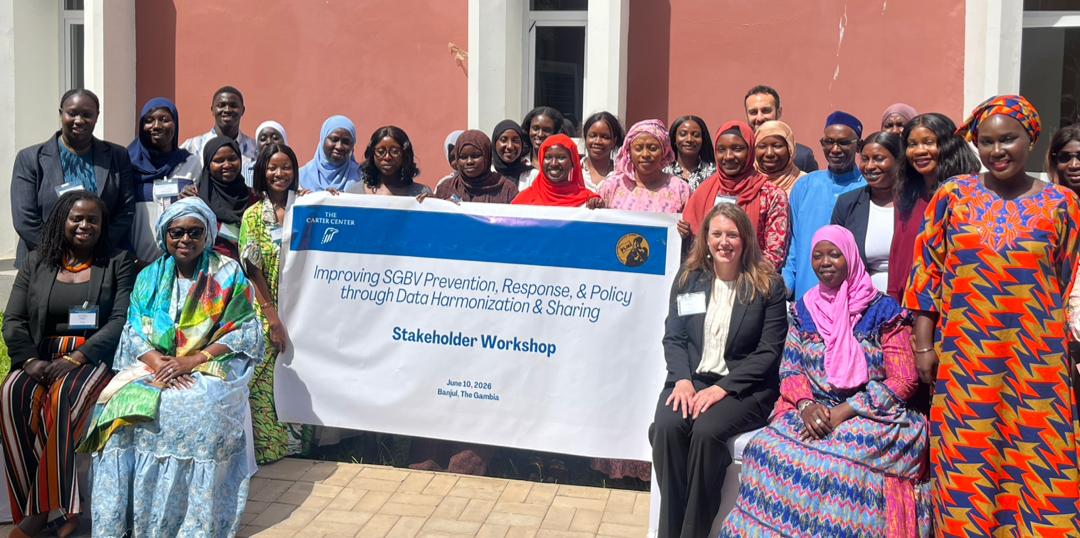
By Alieu Jallow
The Female Lawyers Association of The Gambia (FLAG), working with The Carter Center, has called for stronger legal protections and improved data systems to combat sexual and gender‑based violence (SGBV) and advance gender equality in The Gambia.
The appeal came at a stakeholder workshop on “Improving SGBV Prevention, Response and Policy Through Data Harmonization and Sharing,” which brought together government bodies, civil society, development partners and justice sector actors to discuss how better, harmonised data can strengthen prevention, response and policy.
Despite legislative gains — including the Women’s Act (2010), the Sexual Offences Act (2013) and the Domestic Violence Act (2013) — participants said SGBV remains a serious human‑rights and justice challenge. They highlighted gaps in prevention, survivor‑centred services, referral pathways, access to justice and the availability of reliable data.
A major concern was the fragmented nature of SGBV data collection. Officials said information from law enforcement, the judiciary, health services, and NGOs is gathered using different systems and standards, limiting efforts to understand the scale of violence and coordinate responses. They warned that this undermines evidence‑based policymaking and accountability.
Fatou Kinteh, Minister of Gender, Women and Social Affairs, stressed the need for better coordination. “Yet, in many cases, this data remains fragmented, collected in different ways, stored in separate systems, and not always connected to the wider response framework,” she said. “This is why today’s discussion is both relevant and necessary. What we are exploring is a practical approach to strengthening how all stakeholders collect and use data within their existing roles. Through more harmonized tools, clearer processes, and shared standards, we can improve the consistency and quality of information across the system.”
Stakeholders noted the new Personal Data Protection and Privacy Act, 2025 (Act No. 11 of 2025), which imposes strict rules on handling personal and sensitive information, including data on survivors. They said compliance will require responsible coordination and data‑sharing practices across institutions.
FLAG president Anna Njie reaffirmed the association’s commitment to protecting women and children and described the workshop as a platform for collaboration.
“Today’s workshop provides an opportunity for stakeholders from government institutions, civil society organizations, and other sectors to come together, share experiences, learn from one another, and explore practical ways of strengthening data harmonization,” she said.
The Carter Center shared lessons from its work in Sierra Leone, where it has supported SGBV surveys, service‑provider mapping, harmonised indicators and public data dashboards. Hillary Forden of The Carter Center said the organisation would continue to promote peace, democracy and human rights.
“We at The Carter Center will wage peace, fight disease, and build hope. This is what we seek to do everywhere around the world,” she said.
Participants described the workshop as a step toward a coordinated national framework for SGBV data management. They said stronger data systems, combined with legal reform, public education and sustained advocacy, are essential to improve prevention, enhance survivor support and strengthen accountability across the country.