
 11
11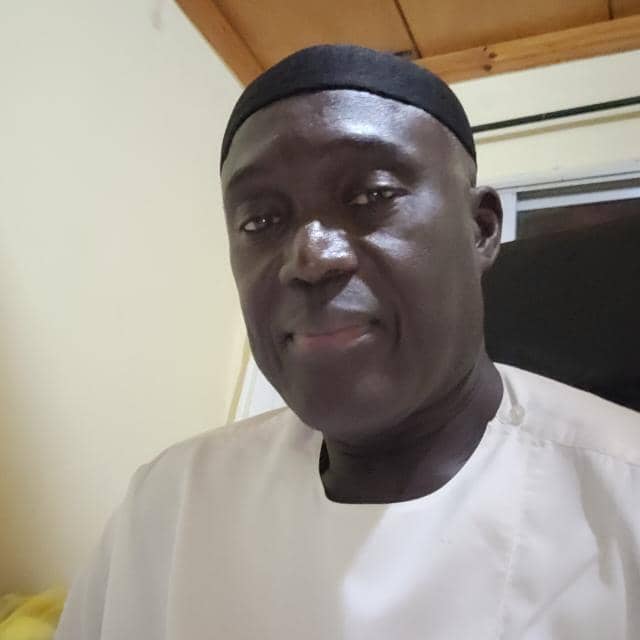
By Dawda Baldeh
Efforts to unite The Gambia’s political opposition ahead of the 2026 presidential election have suffered a major blow following the immediate resignation of Momodou Satou Dibba, Vice Chairperson of the Coalition Mediation Committee (CMC).
Dibba, a retired United Nations senior governance and political affairs official, announced his departure in a resignation letter addressed to CMC Chairperson Prof. Yerro Mballow. He cited irreconcilable differences over the coalition’s leadership structure and decision-making mechanisms.
The core of the fallout centers on how political entities cast their votes during talks to determine whether the coalition should be party-led or candidate-led.
According to Dibba, the mediation committee had recommended a weighted voting system designed to reflect each political party’s size, organizational strength, and past electoral performance. Instead, participating political entities rejected the proposal and adopted a “one-entity, one-vote” mechanism, placing all groups on equal footing regardless of their political weight or track record.
“The CMC advised weighted-voting, which recognises the relative sizes of different political entities, but the majority of the political entities in the talks opted for a one-entity, one-vote mechanism, which pegged all political entities at the same level irrespective of size,” Dibba wrote in his resignation letter.
The adoption of the “one-entity, one-vote” rule subsequently led to the approval of a candidate-led coalition model—a direction Dibba argued undermined the core principles that should govern the alliance.
Although several stakeholders favoring a party-led alliance voiced objections to the voting framework, they initially remained in the dialogue hoping to resolve their differences. However, Dibba indicated that recent developments made further compromise impossible.
“With current developments and state of affairs, and with the one-entity, one-vote mechanism continuing to determine the direction of the Talks, reconciliation is highly unlikely,” he stated.
Declaring that he could no longer participate in a process he no longer believed in, Dibba formally ended his role: “Rather than continuing to engage with a process I do not believe in, I herein respectfully end my role as Member and Vice Chairperson of the CMC with immediate effect.”
While stepping down, Dibba expressed gratitude to his fellow committee members and participating opposition leaders. He reaffirmed his commitment to opposition unity, provided future talks adopt a structure that reflects real political representation.
“I remain available to support any opposition political coalition talks that recognise party size, organisational presence, past electoral performance, and other relevant factors in their negotiations,” he stated.
Dibba’s departure comes at a crucial stage in opposition negotiations and is expected to intensify debate over how the coalition should be governed as parties seek to mount a formidable challenge in the 2026 polls.