
 11
11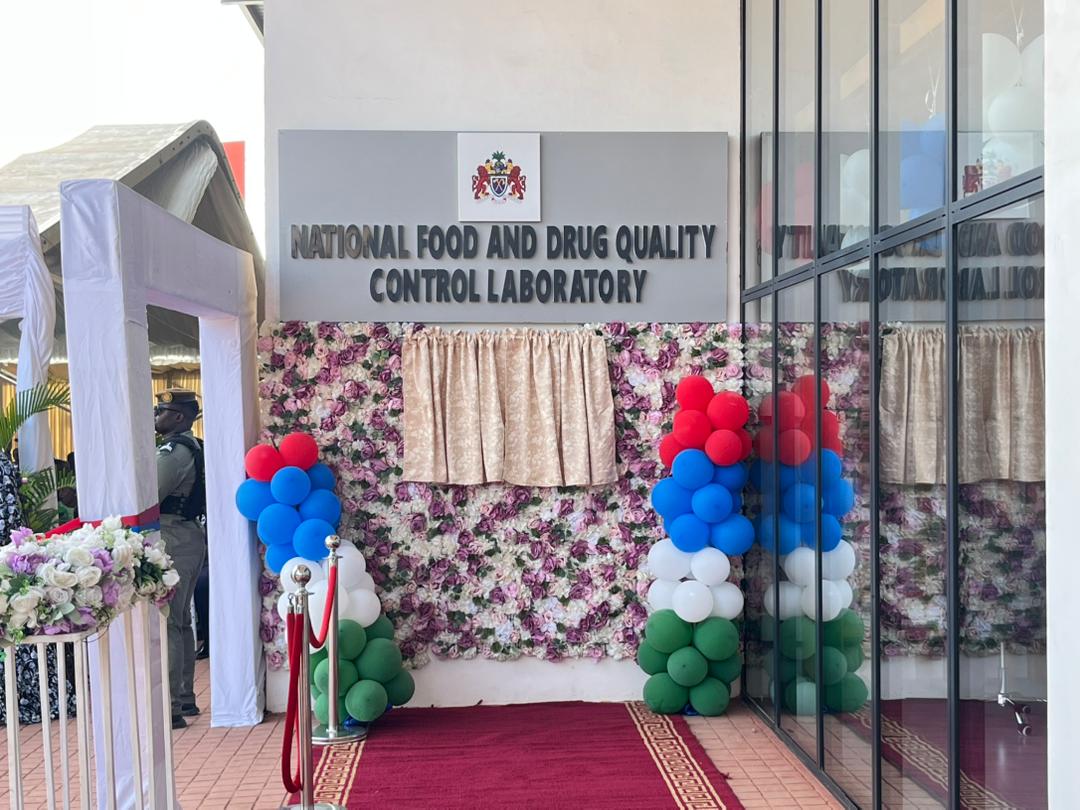
By Alieu Jallow
President Adama Barrow says The Gambia will no longer rely on foreign laboratories to verify the safety of medicines and food as he inaugurates the country’s first National Food and Drug Quality Control Laboratory.
The World Bank‑funded facility will test and certify medicines, food, and other regulated products domestically, shortening delays and cutting costs previously incurred by sending samples overseas.
“No longer will The Gambia rely solely on other countries to verify the safety of our medicines and food. We will test them here, certify them here, and protect the citizens and residents of the country,” Barrow said.
Barrow said the move responds to weaknesses exposed by the 2022 Acute Kidney Injury (AKI) tragedy and pledged the government will not tolerate substandard products. He urged the Health Ministry to secure accreditation, register the lab with the WHO National Control Laboratory Network, and train certified analysts.
“The tragic AKI incident that claimed the lives of our beloved children and shook the nation four years ago exposed major weaknesses in our health system. It painfully reminded us that access to safe drugs is a right, and not a luxury. We have since resolved that Gambians would never again be exposed to a similar tragedy. The investment in this facility is as much the outcome of that resolve as the fulfilment of our promise to the nation. We are proud that, through the World Bank, the laboratory now stands as a public health pillar of resilience, hope, and safety. With these advantages, the Food Safety and Quality Authority, the Medicines Control Agency, and other in-country regulatory bodies will be able to carry out their mandates more efficiently. From now on, we must remove all unsafe food items from our markets and fake medicines from our medical facilities and pharmacies”.
World Bank representatives say the laboratory will strengthen market surveillance, speed regulatory action and help detect substandard and falsified products.
“By establishing and strengthening domestic testing capabilities, countries can reduce dependence on foreign laboratories, shorten turnaround times, improve evidence-based decision-making, and enhance regulatory effectiveness. Building this capacity also strengthens national resilience against health threats, supply chain disruptions, and emerging risks, while fostering sustainable expertise, infrastructure, and self-reliance within the health system,” Matarr Touray said.
Officials say the laboratory will bolster consumer protection, support timely regulatory interventions and boost public confidence in the quality of medicines and food on the Gambian market