
 11
11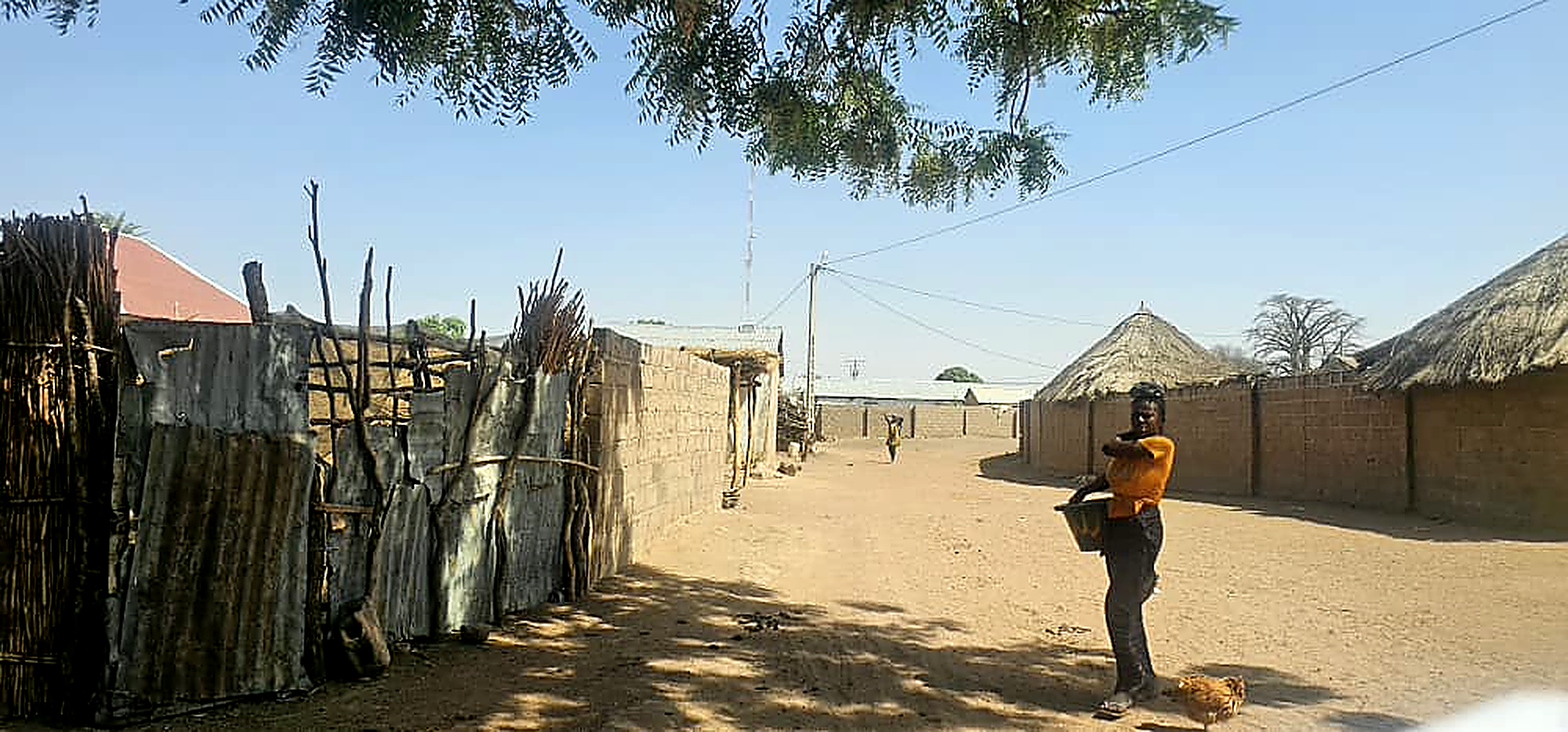
On Friday, 13th March 2026, I visited the quiet border village of Ngunta in Nyanga Bantang Ward, CRR North, where The Gambia meets Senegal. What I witnessed there was more than just an unusual geographical curiosity. It was a powerful reminder of the artificial nature of many African borders and why the dream of African unity remains as relevant today as ever.
In Ngunta, the international boundary does not run through a river or a forest. It runs straight through the village itself. In some compounds, the sitting room is in The Gambia while the bedroom and the outhouse are in Senegal. A person can walk from one room to another and technically cross an international border.
Yet the people living there are the same. They share families, traditions, languages, and daily life. For them, the border is not a cultural reality — it is simply a line imposed from outside.
But the consequences of that line are very real.
On the Senegalese side of the village, electricity flows through homes and compounds. At night, lights glow and life continues with the comfort of power. On the Gambian side, however, darkness falls. Just a few steps away from electricity, families remain without power.
Same village. Same community. Two different realities created by a colonial boundary.
Scenes like this remind us that the borders drawn across Africa during the colonial era were never designed to reflect the lives of the people. They were drawn in distant capitals, often with rulers and pencils on maps, dividing communities that had lived together for generations.
Villages like Ngunta are living proof that Africans were never meant to be separated in the way our modern borders suggest.
This is why the idea of African unity must continue to be part of our political conversation. A stronger, more integrated Africa would mean deeper cooperation between neighboring states, shared infrastructure, coordinated development, and policies that reflect our common interests rather than artificial divisions.
The vision of One Africa is not about erasing nations or identities. It is about recognizing that our strength lies in unity — in working together as a continent with a common purpose.
The Unite Movement for Change believes firmly in the long-term vision of a United Africa — a continent that can coordinate its foreign policy, defend its interests collectively, and unlock its enormous economic potential for the benefit of its people.
Standing in Ngunta, watching a village where a family can live in two countries under one roof, one cannot help but reflect on how superficial many of these borders truly are.
Africa’s future will not be built through division.
It will be built through unity.
One Africa. A United Africa.
Tombong Saidy
UNITE Movement