

 11
11
Written by: Dawda Baldeh
The Gambia is facing an existential climate threat that could see its capital city, Banjul, largely submerged by 2050 if urgent action is not taken, according to a sobering new report launched by the World Bank.
The warning was issued today during the unveiling of the Country Climate and Development Report (CCDR) at the Sir Dawda Kairaba Jawara International Conference Center, outlining the growing risks posed by rising sea levels, flooding, and extreme weather events to the country’s economic and administrative centre.
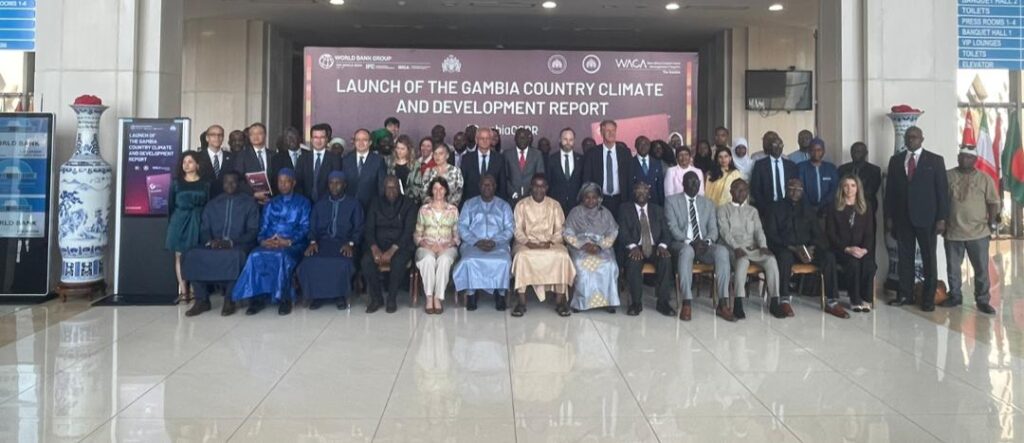
Speaking at the launch, Vice President Muhammed B.S. Jallow said climate change can no longer be treated as a distant or future concern.
“Climate change is no longer a distant threat,” Vice President Jallow said. “It is already shaping The Gambia’s economic future and development trajectory. The cost of inaction is simply too high.”
Despite contributing less than 0.01% of global greenhouse gas emissions, The Gambia remains among the countries most vulnerable to climate change.
According to the report, more than 60% of the population lives in coastal and urban areas exposed to high climate risk. Flooding alone already costs the country up to 3.8% of its annual Gross Domestic Product (GDP).
The report warns that if the current “business-as-usual” trend continues, climate-related disasters could reduce The Gambia’s GDP by 9.3% by 2050. Experts say this could push tens of thousands of people into poverty and severely damage the agriculture sector, which supports nearly 70% of the workforce.
World Bank Country Representative Franklin Mutahakaba said the crisis, while serious, is still manageable if decisive action is taken now.
“Attention to environmental risks is not a parallel agenda, it is central to sustainable development,” Mutahakaba said.
He added that early investment in coastal protection and heat-resilience measures could deliver some of the country’s highest long-term economic returns.
The report estimates that The Gambia will require nearly $8 billion in climate-related investments by 2050 to protect development gains and strengthen national resilience.
Finance Minister Seedy Keita acknowledged that the government cannot meet those costs alone, saying approximately 35% of the required financing must come from the private sector.
However, officials noted that only 15% of small and medium-sized enterprises in The Gambia currently have access to formal financing, creating additional pressure on the government to make climate and green investment projects more attractive and bankable.
Environment Minister Rohey John Manjang described the protection of Banjul as a matter of national heritage and survival.
She said the report should serve as a guiding framework for the country’s future, warning that The Gambia now faces a choice between climate resilience and the risk of losing critical parts of its capital city to rising waters.


