
 11
Written by: Dawda Baldeh
The Intergovernmental Action Group Against Money Laundering in West Africa (GIABA) has called on religious leaders and institutions in The Gambia to strengthen financial transparency and accountability to prevent their organisations from being exploited for money laundering and terrorist financing.
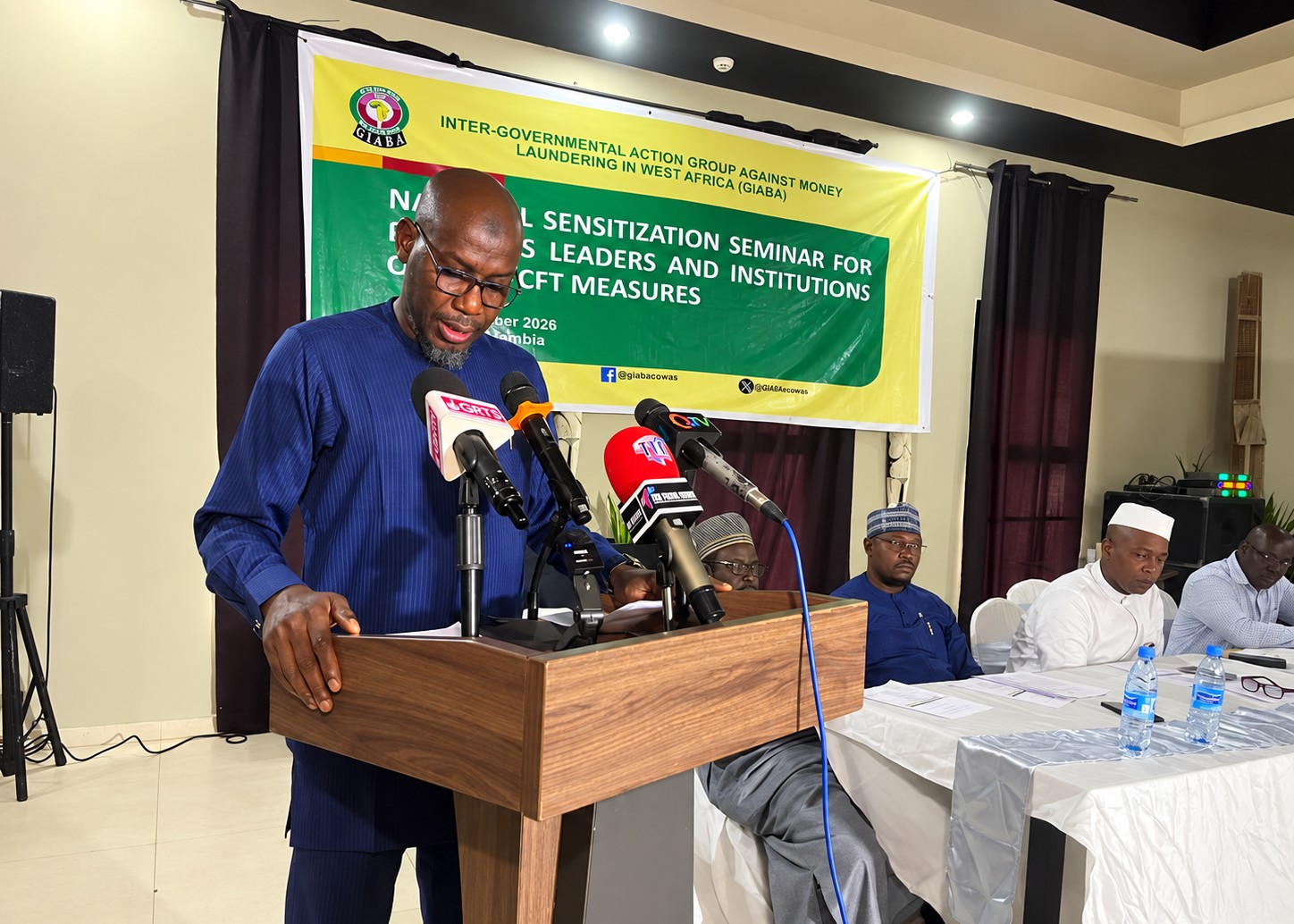
The call was made during a two-day national sensitisation seminar for religious leaders and institutions on anti-money laundering and combating the financing of terrorism in The Gambia.
Held under the theme “Promoting Anti-Money Laundering and Combating Terrorist Financing on the Altar,” the seminar brought together representatives of Islamic and Christian communities, government institutions, the Financial Intelligence Unit (FIU), GIABA and other stakeholders.
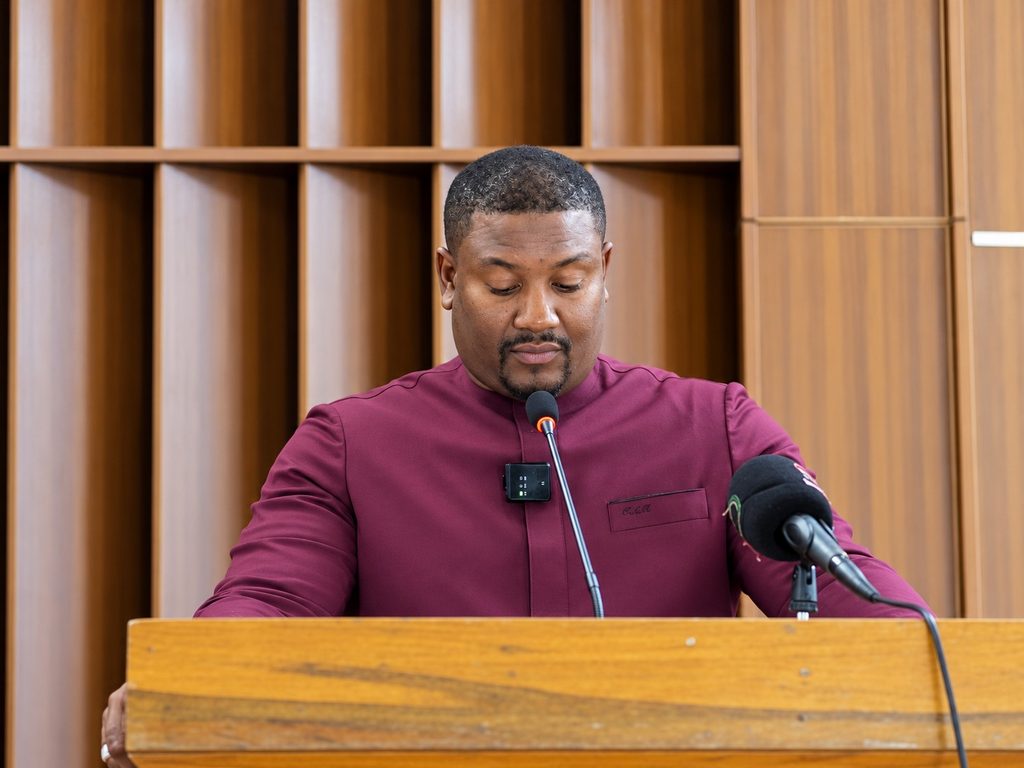
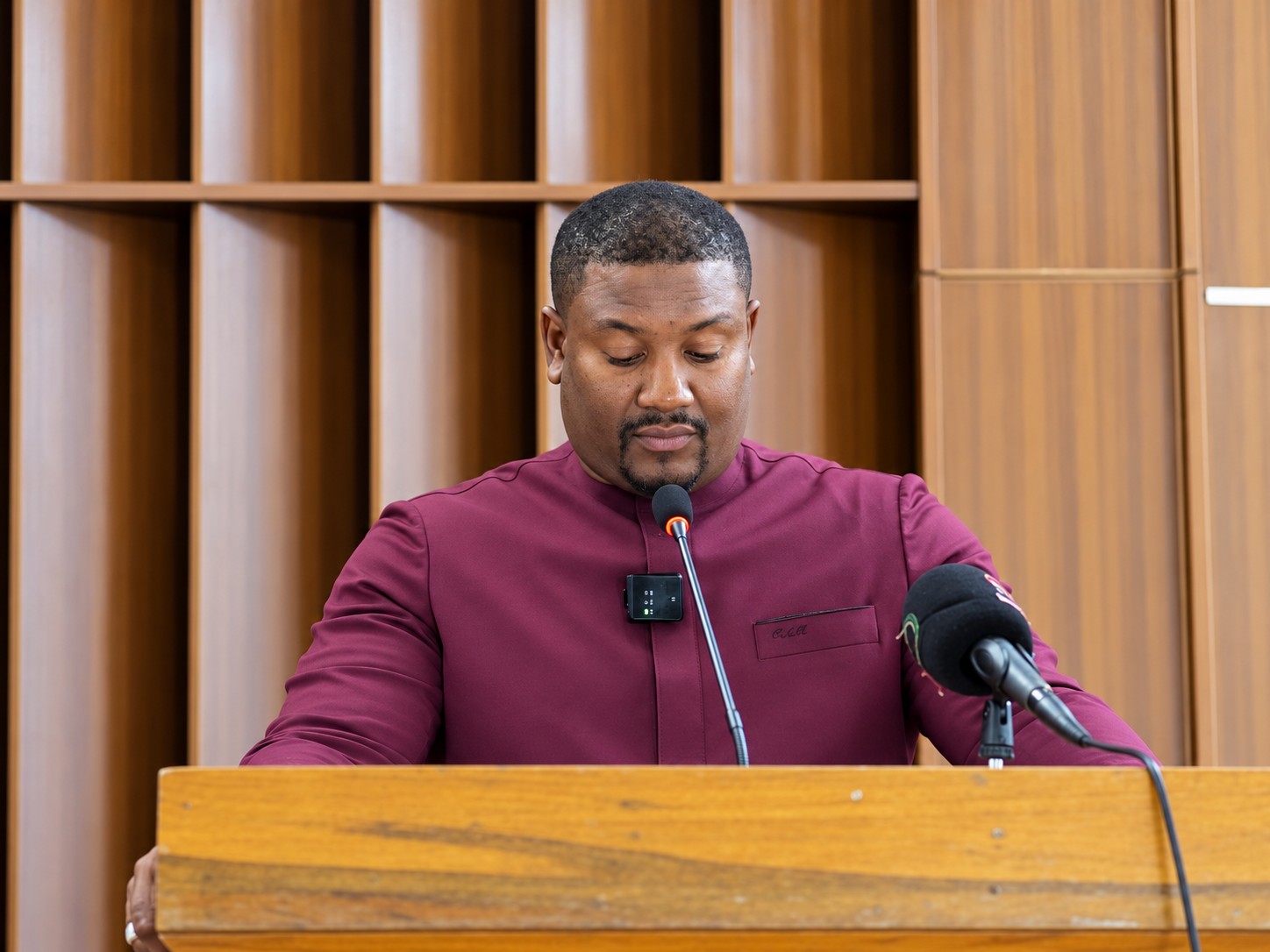
Speaking at the opening, Alhagie Darboe, Director of The Gambia’s Financial Intelligence Unit and GIABA National Correspondent, said money laundering and terrorist financing should not be viewed solely as financial or law enforcement concerns.
“Money laundering and terrorist financing are not merely financial or law enforcement issues. They are societal issues as well that can affect stability, security, integrity, and development of our communities,” Darboe said.
He warned that criminals and terrorist financiers could attempt to exploit legitimate businesses, financial institutions, charitable organisations, non-profit organisations and other community structures.
Darboe, however, stressed that the seminar was not intended to portray religious institutions as inherently vulnerable to financial crimes.
“The overwhelming majority of religious leaders and institutions are committed to serving their communities and promoting good values. Our objective here is to ensure that religious institutions are adequately informed and equipped to protect themselves from possible abuse,” he said.
He urged religious institutions to strengthen basic financial safeguards, including identifying the sources of significant donations, maintaining proper financial records and ensuring transparency in the management of funds.
“Transparency protects trust, accountability protects institutions, and responsible financial management protects communities,” Darboe declared.
He described religious leaders as critical partners in the national fight against financial crimes because of the trust and influence they hold within their communities.
“Religious leaders are therefore not merely participants in this national effort. You are important partners and potential champions of anti-money laundering and combating terrorist financing awareness,” he said.
Darboe encouraged participants to take the message back to mosques, churches, religious schools, charitable organisations and their wider communities.
Representing the GIABA Director-General, Mam Cherno Jallow, Acting Principal Officer of Communication and Advocacy Timothy Melaye said the organisation considers the seminar an important platform for strengthening cooperation with religious institutions.
Melaye explained that Jallow, who recently assumed office as GIABA Director-General, was unable to attend because of another official engagement.
“GIABA and the entire Economic Community of West African States, ECOWAS, consider this particular workshop a very important one,” Melaye said while delivering the Director-General’s address.
He said the seminar was particularly significant because some participants were encountering GIABA and its work for the first time.
Melaye explained that GIABA is a specialised institution of the Economic Community of West African States (ECOWAS), established in 1997 to address money laundering and related financial crimes in West Africa.
Meanwhile, Venerable Jacob Okeke-Cole, who offered the Christian prayer at the event, emphasised the need to safeguard human dignity and promote justice and freedom.
“As we meet, religious leaders and elders in this nation will come up with resolutions and the wherewithal to safeguard the integrity of the human race. And the dignity of every human being must be safeguarded,” Okeke-Cole said.
He called for a collective commitment to faith, justice and freedom, stressing the importance of protecting humanity from practices that undermine society.
The seminar also featured an Islamic prayer led by Khadi Omar Seck, Second Vice President of The Gambia Supreme Islamic Council.
Organisers said the two-day engagement would give religious leaders an opportunity to discuss risks associated with non-profit organisations, financial management, terrorist financing and the potential abuse of religious institutions.
The FIU stressed that the objective is not to impose unnecessary burdens on religious organisations, but to encourage a practical and risk-based approach that protects institutions while allowing them to continue their legitimate religious and charitable activities.
The engagement also seeks to strengthen cooperation between religious leaders, government agencies, financial institutions and other stakeholders, making the fight against money laundering and terrorist financing a shared national responsibility.