
 11
11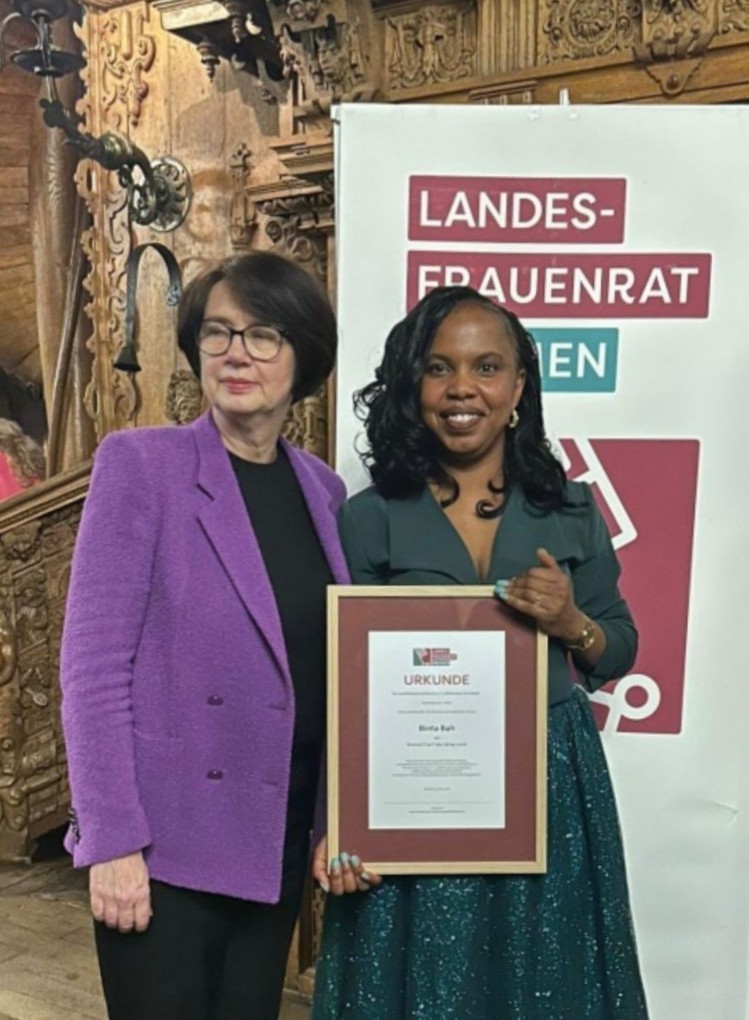
Written by: Alieu Jallow
A Gambian women’s rights activist based in Germany, Binta Bah, has been named Bremen Woman of the Year 2026 in recognition of her longstanding efforts to empower women, promote migrant integration, and advocate against female genital mutilation.
Bah, founder of the Bremen-based civil society organisation LUNDU e.V., received the honour from the Bremen State Women’s Council for her commitment to supporting women affected by female genital mutilation and for raising awareness about the issue within migrant communities.
The recognition came after Bah was nominated among 18 candidates and ultimately voted Woman of the Year 2026 in the northern German city of Bremen. During the award ceremony held at the historic town hall, officials and civil society leaders praised her dedication to advancing women’s rights, intercultural dialogue, and social inclusion.
Speaking at the ceremony, Bah emphasised the responsibility carried by decision-makers in shaping the lives of vulnerable communities. She noted that policies and decisions made by leaders can either stabilise families or push them further into uncertainty.
Originally from The Gambia, Bah arrived in Bremen alone as a teenager. Over the years, she has built a reputation as a grassroots organiser who balanced education, motherhood, and advocacy while supporting women affected by harmful traditional practices.
The World Health Organization classifies female genital mutilation (FGM) as a harmful practice and a violation of the human rights of women and girls. The organisation warns that the practice has no health benefits and can cause serious complications such as infections, childbirth difficulties, chronic pain, and psychological trauma. Globally, more than 200 million girls and women are estimated to have undergone FGM, with the majority of cases occurring in parts of Africa, the Middle East, and some communities in Asia where it is often linked to cultural traditions and social expectations.
Bah’s organisation, LUNDU e.V., works closely with migrant women and families, particularly those from African countries including The Gambia. The association provides German language classes, childcare support, counselling, and social integration services to help migrant women navigate life in Germany.
Through workshops, counselling sessions, and community outreach activities, the organisation also raises awareness about the health risks and human rights implications associated with FGM. Its programmes bring together social workers, police, youth welfare authorities, and community leaders to strengthen prevention efforts and promote dialogue.
At the Senate reception marking the award, Bremen’s social affairs senator, Claudia Bernhard, joined members of the Bremen State Women’s Council in honouring Bah under the theme “Strong together: women’s solidarity as an answer to political crises.”
In a statement, council chairwoman Antje Jess described Bah as a political activist who stands up for her community while strengthening the visibility and representation of Black women in mainstream society. The council also highlighted the important role migrant organisations play in advancing social and cultural development in the state.
Beyond advocacy, Bah also promotes cultural exchange through community events. Each year, her organisation hosts cultural concerts that bring together artists and migrant communities. In 2025, internationally acclaimed Gambian kora virtuoso Sona Jobarteh performed at one of the events, with plans already underway for another concert in May 2026 featuring Gambian artists.
Bah’s recognition in Germany adds to a growing list of Gambian women in the diaspora gaining international visibility for their activism against FGM and their broader efforts to protect the rights and dignity of women and girls.
Advocates such as Isatou Touray and Jaha Dukureh have also received global recognition in recent years for their campaigns against the practice and for promoting the wellbeing of women and girls.
For many observers, Bah’s award reflects not only her personal journey but also the growing influence of Gambian women in global conversations about human rights, gender equality, and community empowerment.