
 11
11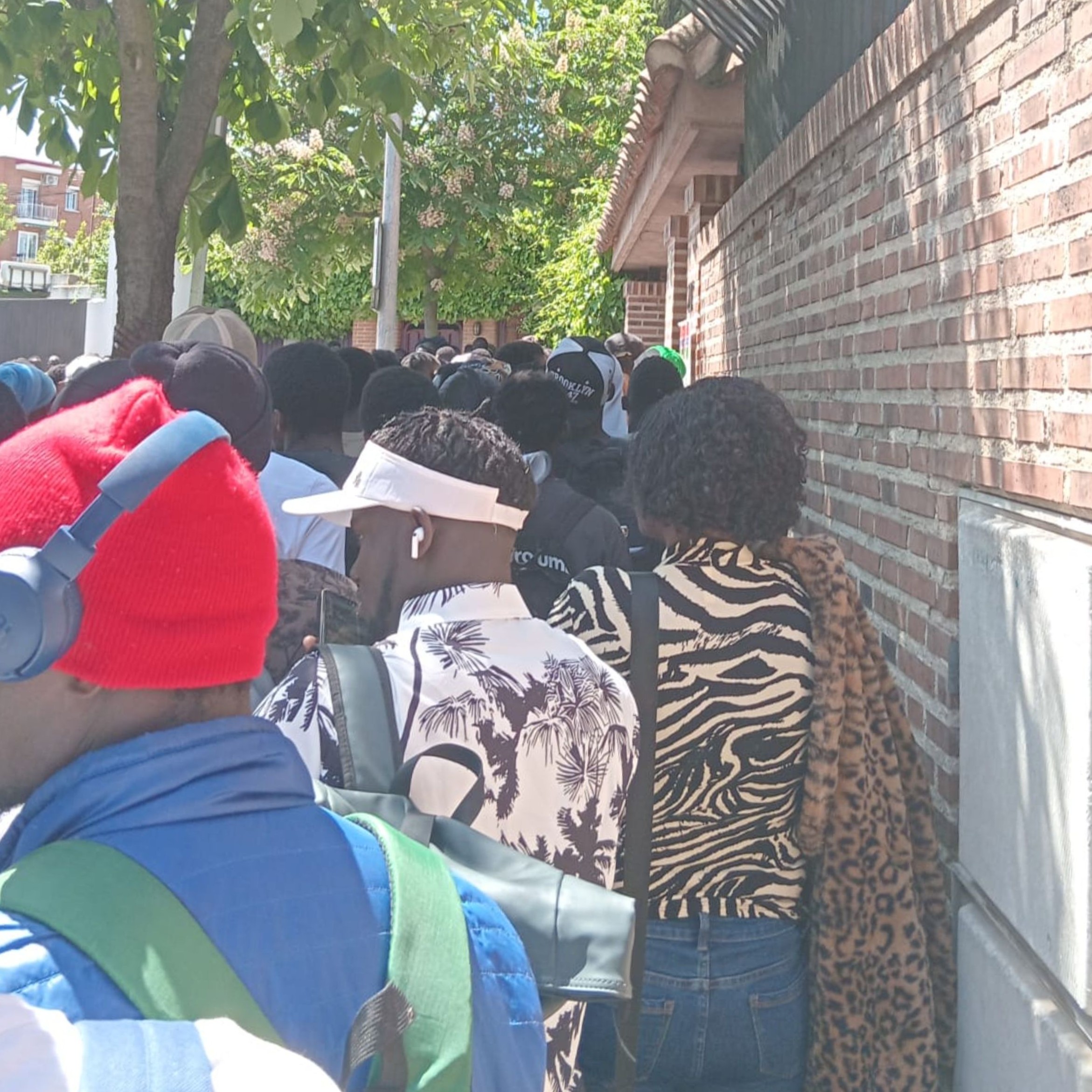
Written by: Alieu Jallow
Gambian migrants in Spain are facing growing uncertainty over their legal future as delays in passport registration raise concerns about their chances of securing legal status.
Across Spain, Gambians form part of a wider migrant workforce, many of whom have spent years navigating complex documentation systems to regularise their stay. Recent policy openings by Spanish authorities have created a pathway toward legal status and, potentially, citizenship. However, for many Gambians, that opportunity now appears uncertain due to difficulties in obtaining valid national passports, a key requirement in the process.
In Madrid, more than a thousand Gambians have been gathering in long queues outside the Gambian embassy following the deployment of immigration officers from Banjul to carry out biometric enrolment. The exercise, intended to ease access to passports for those in the diaspora, has instead drawn criticism over its pace and organisation.
The situation became tense enough to require intervention from Spanish police to maintain order as frustrated applicants struggled to access the service.
Several migrants who spoke to The Fatu Network on condition of anonymity described the process as slow and exhausting, despite each applicant paying a fee of €120.
“Gambians are always a problem, even in Gambia. With your money, you can’t get a passport. Likewise here, we all pay to the banks, more than 1,000 people in Madrid, and things are very slow,” said one migrant.
Another migrant, who travelled more than five hours from Mérida to Madrid, said he was uncertain whether he would be attended to and called on authorities to extend working hours.
“The situation is not easy, so we urge the authorities to open the services for 24 hours so all of us here in Madrid can access them. You need to write a story about this so the government can do more than two days here. If not, people pay their money and lose it all,” he said.
Many migrants fear that the two-day registration window will not be enough to accommodate the number of applicants, raising the risk that some could miss the current opportunity to secure documentation under Spain’s regularisation framework.
“I am even planning to go back home. I travelled two hours to get here, but Gambia, the system will never change. All the Senegalese people have got their passports in some days, but Gambia is a problem. Everywhere you go in the world, The Gambia is behind,” another migrant said.
Concerns have also been raised about the cost, with applicants arguing that the €120 fee is significantly higher than in neighbouring Senegal, where they say passports are issued faster and at a lower cost.
“Spain is giving permits to people so they can start work, but without a passport you can’t make it and we lose this chance. There is no refund of your 120 euros, and you find it hard to secure a job, so one has to wait until Spain makes another announcement, and we don’t know when that might be, it could be in the next two years or more,” one migrant said.
Some migrants also alleged the absence of basic facilities, including makeshift toilets at the registration site, describing the conditions as undignified.
However, in response to information circulating online, the Gambia Immigration Department (GID) rejected claims suggesting a shortage of passport booklets in Spain, describing such reports as “inaccurate and misleading.”
In a statement, the department clarified that the biometric team deployed to Spain is responsible only for enrolment, not passport issuance.
“The biometric enrolment team in Spain does not have any passport booklets in their possession. Their sole mandate is to provide enrolment services,” the statement read.
The GID added that all applications collected in Spain and Italy will be processed and printed in The Gambia, noting that there is “adequate stock of biometric passport booklets” to handle all applications.
The department also defended the conduct of its staff, stating that since the exercise began on April 27th, immigration officers have been delivering services “with professionalism, diligence, and respect for the applicants,” while acknowledging the high demand.
“The GID reaffirms its commitment to service, and urge all Gambians to remain in contact with the Public Relations Office to avoid misinformation and sabotage to the efforts of the government,” the statement added.
Despite these assurances, migrants say the immediate concern remains access and time, as many continue to wait in long queues, worried that delays could cost them a rare and time-sensitive opportunity to regularise their status in Spain.