
 11
11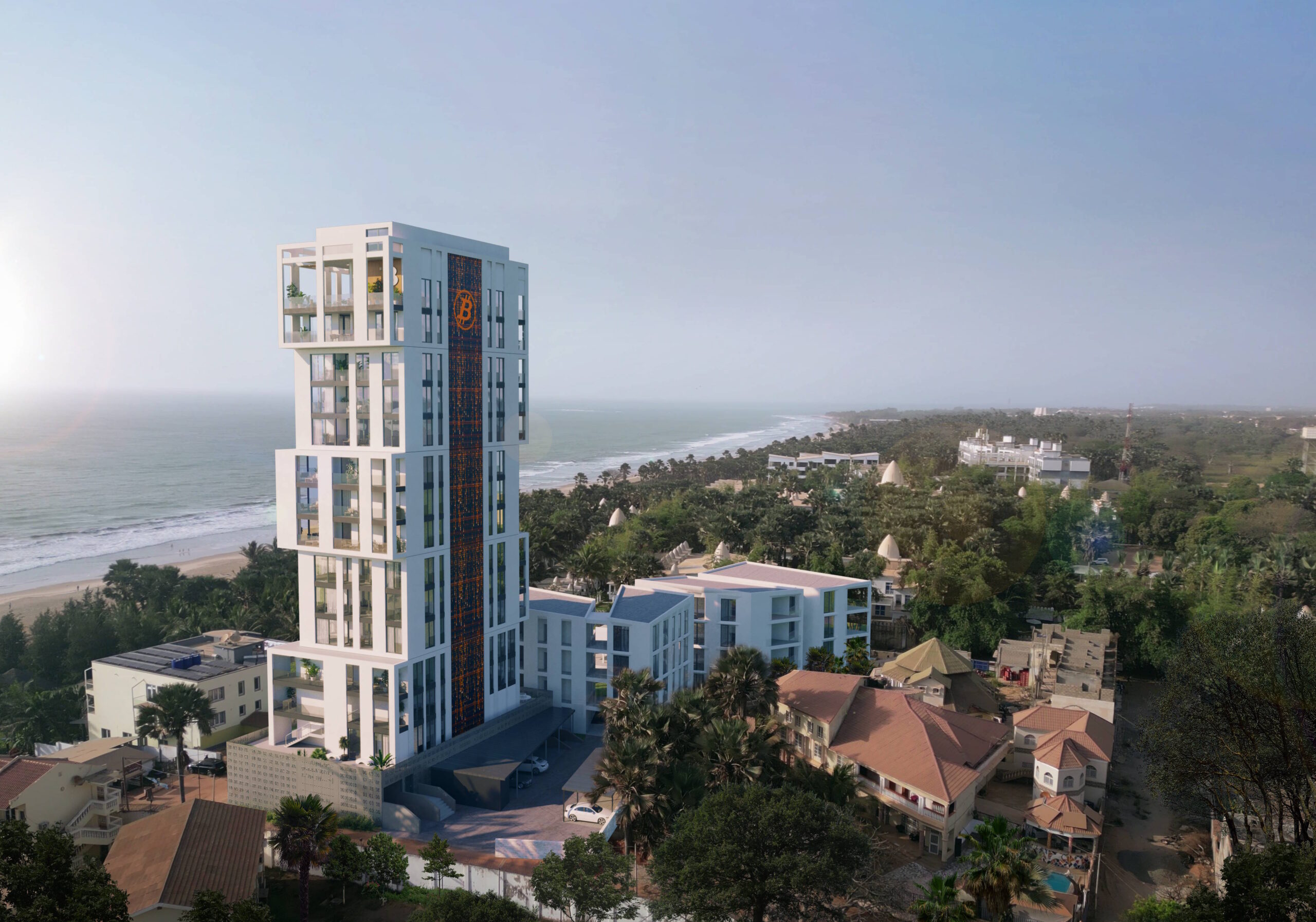
“You will soon learn how the system in The Gambia works”: Austrian developers detail threats, disputed payments, and a growing battle for control of the striking Bitcoin Tower project in Bijilo.
Investigation by: Seringe S.T. Touray
Editor-in-Chief of The Fatu Network
At its core, this is a dispute between business partners that has steadily escalated into a complex legal and financial conflict. Austrian developers Angelika Mitterer and Manuel Stofleth-Mitterer have presented a detailed account of what they describe as financial irregularities, pressure, and a breakdown in their partnership with local stakeholders around the high-profile Bitcoin Tower and The Edge projects in The Gambia.
The Fatu Network has reviewed a substantial body of documents provided by Angelika and Manuel and is launching an independent investigation. These claims are disputed, and efforts to reach all parties involved are ongoing. Ebrima Tamba, in a response to The Fatu Network, disputes this account and raises counterclaims, which are summarised at the end of this report.
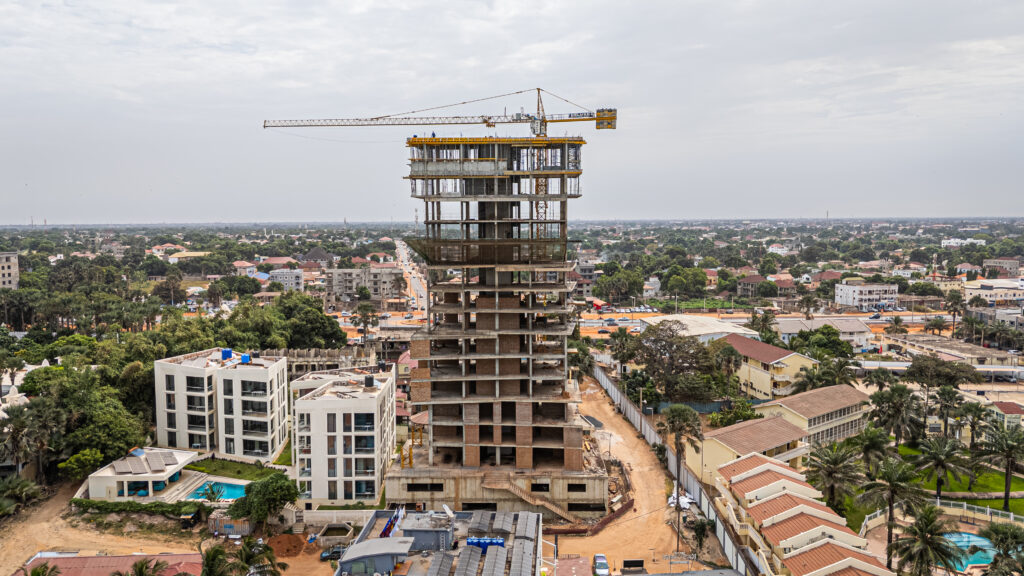
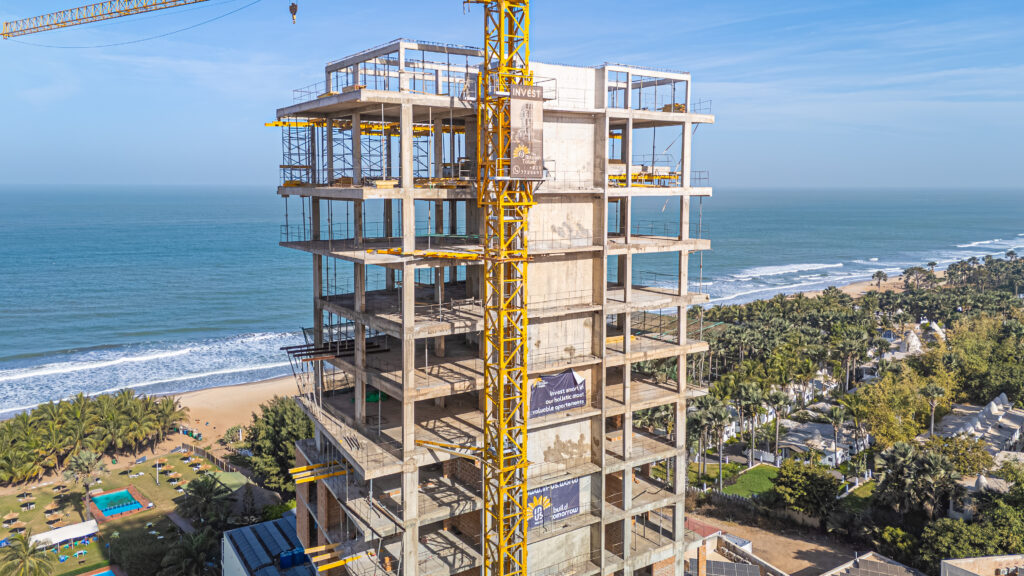
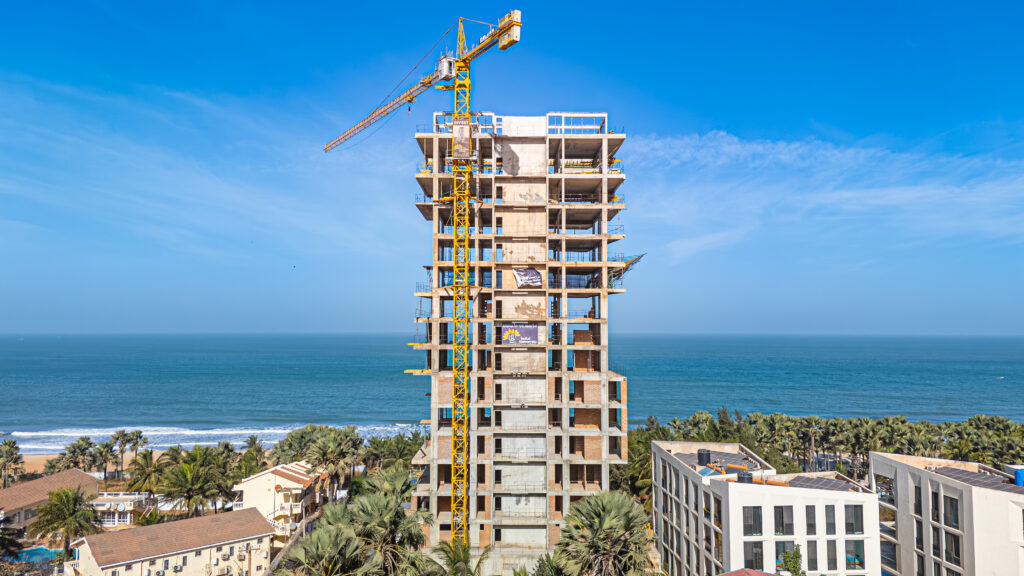
Angelika and Manuel say they relocated to The Gambia around five years ago with their daughter, who was four at the time and is now nine and attending school in the country, as they built both a home and a series of development projects they describe as long-term investments. In their account, what began as a family relocation tied to ambitious development plans has since become entangled in a dispute over money, control, and the future of projects they say were intended to leave a lasting footprint in the country.
What emerges from the documents, correspondence, and internal records they shared is a complex narrative spanning business partnerships, multimillion-dalasi transactions, court interventions, and an escalating conflict now before the Gambian legal system. All of the material reviewed, including audit reports, payment records, WhatsApp transcripts, and legal filings, was provided by Angelika and Manuel as part of their account.
At the centre of the dispute is Kasumai Real Estate Ltd, the company behind both The Edge apartment complex and the proposed Bitcoin Tower project. According to documents reviewed, the company brought together Manuel Stofleth-Mitterer, who held a 30 percent stake tied to project development, planning, and execution, and two majority shareholders, Ebrima Solomon Tamba and Marcel Lambertus Teunis van Andel, who each held 35 percent, representing land contributions and local administrative responsibilities. Ebrima Tamba is linked in the documents to the Kunta Kinteh Beach Complex in Kotu and was, according to documents and their account, involved in handling local processes, permits, and financial interactions with authorities.
Angelika and Manuel describe their involvement as part of a broader, long-term vision. In their words, they came to The Gambia to build “sustainable projects that create not only economic success but also long-term social added value,” combining international investment with local development. Their projects extended beyond The Edge and Bitcoin Tower to include agricultural and wellness initiatives, positioned as part of a broader development model. However, in their account, the partnership began to deteriorate as financial questions emerged, particularly around payments handled at the local level. They say the relationship worsened as requests for money from their local partners increased, while documentation to justify those requests did not follow with the clarity they expected.
A central document is an independent audit report dated August 1st 2025, which Angelika and Manuel commissioned. The audit examined expenditures linked to the projects and found that GMD 1,864,425 had been recorded across categories such as materials, labour, and equipment, but concluded that “documentation to support these expenditures… was not available at the time of our review.” The auditors warned that such gaps in record-keeping could expose the company to “an increased risk of error or misappropriation of funds” and noted that weaknesses in internal controls “may facilitate defalcations which our normal audit checks may not necessarily detect.”
The same audit also raised questions over a reported GMD 18 million payment linked to the Gambia Tourism Board (GTBoard). According to the report, only GMD 5 million could be verified through receipts, while “no further evidence… [was] provided to support the remaining balance of GMD 13,000,000.” Angelika and Manuel point to this discrepancy as one of several instances where large financial demands were made without clear legal justification or adequate supporting documentation. In their telling, this was one of the moments when what had begun as mistrust hardened into a direct internal confrontation.
The financial dispute is closely tied to a separate but pivotal agreement between Manuel and Ebrima Tamba. A promissory note dated May 16th 2023 confirms that Manuel extended a private loan of €165,000 to Tamba, with repayment structured as “50% by 31 December 2024” and the remaining “50% by 30 April 2025.” Under the same agreement, Tamba pledged his shares in both Kasumai Real Estate Ltd and MASThave Real Estate Ltd as collateral. The document states that Tamba “grants the Lender a security interest in all of his shares” in the two companies.
By May 18th 2025, Manuel formally declared Tamba in default, stating in a notice that “you have made no repayments towards the agreed instalments and are therefore in material default.” The notice also states his intention to proceed with “the realization of the pledged security through the sale of your shares.” In their account, this marked a turning point after which relations between the partners deteriorated rapidly. They say the dispute no longer revolved only around delayed payments or paperwork, but around control of the business itself and who would ultimately direct the future of the projects.
Another critical strand of the dispute relates to payments allegedly linked to regulatory approvals. Internal records and WhatsApp transcripts provided by Angelika and Manuel include messages attributed to Ebrima Solomon Tamba, addressing Manuel Stofleth-Mitterer, which contain repeated references to payments said to be required for real estate projects to proceed.
In one message dated September 15th 2024, it is stated that “you have to come and pay at the Gambia Tourism Board,” with figures cited as high as 10 million. The same message further states that “GTBoard will take 5% on each apartment sold,” and adds that “everyone who is doing this estate… they always have their 5%.”
According to Angelika and Manuel, these communications formed part of what they describe as a broader pattern of financial demands presented as necessary for project approvals and continued construction. They say they eventually agreed, under pressure, to a payment structure totalling GMD 18 million. This included an immediate transfer equivalent to €155,340, alongside additional cash instalments. A receipt issued by the Gambia Tourism Board on September 24th 2024 confirms that D5,000,000 was received as a “development levy fee – Construction of Apartments,” while a subsequent letter dated September 30th 2024 acknowledges the payment and grants approval for construction.
However, Angelika and Manuel maintain that the broader financial demands surrounding the payment lacked a clearly defined statutory basis. In their account, the combination of large sums, urgency, and unclear official grounding deepened their belief that they were being drawn into an arrangement they could neither properly scrutinise nor safely refuse.
As tensions intensified, the dispute moved into the courts. An order issued by the High Court on August 8th 2025 recognised that there were “facts… which threaten the management of the projects… and may be at risk.” The court declined to hand control of the company to Manuel, noting that the question of who should manage the projects must be determined at the end of the suit, and instead took steps to preserve the projects while the case continues. A later order dated December 17th 2025 went further, describing the company as being in a “dire state of affairs” and directing that a Sheriff continue overseeing its operations pending further proceedings.
Angelika and Manuel also describe a series of incidents they characterise as intimidation. In their account, they state that after the conflict over the loan and company control escalated, they were told they would soon learn “how the system in The Gambia works.” They further allege that a break-in occurred at their office and residence, involving a security guard they link to their business partner, Ebrima Tamba, and report that surveillance footage showed the individual “deliberately turning the camera away.” When the matter was reported to police, they say the situation took an unexpected turn, with Manuel detained for several hours without a clear explanation. They say these events, taken together, left them with the impression that the dispute had moved beyond a commercial fallout and into something more coercive and difficult to confront on equal terms.
They also describe interactions with investigators in Banjul, where the focus of the investigation extended to their private devices and cryptocurrency accounts. Angelika and Manuel state that they were detained for several days after refusing to provide access to certain credentials which, in their view, were not covered by the scope of the court order. Separate proceedings have also arisen from disputes involving access to financial records and investigative requests. Their broader timeline of events relating to the police investigation will be examined separately as part of this ongoing series.
At the same time, Angelika and Manuel reject allegations of fraud, theft, and conspiracy that have circulated in sections of the media, describing them as unsubstantiated and linked to the escalating dispute between shareholders. They argue that the audit submitted to authorities shows no missing funds on their part, while pointing instead to withdrawals made “without corresponding supporting documentation.” They also raise concerns about the continued operation of The Edge project, alleging that rental income from apartments is being collected without being remitted to the respective owners.
The documents reviewed by The Fatu Network present a detailed account from Angelika and Manuel, supported by contracts, audit findings, payment records, and contemporaneous communications. However, these accounts are disputed and form part of an active legal process involving multiple parties. The matter remains before the courts and has not yet been finally determined. Ebrima Tamba, while responding in detail, did not provide supporting documentation for the claims raised in his reply.
The Fatu Network has contacted Ebrima Tamba and Marcel van Andel for comment. Further reporting will examine the competing claims, financial records, and legal proceedings in greater detail as part of an ongoing investigation into the Bitcoin Tower and The Edge developments.
Editor’s Note: In a response to The Fatu Network, Ebrima Tamba confirmed receiving the €165,000 loan but disputed Angelika and Manuel’s account. He alleges that Manuel Stofleth-Mitterer controlled the company’s finances and failed to properly account to other shareholders, a claim for which Tamba has not provided supporting documentation. He also denied knowledge of the alleged break-in and challenged the audit findings. Angelika and Manuel have disputed aspects of his account in subsequent correspondence, which will be examined in a follow-up report.
This is the first in a series of reports.