
 11
11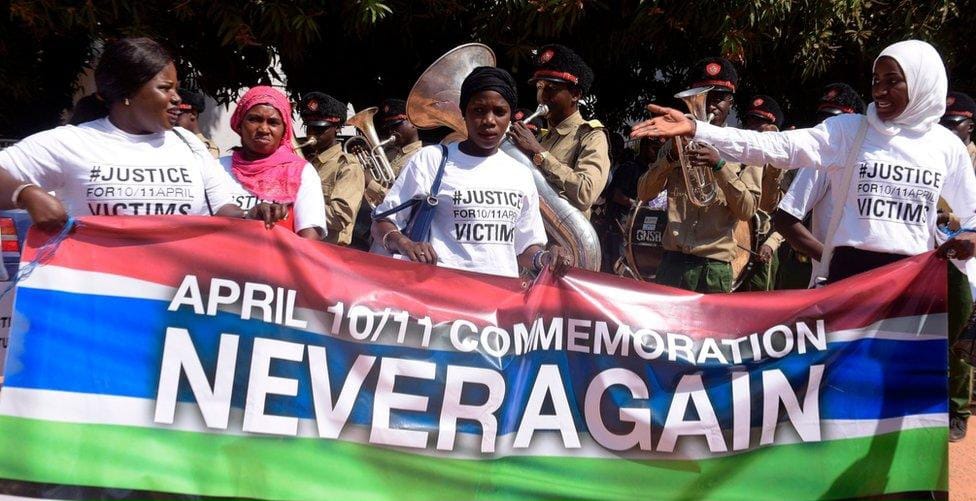
Fatou Baldeh – CEO and Founder, Women In Liberation and Leadership
Every year, when April 10th and 11th return, I think of children. I think of school uniforms laid out the night before. Exercise books left unfinished. Mothers expecting their children home that evening, only to wait forever. What is too often forgotten is that this tragedy did not begin with gunfire. It began with violence against two children: A young schoolgirl was raped by a man in uniform, and a boy was beaten so brutally that his body could not survive. When the authorities chose silence over justice, students took the burden upon themselves. They stood up because no one else would. That burden cost them their lives.
Twenty-six years ago this week, Gambian students walked into the streets asking for something simple and rightful: Justice. Justice for a boy beaten to death. Justice for a young girl raped by a security officer. They were children demanding answers from a state that should have protected them. Instead, the state responded with bullets. Those children were shot. Some died instantly. Others survived with wounds that never truly healed on their bodies, and in their minds. Many of us who listened to their stories during the Truth, Reconciliation and Reparations Commission (TRRC) were not left unchanged. As a mother, and as someone who worked closely with victims through that process, I can say this plainly: no parent ever recovers from losing a child to state-sponsored violence. And no child ever recovers from learning that the system meant to protect them chose to harm them instead.
During the TRRC hearings, survivors of Sexual and Gender Based Violence (SGBV) spoke with trembling voices and extraordinary courage. I sat with women, men, and children who carried shame that was never theirs to bear. What the TRRC revealed was devastating, but not surprising to those who lived it: sexual violence was everywhere under the dictatorship. In the State House. In prisons. During arrest and detention. In workplaces, and in homes. Sexual violence was not accidental. It was a method. A way to control bodies, break spirits, and silence dissent. And because the violence came from the state itself, victims had nowhere to go. Reporting abuse meant risking detention, retaliation, public shaming, or further harm. Many survivors chose silence not because they lacked courage, but because they were trying to survive. This is how impunity takes root and how violence becomes invisible. The Commission made clear that sexual violence during the dictatorship was not incidental, it was pandemic.
This April, as Gambians rightly commemorate April 10th and 11th and welcome the appointment of a Special Prosecutor to pursue Jammeh-era crimes, remembrance and celebration must be matched with honesty. For many survivors I continue to walk alongside, this is the first genuine spark of hope in years, that what happened to them may finally be recognised by law, not only by memory. Yet the violence of the dictatorship, especially sexual violence, did not end in 2017; its legacy persists in normalised abuse, discriminatory norms, weak accountability, and unequal power relations that continue to place women and girls at risk. Sexual and gender based violence remains widespread in The Gambia, impunity remains the rule, survivors are discouraged from reporting, and perpetrators evade consequences. Therefore, if sexual violence is treated only as a crime of the past, we will fail the girls being harmed today and the mothers who choose silence because justice still feels out of reach. Confronting SGBV therefore requires using the opportunity that the post TRRC provides us to build systems that protect children before harm happens and ensure that when a girl is violated, she is met with care not suspicion and that when a survivor speaks, the state and society listen.
So on this April 10th and 11th, I remember the students who never came home, the girl whose pain was ignored, the mothers whose grief shaped my understanding of justice and the girl who is suffering today.