
 11
11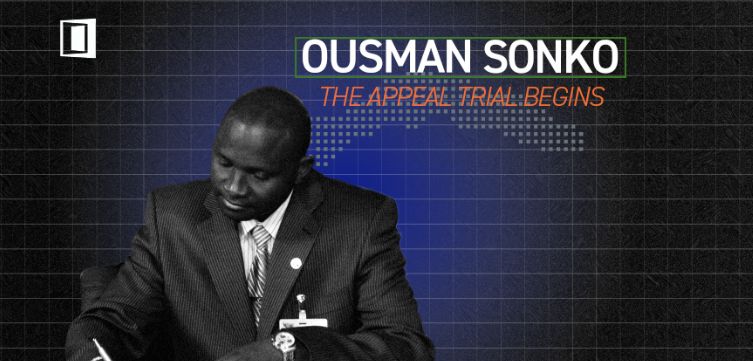
Written by: Seringe S.T. Touray
The appeal trial of former Gambian Interior Minister Ousman Sonko has entered its first week in Switzerland, reopening a landmark case involving killings, torture, and unlawful detention during the rule of Yahya Jammeh.
Sonko was sentenced in May 2024 to 20 years in prison by the Swiss Federal Criminal Court after being found guilty of crimes against humanity committed between 2000 and 2016. Arrested in 2017 following a complaint by TRIAL International, he became the highest-ranking Gambian official convicted in Europe under universal jurisdiction. He is now appealing the judgment in full, while prosecutors and victims are also challenging parts of the ruling.
According to an update issued by TRIAL International, the opening days of the appeal were dominated by preliminary legal challenges from the defence. It argued that “the indictment did not describe the relevant facts with sufficient detail,” particularly regarding allegations of sexual violence, and should therefore not be examined.
The defence also challenged the validity of the amended indictment introduced in 2023, claiming earlier versions did not include key elements such as sexual violence or the basis for crimes against humanity. It further questioned Switzerland’s authority to prosecute part of the case, arguing that such crimes “were not codified in Swiss domestic law prior to 2011.”
Prosecutors rejected these arguments, maintaining that the indictment meets legal standards and that Switzerland can prosecute such crimes under customary international law. The court sided with the prosecution at this stage, rejecting the defence’s objections, confirming the indictment is valid, and allowing the appeal to proceed.
Another key issue in the appeal is whether allegations of sexual violence, which were excluded in the original ruling, should be reconsidered. Lawyers representing victims argued that the acts were not isolated, stating they “formed part of a broader pattern of repression,” and could qualify as crimes against humanity or torture under international law.
The defence has also raised concerns about how evidence was collected. It argued that some investigative steps were carried out “in secret or outside the legal framework,” questioned whether evidence from The Gambia was selectively gathered, and suggested that local authorities may have influenced what was shared with Swiss investigators.
Further disputes arose over asylum-related records. The defence argued that Switzerland continued returning Gambian nationals during the period covered by the indictment, suggesting there was no widespread attack on civilians. Prosecutors disagreed, arguing such material should be assessed carefully and not automatically excluded.
The court also addressed complaints about translation and fair trial rights. The defence claimed Sonko had not been able to fully understand earlier proceedings due to a lack of translation. The court rejected this, finding that he had sufficient understanding of the case and that a full translation was not required.
Additional defence motions were also dismissed, including requests to halt the trial and to reframe how charges were described. The court clarified that the case concerns co-perpetration, not complicity, and confirmed it would assess all issues when examining the full case.
The first week also included testimony from a witness in The Gambia, a former soldier who appeared by video link and had previously testified before the Truth, Reconciliation and Reparations Commission (TRRC). He told the court he knew Sonko well and described him as “a very good commander.”
The witness gave his account of a 2000 operation that led to the death of a suspected political opponent. He said the victim had opened fire first and that both Sonko and former presidential guard commander Landing Sanneh were present. When confronted with earlier court records suggesting a different version of events, he maintained his account before later stating that Sonko’s previous testimony was accurate.
He also addressed allegations of sexual violence involving Sonko, saying he had heard the claims but found them “implausible,” adding to the sharply contested nature of that part of the case.
The proceedings, expected to last at least two weeks, continue to draw attention in The Gambia, where discussions are ongoing about establishing a special tribunal to prosecute crimes committed during Jammeh’s rule. For many victims, the appeal is another critical moment in the long-running effort to secure accountability for past abuses.