
 11
11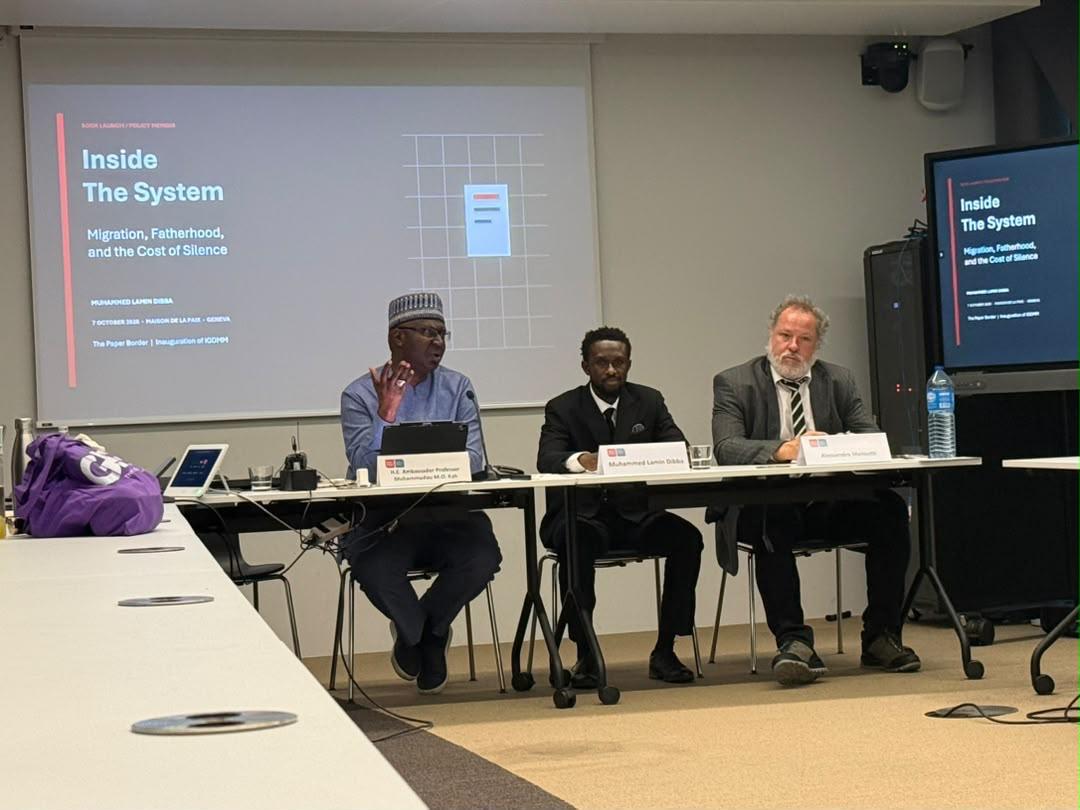
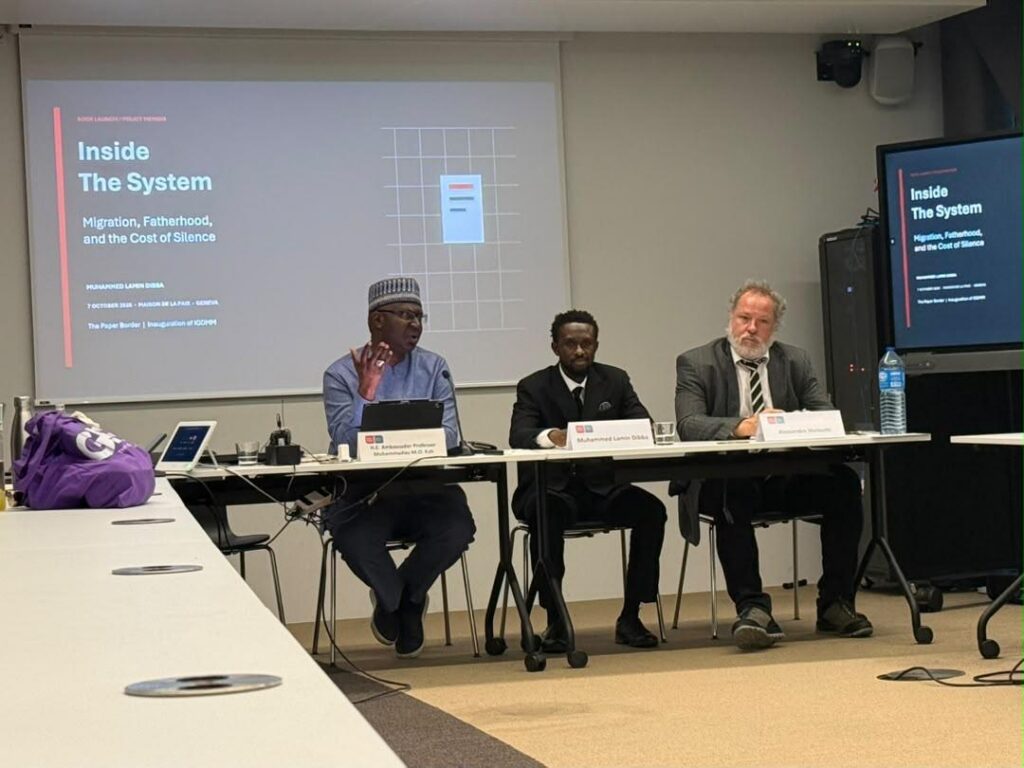
Gambian author and migration specialist Muhammed Lamin Dibba has launched his policy memoir, Inside the System: Migration, Fatherhood, and the Cost of Silence, at the Geneva Graduate Institute in Switzerland.
The book launch, held on Wednesday, was co-organised by the Permanent Mission of The Gambia to Switzerland, the UN, WTO and other international organisations in Geneva, the Global Migration Centre of the Geneva Graduate Institute, and the institute’s Afrique Student Association.
Hosted under the theme Bridging the Gap, the event brought together diplomats, academics and diaspora leaders to discuss migration governance, administrative systems and family life within European migration frameworks.
Addressing guests, Dibba described the book as both a personal and policy-focused account of migration, fatherhood and bureaucracy.
“I am not here simply to launch a book. I am here to open a conversation about that silence,” he said. “What happens when you are still physically present, but slowly become invisible inside the system?”
The author said the memoir was written from his lived experience as a father and migration practitioner navigating administrative processes in Switzerland.
“Inside The System is deeply personal. It is a story about migration, but it is also a story about fatherhood. It is a story about bureaucracy, but also about dignity,” he said.
Reflecting on the broader message of the book, Dibba argued that administrative delays can have far-reaching consequences on people’s lives.
“Administrative time is not the same as human time,” he said. “For an institution, a delay can appear as a processing issue. For the person waiting, those same days affect employment, income, family planning, psychological stability and the ability to make decisions about the future.”
He added: “The larger argument is that an administrative delay is rarely only an administrative delay. It can become an employment problem. It can become a financial problem. It can become a family problem. And eventually, it can become a governance problem.”
During the launch, Dibba described the book as an effort to bridge the gap between lived experiences and policymaking, saying migration systems should be informed by the people who experience them directly.
“Policymakers should not design migration systems without listening to the people who live inside them,” he said.
The monograph examines administrative governance, procedural timeliness and fatherhood within European migration systems through a combination of critical auto-ethnography and socio-legal analysis.
In attendance were Professor Alessandro Monsutti, Ambassador Professor Muhammadou M.O. Kah, Gambia’s ambassador to Switzerland and international organisations in Geneva, and other diplomats, academics and members of the Gambian diaspora.