
 11
11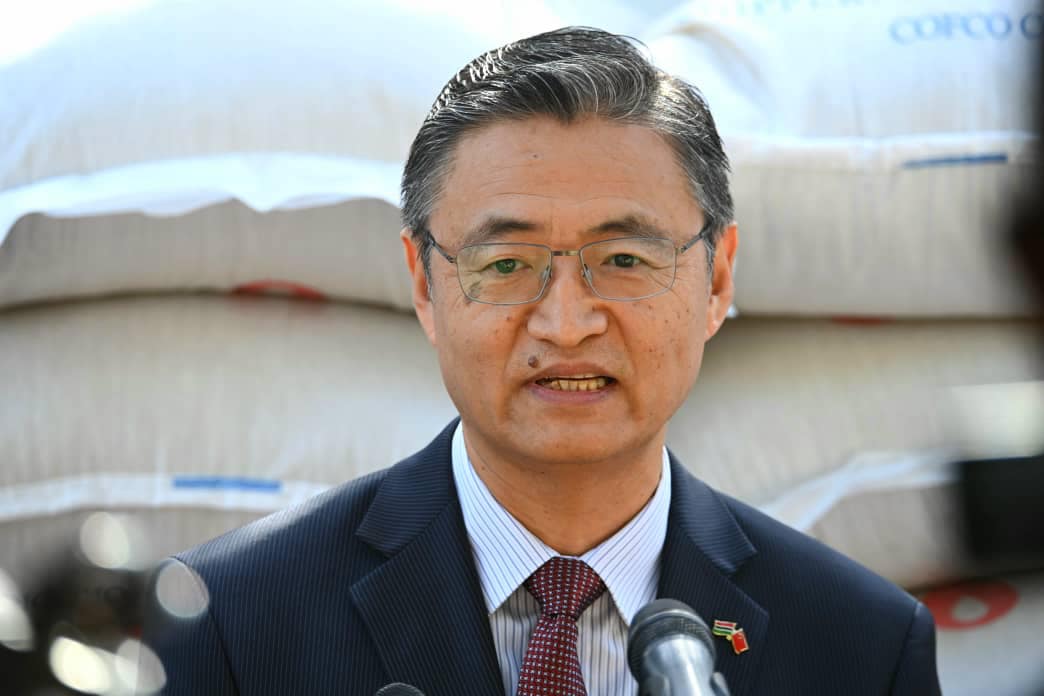
Written by: Alieu Jallow
The Government of the People’s Republic of China has committed US$1.5 million to support The Gambia’s push to reduce its dependence on imported staple foods, focusing on increased production of rice and millet, a staple cereal widely grown across West Africa, through a two-year programme under the FAO-China South-South Cooperation Programme. The initiative, implemented by the Food and Agriculture Organization of the United Nations (FAO), will be based in Sapu in the Central River Region (CRR). It aims to strengthen agricultural production, post-harvest management, processing and value chain development for the country’s two major staple crops.
Eight Chinese agricultural experts will be deployed to work alongside Gambian researchers, extension workers and farmers while providing technical training and capacity-building support to national institutions.
Agriculture remains the backbone of The Gambia’s economy, providing livelihoods for about 72 percent of the population. Rice is the country’s most widely consumed staple food, yet domestic production currently meets only about one-fifth of national demand. As a result, the country relies heavily on imports to feed its population, leaving it exposed to fluctuations in global food prices and supply disruptions.
Millet, the country’s second most important staple crop, also faces major constraints. Production is largely carried out by smallholder farmers and is affected by limited mechanisation, weak post-harvest systems and poor market linkages.
Speaking at the launch of the programme, the Chinese Ambassador to The Gambia, Liu Jin, reaffirmed Beijing’s commitment to supporting the country’s agricultural transformation through practical cooperation and knowledge sharing.
He said the initiative comes as both countries mark a decade since the restoration of diplomatic relations, and highlighted China’s broader support to The Gambia’s agricultural sector, including a US$6 million agricultural technology project in Sapu and Jamjamjelly aimed at promoting improved production techniques for rice, maize, millet and vegetables.
“As we stand at the beginning of a new decade of China–Gambia relations, China is ready to work closely with The Gambia to strengthen standards alignment, improve product quality and enhance market information sharing,” the ambassador said.
“Our goal is simple: to help farmers not only grow more but also sell better, keep more value at home and ensure that farming communities truly benefit. China has always been a strong supporter of South-South cooperation, guided by the principles of equality and mutual benefit, practical results, long-term partnership and shared development,” he added.
Speaking at the official launch and inception workshop, Agriculture Minister Demba Sabally said The Gambia has significant untapped agricultural potential, particularly in inland valleys and tidal swamp areas that remain underutilised.
He said that with proper irrigation systems, water control infrastructure, mechanisation and access to improved seeds, national food production could increase substantially.
“Rice is our most important staple food, yet, as a nation, we still consume far more imported rice than we produce,” Sabally said.
According to the minister, the government spends about US$80 million each year on rice imports.
“This is money that leaves our economy, money that could be building irrigation schemes, strengthening research, mechanising our farms and empowering our youth,” he added.
Sabally explained that rice production in The Gambia is concentrated mainly in lowland ecologies such as tidal swamps, inland valleys and irrigated perimeters. While progress has been made through the introduction of improved seed varieties and increased mechanisation support, productivity remains constrained by erratic rainfall, saltwater intrusion, limited irrigation infrastructure and post-harvest losses.
“This South-South Cooperation initiative is one such response,” he said.
The FAO Representative in The Gambia, Shibu Rampedi, said domestic production currently meets only about 19 percent of national rice consumption, forcing the country to depend heavily on imported rice to meet demand.
She added that millet accounts for roughly 30 percent of the country’s cereal production and is mainly cultivated by smallholder farmers for household consumption.
“These statistics reflect the realities faced by farming communities, including limited access to quality seeds, inadequate irrigation infrastructure, outdated agronomic practices, inefficient post-harvest handling and restricted market connectivity,” she said.
She added that the new project aims to address these constraints directly.
United Nations Resident Coordinator in The Gambia, Karl Fredrik Paul, said the programme aligns with the country’s national development agenda under the Yiriwaa National Development Plan, which identifies agriculture as a key driver of economic transformation.
He said the initiative will help increase rice yields and strengthen agricultural value chains through improved rice breeding, mechanisation and modern farming techniques.
“At the same time, strengthening post-harvest handling, processing technologies and market access for rice and millet will help reduce losses, improve product quality and increase incomes,” he said.
The programme is expected to benefit about 28,000 direct beneficiaries and more than 160,000 indirect beneficiaries across farming communities.
The project will be led by Chinese rice mechanisation specialist Li Zhi and a team of experts specialising in rice breeding, irrigation and production systems. The experts will be stationed in Sapu for two years, working directly with farmers, researchers and extension staff.
Their work will include building capacity in rice breeding, improved storage, processing, irrigation techniques and mechanisation while introducing high-yielding and stress-tolerant crop varieties, modern irrigation systems and adaptive research methods.
The initiative is also expected to strengthen local seed multiplication systems and improve technology transfer, with the long-term goal of helping The Gambia gradually reduce its dependence on imported staple foods.