

 11
11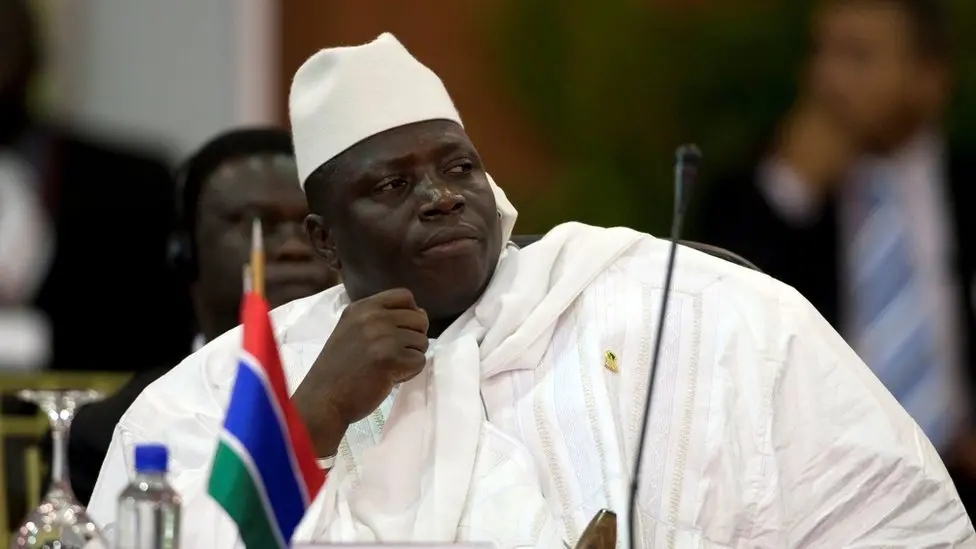
Written by: Dawda Baldeh
A 324 page final report released this March by a Special Select Committee of the National Assembly of The Gambia has sharply criticised the handling and disposal of assets linked to former president Yahya Jammeh, pointing to serious governance failures, legal breaches, and weak oversight in the process.
The inquiry was launched after growing public concern over how assets identified during the Janneh Commission were later managed and sold. The Janneh Commission, established in 2017 by President Adama Barrow, investigated the financial activities of Jammeh and his associates during his 22 year rule and recommended the seizure of numerous properties, businesses, vehicles, livestock and other assets believed to have been improperly acquired.
In the years that followed, those assets were placed under state control and gradually disposed of through various mechanisms overseen primarily by the Ministry of Justice of The Gambia, which at the time was headed by Attorney General and Minister of Justice Abubacarr Tambadou, along with court appointed receivers. However, questions about transparency and pricing began to surface after investigative reporting by The Republic revealed what critics described as questionable sales of some properties and livestock.
The revelations sparked widespread public debate and protests organised by the civic movement Gambians Against Looted Assets (GALA), which demanded full disclosure of the assets, the buyers, and how the proceeds were handled. Amid the growing backlash, lawmakers established a parliamentary inquiry to examine the disposal process and determine whether public resources had been mismanaged.
In its report, the Special Select Committee describes an institutional environment marked by what it calls an “administrative vacuum,” where weak structures and unclear authority allowed informal practices that it said were inconsistent with the standards expected in a modern democratic state.
The committee found that although the Janneh Commission had been tasked with restoring accountability, its own administrative systems were “inherently inefficient and ill suited to the scale and sensitivity of its mandate.” Investigators noted that the commission operated without a formally documented organogram or operational handbook, a gap that led to confusion over reporting lines and responsibilities.
In a foreword to the report, committee chairperson Abdoulie Ceesay said the inquiry uncovered systemic weaknesses in the management of the assets. He pointed to situations where disposals occurred without proper legal authority and where oversight responsibilities were either unclear or left unexercised.
One of the most sensitive issues raised by the committee concerns what it described as a perceived conflict of interest involving the commission’s lead counsel, Amie Bensouda. According to the report, Bensouda’s law firm was simultaneously engaged by the Social Security and Housing Finance Corporation while she served as lead counsel to the commission, even though the corporation itself was among the entities examined during the inquiry.
The committee also examined the role of the commission’s receiver and trustee, Alpha Barry, who acknowledged during testimony that detailed reports on the sale of assets were only compiled after what he described as “public noise” surrounding the disposal process.
Among the most striking findings in the report are those relating to the sale of livestock seized from farms linked to Jammeh. According to the committee, procedural safeguards were frequently bypassed, with animals sold through spot pricing and offline bargaining rather than structured valuation processes.
Investigators reported a significant discrepancy between the number of animals initially recorded and those eventually accounted for. While early counts suggested that up to 3,456 animals had been seized, final valuations referenced as few as 516, leaving hundreds of animals unaccounted for in official records.
The committee further cited an unauthorised sales arrangement involving a man identified as Alieu Jallow, who was said to have conducted livestock transactions without lawful authority. Instead of issuing formal receipts, the report states that handwritten tickets were used to document sales.
Financial handling of the proceeds also drew sharp criticism. According to the report, cash collected from livestock sales was sometimes placed in a physical iron briefcase in the field before later being deposited in bank accounts, often with delays and limited documentation.
Beyond individual transactions, the committee concluded that the overall administrative and financial design of the asset recovery system undermined effective oversight. It noted that the commission relied heavily on the Ministry of Justice for routine approvals, a structure that it said compromised the level of functional independence required for such a sensitive national task.
The inquiry has recommended that the Inspector General of Police open a criminal investigation into suspected fraudulent acts relating to the concealment of certain landed properties that may have been withheld from the commission’s attention. It further urged disciplinary measures against any officials found to have deliberately withheld information about assets, recommending immediate suspension and prosecution where appropriate.
The report also raised concerns about financial management within the judiciary after investigators discovered that funds had been transferred from accounts controlled by sheriffs without clear authorisation. According to the committee, the circumstances surrounding those transfers raise questions about the integrity of some financial controls within the system.
In its final assessment, the committee delivered a particularly sharp critique of record keeping practices within the Ministry of Justice. It said official documentation related to the asset recovery process was stored in a physical backroom without a modern indexing system, making it difficult for investigators to trace transactions and verify records.
“In an institution entrusted with safeguarding the legal memory of the State, such arrangements amount to administrative incompetence,” the report states, adding that information which should have been readily accessible had to be reconstructed through witness testimony and fragmented records.
The findings are expected to intensify debate over the management of assets recovered from Jammeh’s rule and may lead to further investigations as authorities consider the committee’s recommendations.
Comments are closed.



Nobody warns authors about this before they publish a book.
The moment your book goes live…
You accidentally take on a second job.
Marketing.
Suddenly your evenings look like this.
Trying to write social media posts.
Designing graphics.
Creating promotional images.
Jumping between platforms trying to get attention for your book.
Don’t skim — watch the video here
[ https://ai-sales-rocket.blogspot.com ]
And the moment you stop doing that… The traffic disappears.
The sales disappear.
The authors who succeed usually discover something important.
They don’t rely on motivation. They rely on systems.
Something that promotes their books every single day whether they feel like it or not.
That’s exactly what Andreas Quintana built for his own publishing business.
He got tired of promoting his books manually.
So he created a tool that reads your book, generates marketing content, and promotes it across multiple platforms automatically.
Your book basically gets its own 24/7 marketing engine.
Instead of me trying to explain it… Go watch Andreas walk through it.
Don’t skim — watch the video here
[ https://ai-sales-rocket.blogspot.com ]
The launch price is $17.97 but the important part is understanding what this actually does.
Watch the video first.
Then decide if this is something you want working behind your books.
[Kuna Behera]
P.S. Quick-Start Author Bonus
The first 100 customers today will unlock 2 extra book uploads FREE.
That means you can promote 3 books instead of just one with AI Sales Rocket.
Once the first 100 spots are gone… this bonus disappears.